
Last updated November 2, 2026
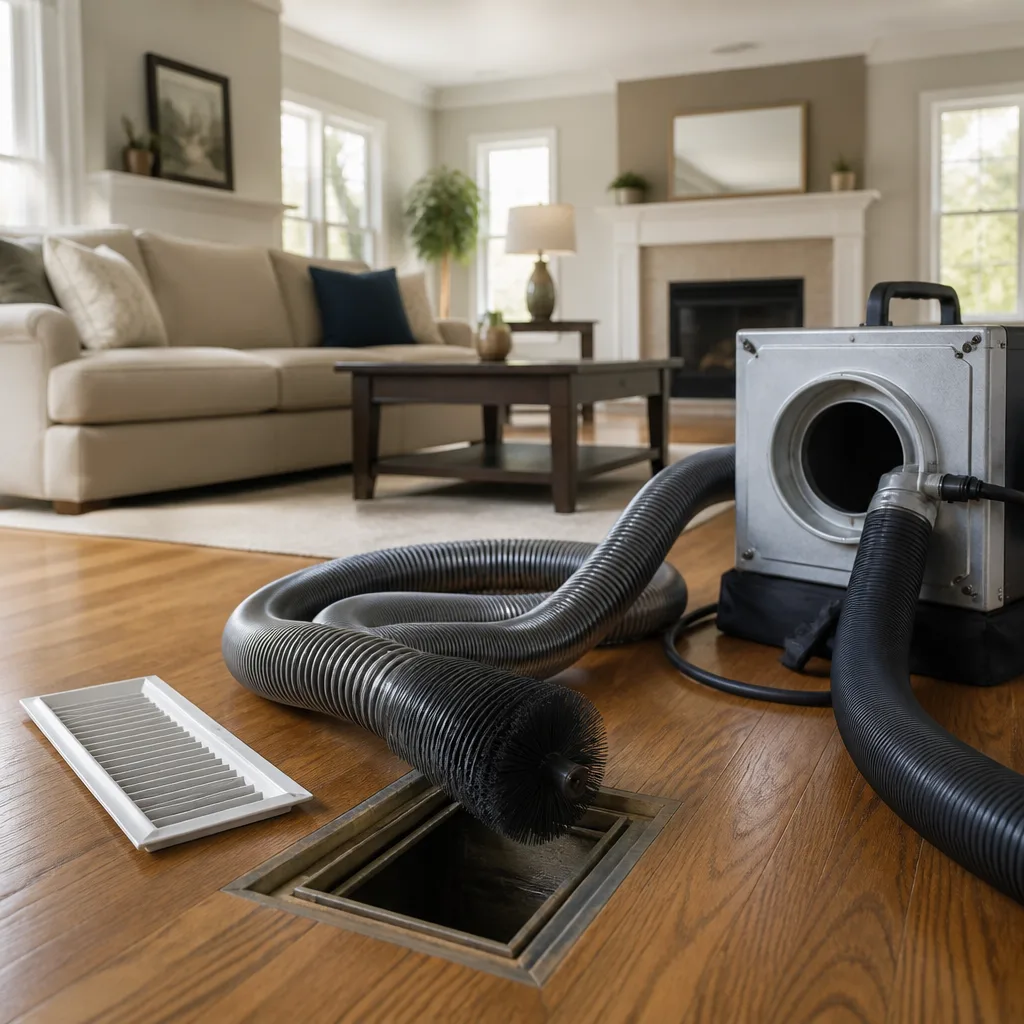 Whole-home duct cleaning
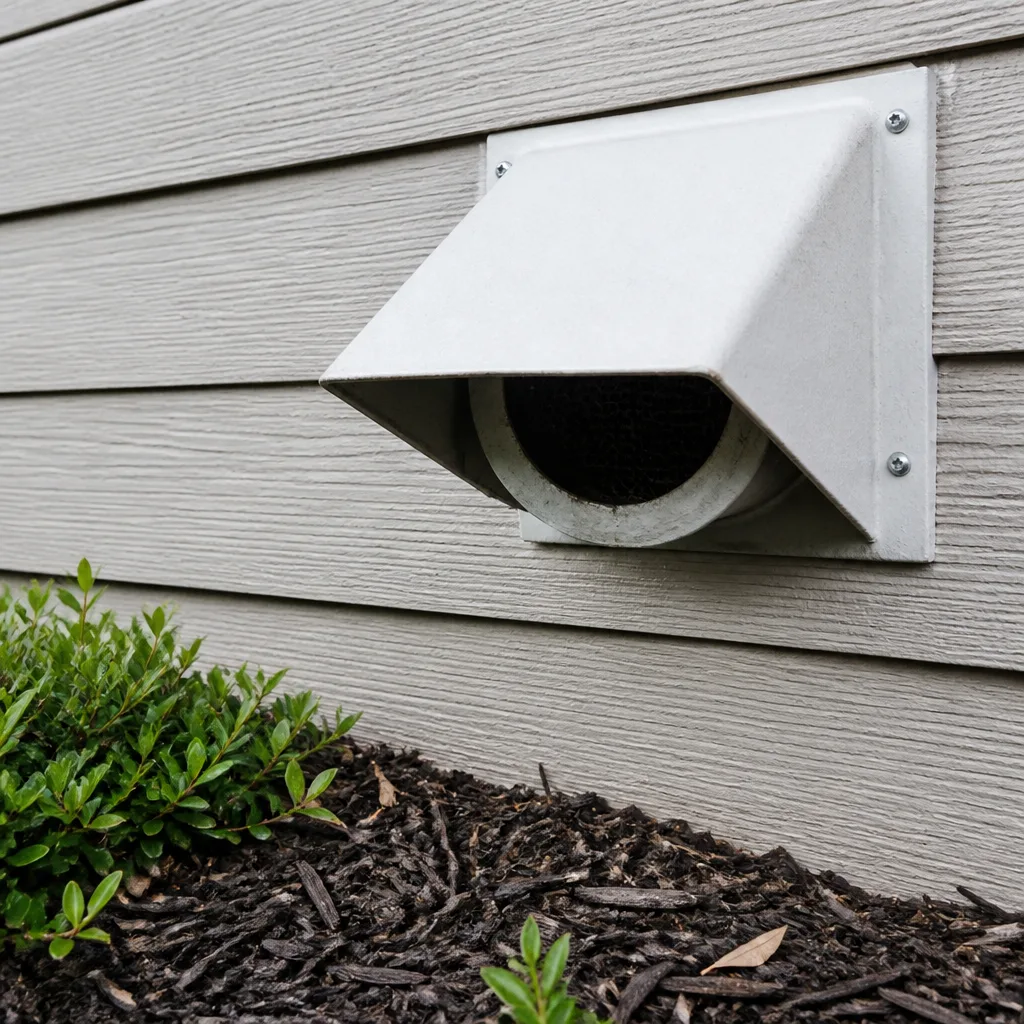 Dryer vent cleaning
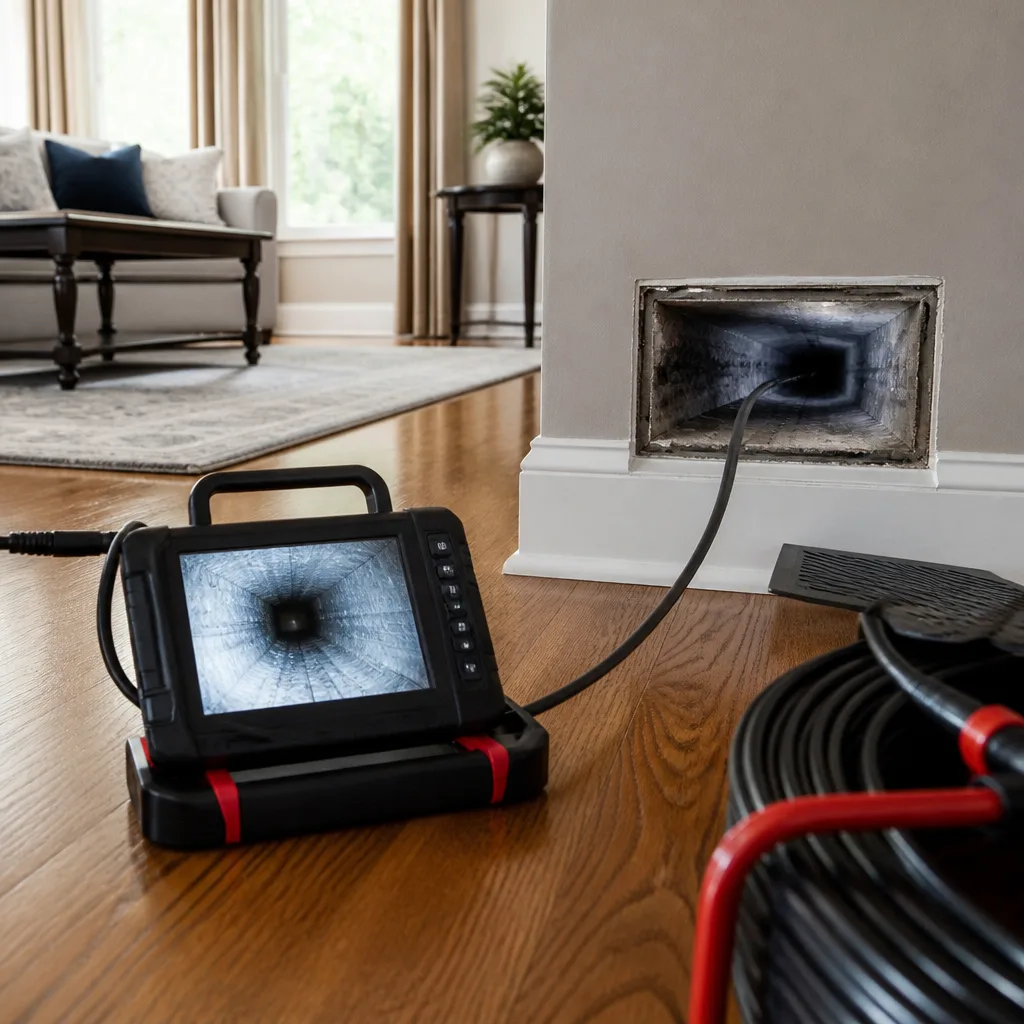 Camera inspection
 Sanitizing & deodorizing
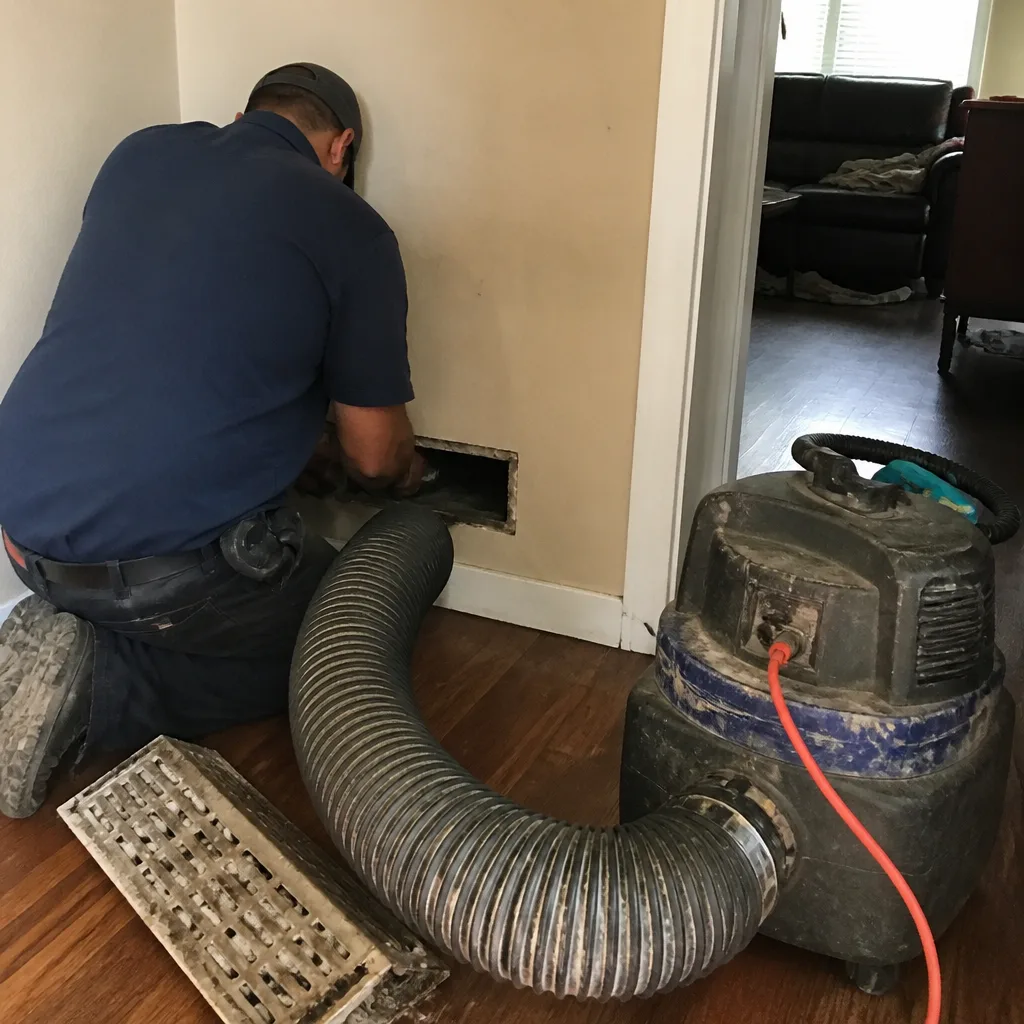
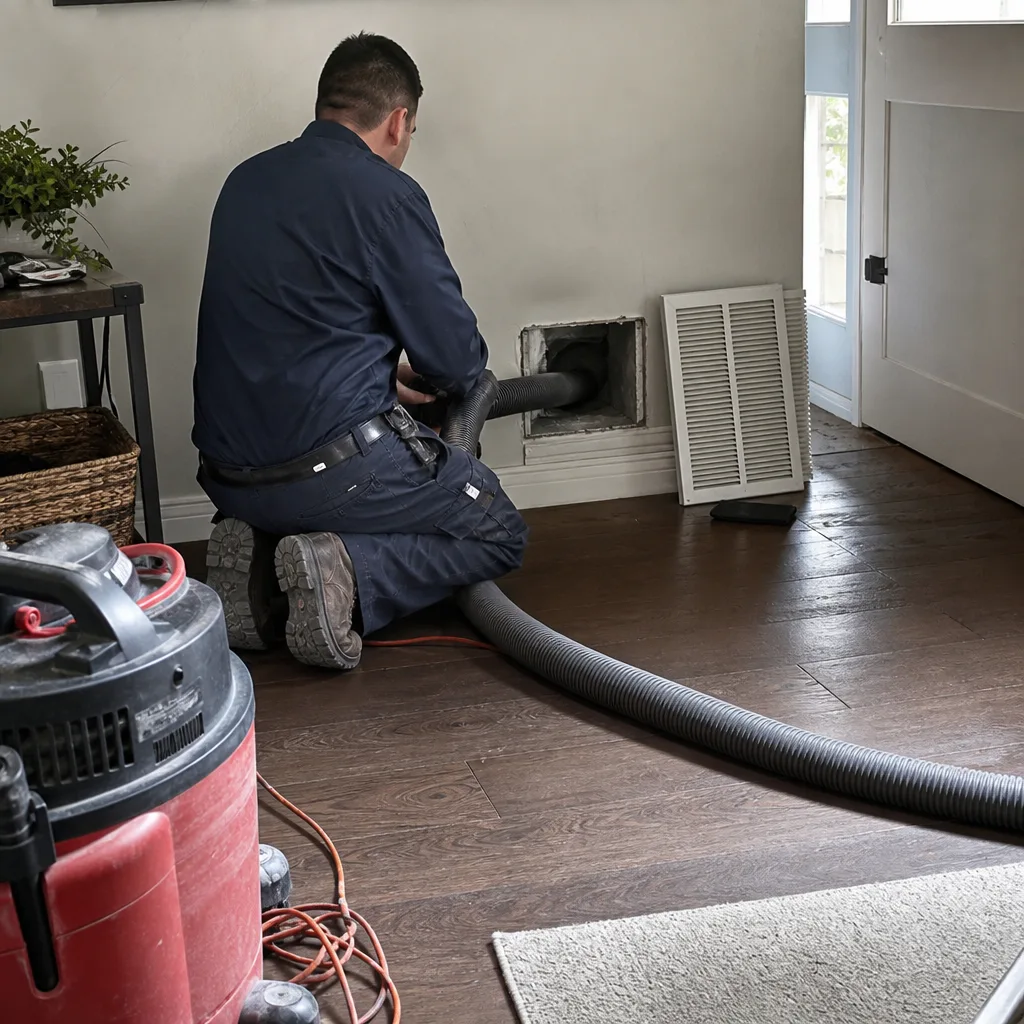
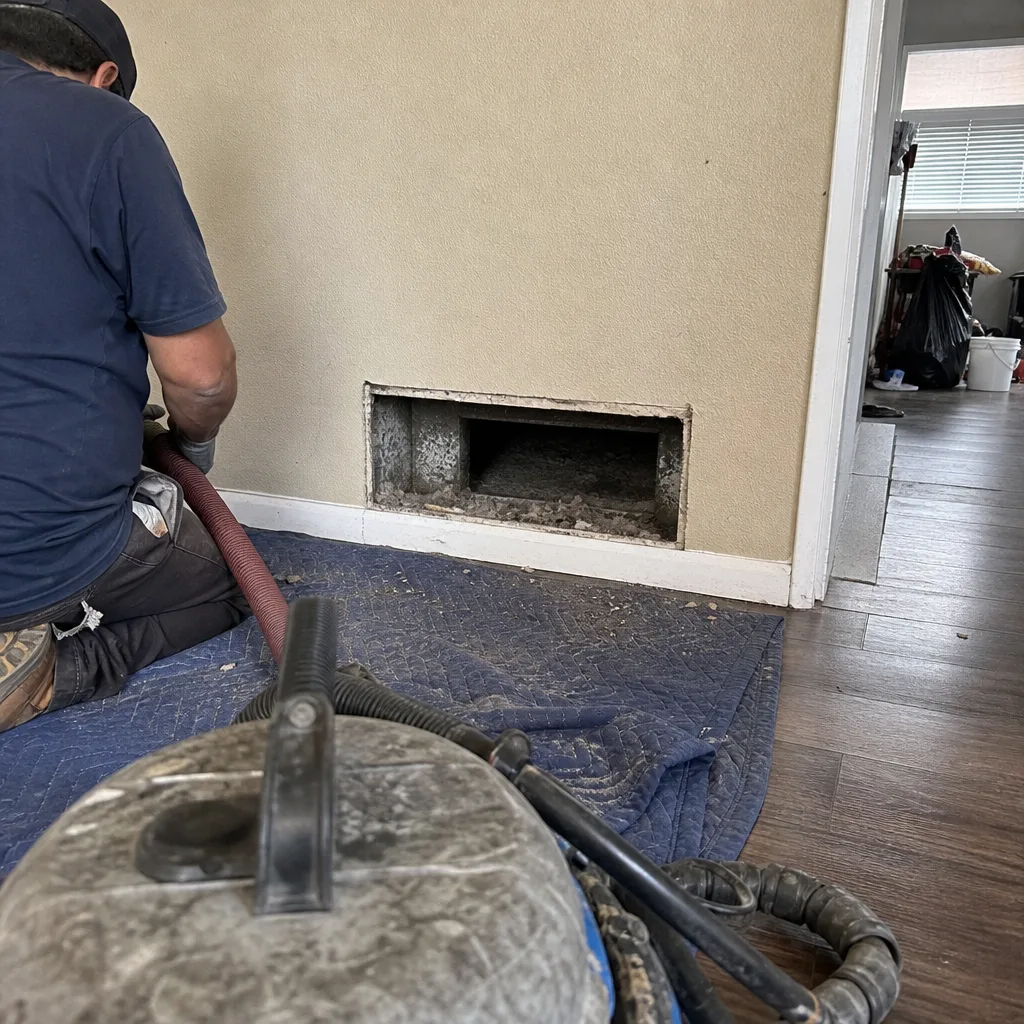
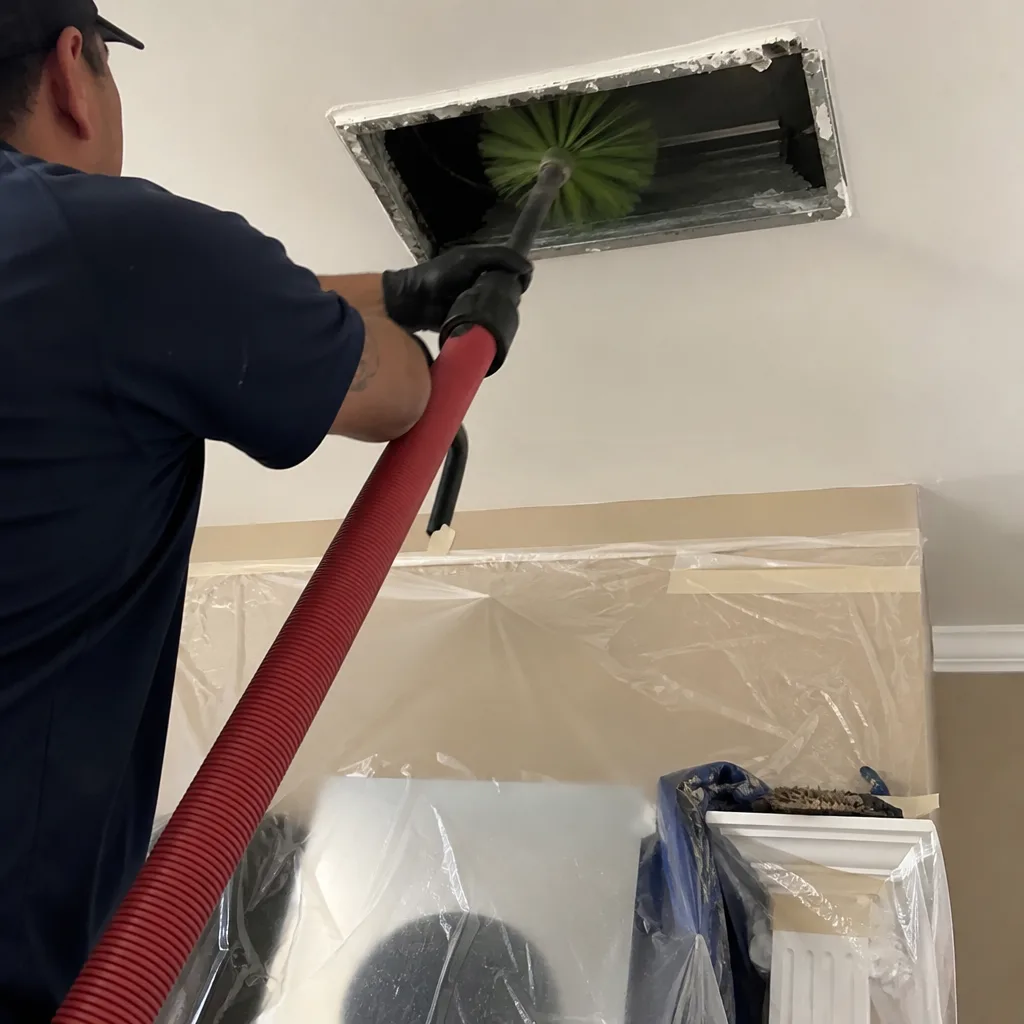
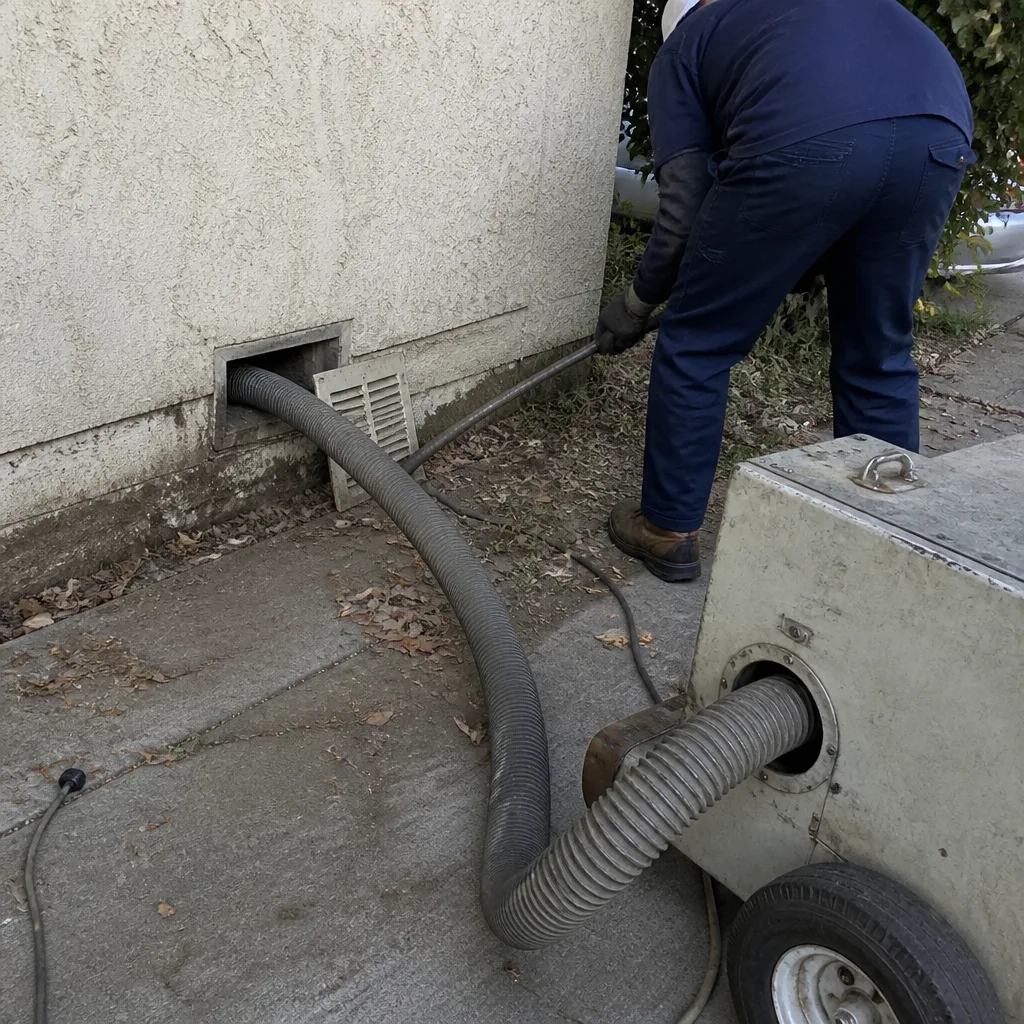
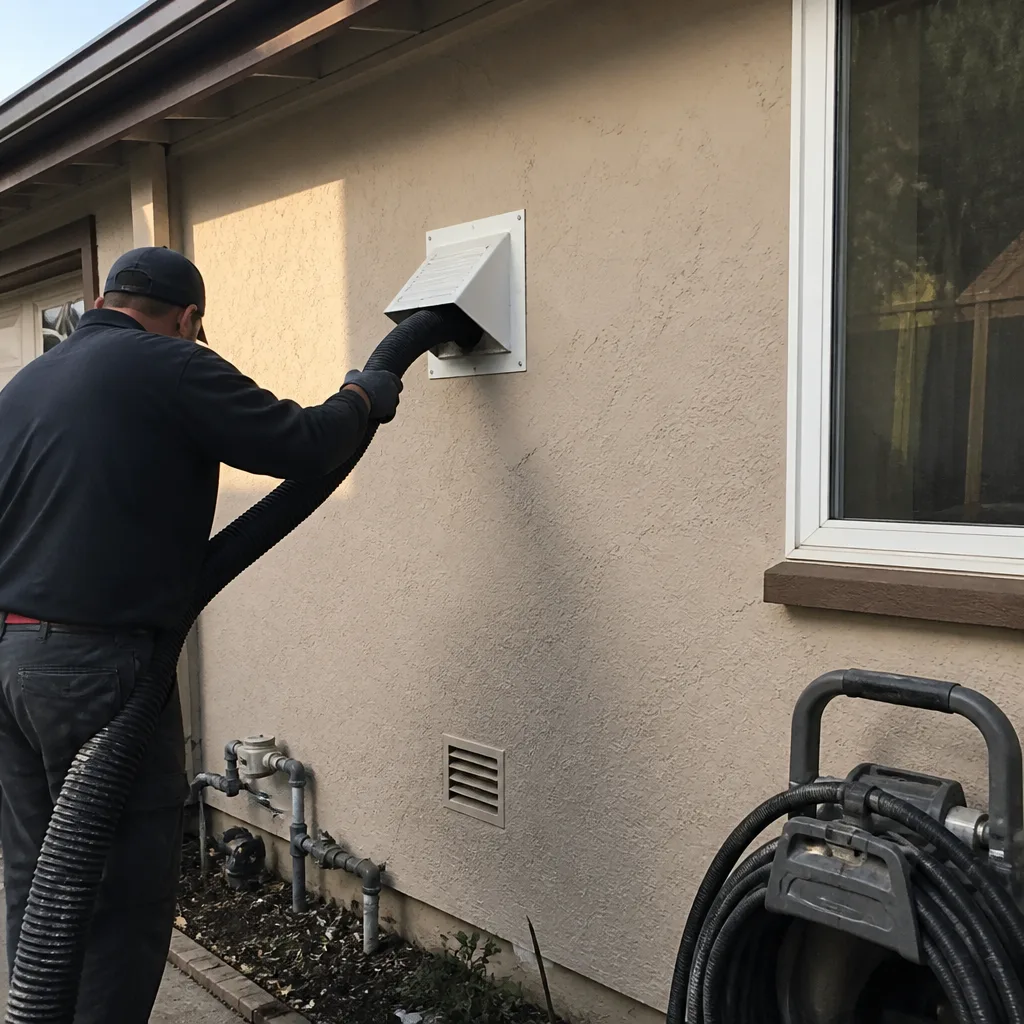
Whole-system duct and dryer vent check with before-and-after photos - you see exactly what came out of your vents
That "$99 whole-house special" is a bait ad - the real number appears once they are in your hallway, or the "clean" is a shop-vac at the register. We photograph the inside of your ducts before and after instead.
Air Duct Cleaning Warning Signs: A Pocket Homeowner’s Reference Guide
Here’s the thing most duct cleaning articles won’t tell you: by the time you see a gray film on your register covers, the problem has been running for months. Duct systems don’t fail suddenly. They degrade in stages, and the earliest stages are quiet. A room that runs three degrees warmer than it did last summer. A filter that loads faster than it should. A smell you only notice on the first hot day of the year. These are the signals that matter, because they show up before your system is truly compromised. In Pocket, where summer temperatures climb past 100 degrees and your AC runs hard for five months straight, catching duct problems early means the difference between a cleaning visit and a system that’s been circulating dust, bypass air, and worse for half the year. This guide walks through the indicators most homeowners miss, what each one actually means, and when it’s time to call for Air Duct Cleaningomeone who can do more than run a vacuum through your registers.
Quick Answer
The earliest signs that your air ducts need attention in Pocket are uneven room temperatures that don’t match your thermostat, filters that load 40% faster than their expected lifespan, and register grilles showing dark streaking, rust staining, or oily residue. If you notice any combination of these, your duct system is telling you something: it’s leaking, restricted, or carrying contaminants. The fix starts with a full-system inspection and contact cleaning, not just a surface pass.
Table of Contents
- Quick Answer
- Airflow Signals: When Rooms Stop Cooperating
- Odor Profiling: Three Smells That Mean Different Things
- Filter Load Rate: The Diagnostic Most Homeowners Overlook
- Visual Indicators at the Register: What Streaks, Rust, and Oil Actually Mean
- Pest and Rodent Indicators: When Cleaning Alone Isn’t Enough
- Why Pocket Homes Show These Signs Earlier Than Most
- Common Mistakes to Avoid
- When to Call a Professional
- Frequently Asked Questions
- The Bottom Line
Airflow Signals: When Rooms Stop Cooperating
The thermostat says 74. Your bedroom says 78.
Every homeowner knows which rooms run warm or cool in their house. What matters is when that pattern changes. If you’ve lived in your Pocket home for more than two summers, you know that the upstairs bedroom with the west-facing window always runs a few degrees warm in August. That’s normal, and it’s predictable. What’s not normal is when a room that was always comfortable suddenly starts running three to five degrees off the thermostat. Or when the changes shift: the living room cools fine, but the hallway bathroom now gets almost no airflow at all. That’s not an equipment problem. Your furnace blower hasn’t forgotten how to push air. What’s changed is the path the air takes to get there.
What uneven room temperatures actually indicate
When airflow drops in specific rooms while others remain fine, the cause is almost always in the ductwork. The two most common culprits in Pocket homes are duct leakage and internal restriction. Duct leakage happens when a joint separates, a section gets knocked loose in the attic, or a flex duct develops a tear. The air your blower pushes into that branch line leaks out into unconditioned space before it ever reaches the register. You’re paying to cool your attic, and the room at the end of that run suffers. Restriction is different. It’s a buildup inside the duct itself: years of dust, pet hair, construction debris from a previous remodel, or in some cases, a collapsed section of flex duct. The air can’t get through, so it doesn’t.
How to test this yourself before you call anyone
- Walk the house on a hot afternoon. Go room by room and note which spaces feel warmer or stuffier than the thermostat setting. Write it down. Your memory of “that room always runs warm” is less reliable than a written list made in real time.
- Hold a tissue near each register with the system running. Compare how far the tissue moves. A register with strong airflow will push the tissue nearly horizontal. A restricted register will barely move it. The difference between rooms is what you’re measuring, not the absolute flow.
- Check the register dampers. Some registers have a small lever that opens or closes internal louvers. Confirm they’re open. A damper that got bumped closed during cleaning or moving furniture is an easy false positive to rule out.
- Feel the metal register itself. On a cooling cycle, it should be uniformly cold. If one corner is noticeably warmer, you may have bypass air mixing in, which points to a fitting or seal problem behind the wall.
Rooms that consistently run five degrees off the thermostat while others are fine. That’s a duct problem until proven otherwise. In our experience at Purevent Air Duct Cleaning home, most homes in Pocket with this symptom have either a disconnected branch line in the attic or a section of flex duct that’s partially collapsed. Both are repairable. Neither fixes itself.
Odor Profiling: Three Smells That Mean Different Things
Smells from your vents are diagnostic information. The problem is that most homeowners lump them all together as “the vents smell musty” and call it a day. But different smells point to different problems, and the response shouldn’t be the same. Here’s how to profile what you’re smelling in your Pocket home.
The musty smell: biological growth, not just old dust
A musty odor that’s present every time the system runs, and especially stronger when the AC first kicks on, almost always indicates biological growth inside the ductwork or on the evaporator coil. Dust itself doesn’t smell musty. What smells is what grows on dust when it gets wet. In Pocket, the humidity swing between our dry summer heat and damp winter months creates condensation cycles inside duct systems that are exactly what biological growth needs. If the musty smell is concentrated in certain rooms only, the growth is likely in that specific branch line. If it’s throughout the house, it’s probably at the evaporator coil or in the main supply trunk. This is not a situation where air freshener or a filter change helps. The source needs to be removed with contact cleaning, and the underlying moisture problem needs to be identified or it’ll come back.
The burnt dust smell: the first heat cycle of the season
Every fall and winter, when Pocket homeowners turn on their heat for the first time, some of them notice a faint burning smell from the vents for the first few hours. That’s the smell of accumulated dust burning off the heat exchanger. It’s normal to a point. Summer dust settles on the exchanger, and the first heating cycle burns it off. The smell should fade within a few hours and not return. If it persists for more than a day, or if it returns every time the heat runs, that’s different. That indicates a significant accumulation inside the system that’s being heated repeatedly, and it points to ducts that haven’t been cleaned in years. A system with clean ducts doesn’t have enough material on the exchanger to produce a noticeable odor at all.
The chemical or acrid smell: something that isn’t dust
A chemical smell, especially one that’s sharp, smells like solvents, or has a plastic or off-gassing quality to it, should never be ignored. In Pocket’s older home stock, especially houses built before 1990, this can come from several sources. Degraded duct insulation. Rodent urine or nesting material that’s being heated and circulated. Or, in newer homes or after a remodel, off-gassing from new insulation, sealants, or adhesives used in construction. The critical diagnostic question is whether the smell is constant or only when the system runs. If it’s only when the system runs, it’s in the ducts. If it’s constant, it may be in the building materials and the system is just moving it around. Chemical smells call for an inspection, not just a cleaning. You need to identify the source. Air Duct Repair in Pocket matters here because some chemical sources, like damaged insulation or deteriorated flex duct lining, require replacement, not cleaning.
Filter Load Rate: The Diagnostic Most Homeowners Overlook
Your air filter is a measurement device. Most homeowners think of it as a component they replace on a schedule, but the rate at which it loads tells you something about what’s moving through your duct system. Here’s how to use it.
How to calculate your expected filter life
Start with the filter manufacturer’s rated life. Most standard one-inch filters are rated for 30 to 90 days. Higher-MERV pleated filters often run 90 days to 6 months depending on the system. The key is to establish your baseline. When you replace a filter, note the date. Check it once a week. How quickly does it go from white to gray? For most Pocket homes, a standard filter changed at 90 days will show a light, even coating of dust. It’s loaded, but not clogged. That’s normal. Your baseline is simply how long it takes to reach that state.
What it means when filters load 40% faster than expected
Now say you’ve established a baseline. Your filter normally lasts 90 days before it’s clearly loaded. Suddenly, you’re changing it at 50 or 55 days. It’s dark. It’s visibly clogged. Something changed. The most common explanations, in order of how often we see them in Pocket homes:
- The return side of your duct system is pulling from an unconditioned space. A disconnected or damaged return duct in the attic pulls insulation fibers, dust, and outdoor particulate directly into the filter. The filter loads fast because it’s filtering attic air, not house air.
- Your ducts have a significant internal dust load that’s now mobilizing. Years of accumulated dust may be shifting, especially if recent work elsewhere in the house (a remodel, roofing, new insulation) disturbed the duct runs.
- Your blower motor is running longer cycles. A dirty evaporator coil reduces cooling efficiency, so the system runs longer to hit the thermostat. Longer run times mean more air passes through the filter per day, which means faster loading.
- A return register in a high-traffic area is pulling more debris than usual. Pets, recent work, more time at home, all of it contributes.
Fast filter loading is never a problem in itself. It’s a symptom. The filter is doing its job. The question is what it’s filtering and why there’s so much of it. If you’re loading filters 40% faster than your baseline, we’ve found that an inspection almost always turns up a return-side leak or an internal duct load that’s ready to be cleaned.
Visual Indicators at the Register: What Streaks, Rust, and Oil Actually Mean
Register grilles are the only part of your duct system you can see without tools. Most homeowners never look at them closely. Here’s what to look for and what each indicator means.
Dark streaking around the register edges
Dark gray or black streaks on the wall or ceiling around a register are bypass air marks. This happens when some of the air leaving the register gets pulled back into the return side of the system instead of mixing into the room, or when air from the wall cavity gets entrained along the register edges. That bypass air carries dust particles, and over time, those particles deposit in the visible streaks you see. Dark streaking means two things: the air path around that register isn’t sealed well, and the air moving through it is carrying enough particulate to leave visible deposits. It’s a sealing issue and a cleaning issue, usually both. In Pocket homes with older, harder-to-seal wall assemblies, we see this regularly.
Rust staining or water marks
Rust on a register, or rust-colored staining on the surface around it, means condensation is forming somewhere it shouldn’t. Warm, humid air is meeting a cold metal surface. That can happen when the register boot (the metal box behind the register) isn’t insulated properly, when the duct serving that register is leaking cool air into the wall cavity, or when there’s a larger moisture problem inside the duct system itself. Rust staining is a moisture signal first and a cleaning issue second. The rust needs to be addressed, but the underlying cause is moisture. If you see rust, the duct system needs an inspection. It may also need repair of the boot, the insulation, or the duct connection. We have Air Duct Cleaning in Pocket equipment that includes the inspection tools to find these problems, but we’re clear-eyed about when a fix is required: cleaning a rusted boot doesn’t stop the condensation from returning.
Oily residue on the register surface
A sticky, oily film on your registers is a sign of blower motor wear. Small amounts of bearing lubricant or motor oil atomize into the airstream as the blower ages, and that fine oil mist deposits on the first surface it passes: your register covers and the wall around them. It’s a mechanical warning signal. The oil itself won’t hurt you, but it means your blower motor is approaching repair or replacement age. And the oily film becomes a dust magnet, which accelerates the visual buildup on your registers. If you run a white cloth over a register and it comes away with a gray, greasy film, that’s not household dust. It’s motor oil. It’s time for an HVAC tech to look at the blower and for a duct cleaning to remove the coated particulate from the system.
Pest and Rodent Indicators: When Cleaning Alone Isn’t Enough
Rodents, insects, and birds all find their way into duct systems. Pocket’s older housing stock makes this more likely than in newer subdivisions. Here’s how to identify the signs and understand when cleaning alone won’t solve the problem.
What entry points look like
Rodents enter duct systems through three primary paths: gaps around roof penetrations where the boot or stack meets the attic floor, disconnected flex duct joints in the attic, and torn duct insulation that provides both an entry point and nesting material. You likely won’t see the entry point itself without getting into the attic. What you’ll see instead are the indirect signs: droppings in or around register boots, shredded insulation material appearing at registers, noises from the ductwork that aren’t mechanical, and a distinct ammonia-like odor that gets stronger when the system runs. That odor is urine, and it’s not just unpleasant. Rodent urine in a duct system is a contaminant that requires more than surface cleaning to address.
Why Pocket’s older home stock is particularly vulnerable
A large portion of Pocket’s housing dates from the 1960s through the 1980s. These homes were built with different duct sealing standards than modern construction allows. The flex duct and metal connections in these older systems, especially in unconditioned attics, have had decades to shift, separate, and degrade. Gaps develop. Insulation tears. The result is a system with more potential entry points and less ability to exclude pests once they find them. Newer Pocket developments are less vulnerable, but they’re not immune. Any home with an unconditioned attic and duct runs through that space is a candidate.
When cleaning alone isn’t enough
Here’s the distinction we make when inspecting a Pocket home with rodent activity in the ducts:
- If the entry point is intact and the activity is historical: cleaning is appropriate to remove the contamination, and the system can be returned to service.
- If the entry point is present and the ducts show an active path in: cleaning alone will just create a clean surface for the next rodent. The entry point needs to be sealed. Damaged flex duct sections need replacement. The duct repair has to happen in the same visit as the cleaning, or you’ll repeat the cycle.
- If the nesting material or droppings are extensive: contact cleaning with negative air containment is the minimum standard. Surface vacuuming moves more contamination than it removes. This is where professional equipment matters. Our Rotobrush rotary-brush system and Nikro negative-air machines are designed for exactly this kind of contamination, not just routine dust.
The “cleaning alone isn’t enough” scenario is where our Air Duct Repair in Pocket capability actually matters. Most duct cleaning companies can tell you there’s a problem. We can fix it during the same visit because repair is part of the service, not a referral to someone else.
Why Pocket Homes Show These Signs Earlier Than Most
Pocket isn’t just a neighborhood. It’s a set of specific environmental conditions that affect how duct systems behave, and homeowners here should understand what those conditions mean for their systems.
Next to the river, in the Central Valley heat
Pocket sits adjacent to the Sacramento River. That proximity means higher ambient humidity than neighborhoods further inland, especially during the shoulder seasons when temperatures swing between daytime heat and nighttime damp. Duc systems in Pocket homes are subject to more condensation cycles than systems in, say, Elk Grove or Rancho Cordova. That condensation is what starts the chain: moisture settles on duct surfaces, dust adheres to the moisture, and eventually that combination supports biological growth. The same heat that runs your AC hard for five months a year also bakes the attics where most of these ducts live. Attic temperatures in Pocket during August can exceed 140 degrees. Duct insulation, seals, and flex duct liners all degrade faster under that thermal load. Homes that are twenty or thirty years old have been through two or three decades of those cycles.
Older home stock, aging duct systems
Pocket was built out primarily between the 1960s and the 1990s. That means most of the duct systems in the neighborhood are original or have been replaced piecemeal as remodels happened. A 1972 house with original metal duct runs in the attic has had fifty years of thermal cycling, rodent pressure, insulation shifts, and joint separation. Even a well-maintained system of that age has accumulated internal dust loads that newer construction simply hasn’t had time to develop. And because Pocket has a mix of original and remodeled homes, every house has a different duct history. Some have original metal trunk lines with newer flex branch runs. Some have had complete duct replacement. That variability means there’s no single expected condition for a Pocket home. You need to actually look.
What this means for you as a homeowner
If you live in Pocket, the warning signs we’ve described in this guide will show up earlier in your home than they would in a newer subdivision. That’s not a reflection on your maintenance. It’s a reflection on the environment and the age of the housing stock. The practical takeaway is to check more often. Look at your registers seasonally. Track your filter loading. Notice the airflow in rooms you don’t use often. In Pocket, these early indicators are the difference between a maintenance cleaning and a repair situation. And the repair situation always costs more. For help selecting a provider, read Choosing the Right Air Duct Cleaning Brand: A Buyer’s Guide for Pocket.
Common Mistakes to Avoid
- Treating every smell as the same problem. Musty, burnt, and chemical odors have different causes and different fixes. A musty smell that gets scooped by a general cleaning without addressing the moisture source will return. Know the difference before you call.
- Ignoring a room that runs warm because “it’s always been like that.” Patterns that are stable are one thing. Patterns that have shifted are another. If the guest bedroom used to cool fine and now runs five degrees off, something changed, and it’s usually in the ductwork.
- Replacing filters faster without asking why. A filter that loads in half its rated life is telling you something about the air moving through your system. Shortening the replacement interval masks the symptom. In Pocket’s older homes, a suddenly fast-loading filter usually means a return leak in the attic.
- Hiring a cleaning company that can’t repair what it finds. If a technician identifies a disconnected duct, torn flex line, or rodent entry point and then tells you to call someone else, you’ve paid for a diagnosis and still need a repair visit. Ask before you book whether repairs are part of the service.
- Waiting until you can see the problem. Visible dust at the registers, dark streaking on the ceiling, and persistent odors are all late-stage signals. By that point, whatever is in your ducts has been circulating through your home for weeks or months. The early signals are airflow changes, filter loading, and subtle temperature differentials.
- Assuming a newer home doesn’t need an inspection. Newer Pocket construction has tighter building envelopes and better duct sealing, but construction debris in ducts is a known issue in homes built during the boom years. Drywall dust, sawdust, and insulation fragments all end up in the system during construction and don’t always get cleaned before move-in.
- Cleaning the ducts once and considering it permanent. Duct systems are dynamic. Joints shift, insulation degrades, rodents find new ways in. A cleaning is a reset, not a permanent fix. In Pocket’s environment, a cleaning every three to five years is maintenance, not extravagance.
When to Call a Professional
None of these indicators are things you should try to fix from the register side. Duct systems are sealed by design, and the problems that cause these warning signs are almost always inside the system, not at the visible surfaces. If you’ve noticed uneven room temperatures that don’t match the thermostat, a filter loading significantly faster than normal, any persistent odor from the vents, or visual indicators like dark streaking or rust on your registers, it’s time for a professional inspection with tools that can see what you can’t. Rotobrush rotary-brush systems and Nikro negative-air machines can clean what’s inside the duct run, not just what’s visible at the register. And if the inspection finds a torn flex line, a separated joint, or a rodent entry point, you want the person who found it to be able to fix it. Purevent Air Duct Cleaning offers free estimates in Pocket. Call (877) 752-5088 to schedule an inspection.
Frequently Asked Questions
In Pocket’s climate, with its hot summers and older housing stock, we recommend a professional cleaning every three to five years as a maintenance interval. Homes with pets, recent remodels, smokers, or occupants with respiratory sensitivities may benefit from more frequent cleaning. The three to five year window is based on how quickly dust loads accumulate in our environment: the Sacramento River humidity accelerates biological growth, and the summer heat hardens accumulated dust onto duct surfaces where it becomes more difficult to remove. The NADCA (National Air Duct Cleaners Association) standard is to inspect annually and clean on a condition-based schedule, not a strict calendar. If you’re seeing any of the warning signs described in this guide before three years, address them at that point rather than waiting. For an exact quote on your Pocket home, call (877) 752-5088. Estimates are free.
The price difference usually comes down to the equipment and the scope. Entry-level duct cleaning often uses a consumer-grade vacuum attached to a register, which removes surface dust from the first few feet of each duct run but can’t contact the full length of the system. Professional cleaning uses rotary-brush systems like Rotobrush that mechanically agitate the duct walls along the entire run, combined with negative-air machines like Nikro units that create containment so the dislodged dust is captured, not blown back into your home. The cheap quote also typically doesn’t include inspection into the sections of duct that matter: the trunk lines, the return side, the boots behind the registers. And if the low-bid company finds a disconnected section or a torn flex line, they usually can’t repair it. You’ll pay a second visit from a different company to fix what the first one found. The whole-system price is the honest price. For a quote that includes cleaning, inspection, and repair capability in the same visit, call (877) 752-5088.
Before-and-after photos of your duct interior are the standard for verification. A professional cleaning company will insert a camera into the main trunk line and branch runs before work begins, document the condition, and capture the same shots after cleaning. You should be able to see the difference in the photos: clean metal, clean flex duct lining, no visible dust accumulation. We use Guardsman inspection equipment alongside our Rotobrush and Nikro systems to document every job. Additionally, you should notice practical differences: you’ll feel the airflow at registers more strongly, rooms that were uneven will be more balanced, and any persistent odors from the system should be gone. If the company can’t or won’t provide before-and-after photos of your own ducts, that’s a red flag. For a free estimate with documented before-and-after verification in Pocket, call (877) 752-5088.
Duct systems recirculate whatever settles inside them. When dust, pollen, pet dander, and biological growth particles accumulate in the duct work, the blower pulls them back into the airstream on every cycle. In Pocket, where outdoor allergens from the river corridor mix with indoor dust from older homes, that recirculation can absolutely contribute to allergy symptoms. The medical literature is clear that duct cleaning is not a medical treatment and won’t resolve allergies that have other primary triggers. But removing a continuous source of recirculated particulate from the air you breathe indoors is a reasonable environmental step. We partner with filtration brands like Honeywell and Aprilaire for customers who want ongoing air quality management after their ducts are clean. The cleaning resets the system; good filtration maintains it. To discuss your specific situation in a Pocket home, call (877) 752-5088 for a free estimate.
Musty odor indicates biological growth, but not all biological growth is mold. The distinction matters because the response is different. Musty-smelling ducts often contain dust-borne bacteria or mildew on the evaporator coil or inside the duct lining, which can typically be addressed with contact cleaning and addressing the moisture source. Mold is a specific type of fungal growth that requires identification and potentially different remediation standards beyond routine duct cleaning. What we can tell you without an inspection is that a persistent musty smell from your vents in a Pocket home is rarely just dust. It’s moisture meeting organic material. The right first step is a professional inspection to identify what’s actually in the ducts and whether moisture is still entering the system. If mold is suspected, we’ll refer you to a licensed mold assessor because that’s outside the scope of duct cleaning. For duct-related biological growth that falls within our service scope, we use our Rotobrush and Nikro equipment to clean to containment standards. Call (877) 752-5088 to schedule an inspection in Pocket.
Yes. Dryer vents are a fire risk, not just an air quality issue. Lint accumulates in dryer vents differently than dust in HVAC ducts: it’s more combustible, it packs tighter, and the flow path is shorter and more direct. The National Fire Protection Association identifies dryer vent cleaning as a fire prevention measure, separate from air duct cleaning. In Pocket homes where the dryer vent run is often long and passes through the attic or crawl space before exiting, lint accumulation can restrict airflow and create a fire hazard long before you notice a performance issue. Our Dryer Vent Cleaning in Pocket service is a dedicated offering precisely because we treat it as a distinct problem from HVAC duct cleaning. The equipment and approach are different. If you haven’t had your dryer vent inspected in the last year, it’s worth checking. Call (877) 752-5088 for a free estimate.
The Bottom Line
The earliest signs of duct problems in Pocket aren’t dramatic. They’re rooms that run a few degrees off, filters that load faster than they used to, and smells that only show up when the seasons change. Most homeowners miss these signals because they’re looking for the obvious: visible dust, black streaks, a smell strong enough to notice every day. By the time those show up, the problem has been running for months. The ducts in Pocket’s older homes, fighting the humidity from the river and the heat of our summers, need attention earlier than most. Learn to read the quiet signs. Check your registers seasonally. Track your filter loading. Pay attention when a room shifts. And when you call someone, make sure they can do more than vacuum. Your duct system is only as clean as the repair it needs. For a free estimate in Pocket, call (877) 752-5088.
Written by the team at Purevent Air Duct Cleaning, serving Pocket since 2017. Explore more guides & resources on keeping your home’s air clean.
Styles & brands we work with
- Whole-home duct cleaning
- Dryer vent cleaning
- Camera inspection
- Sanitizing & deodorizing
See the difference
 Before
 After
 Before
 After
 Before
 After