
Last updated November 2, 2026
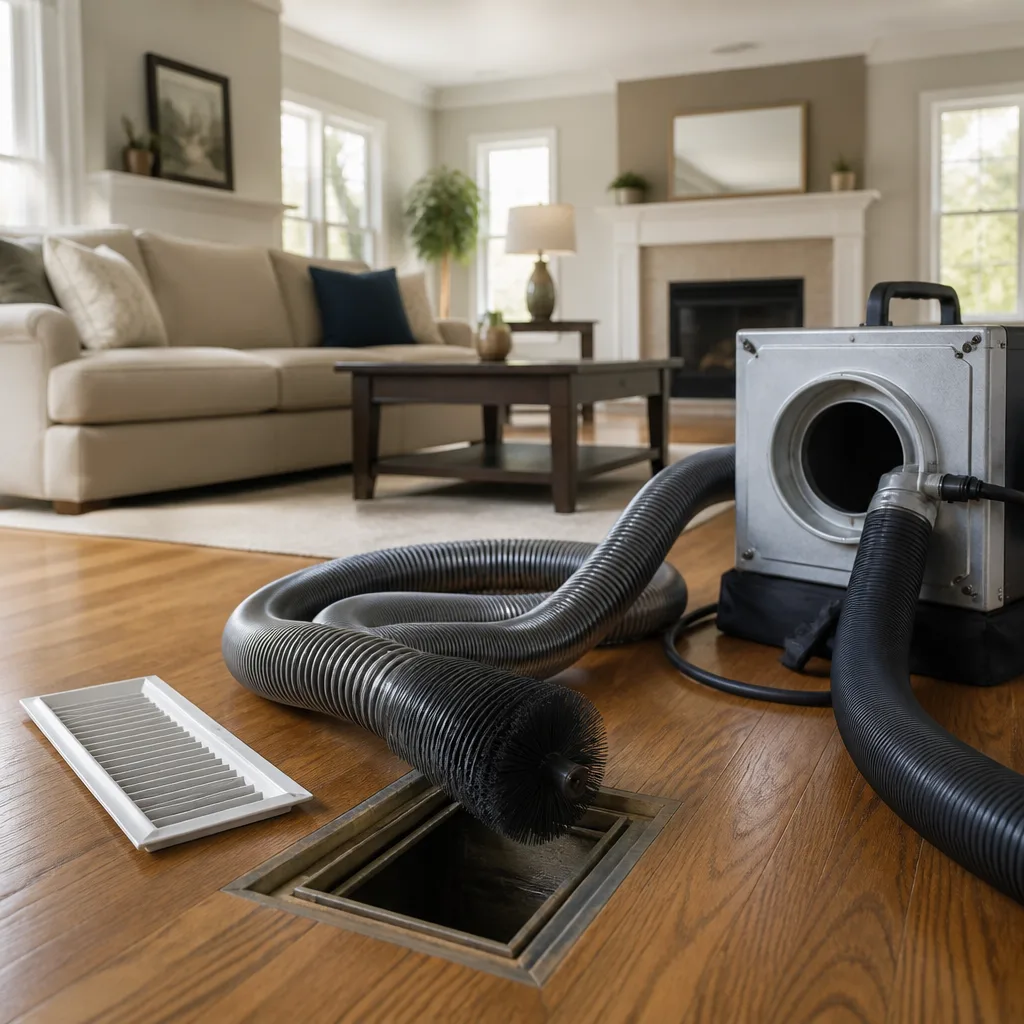 Whole-home duct cleaning
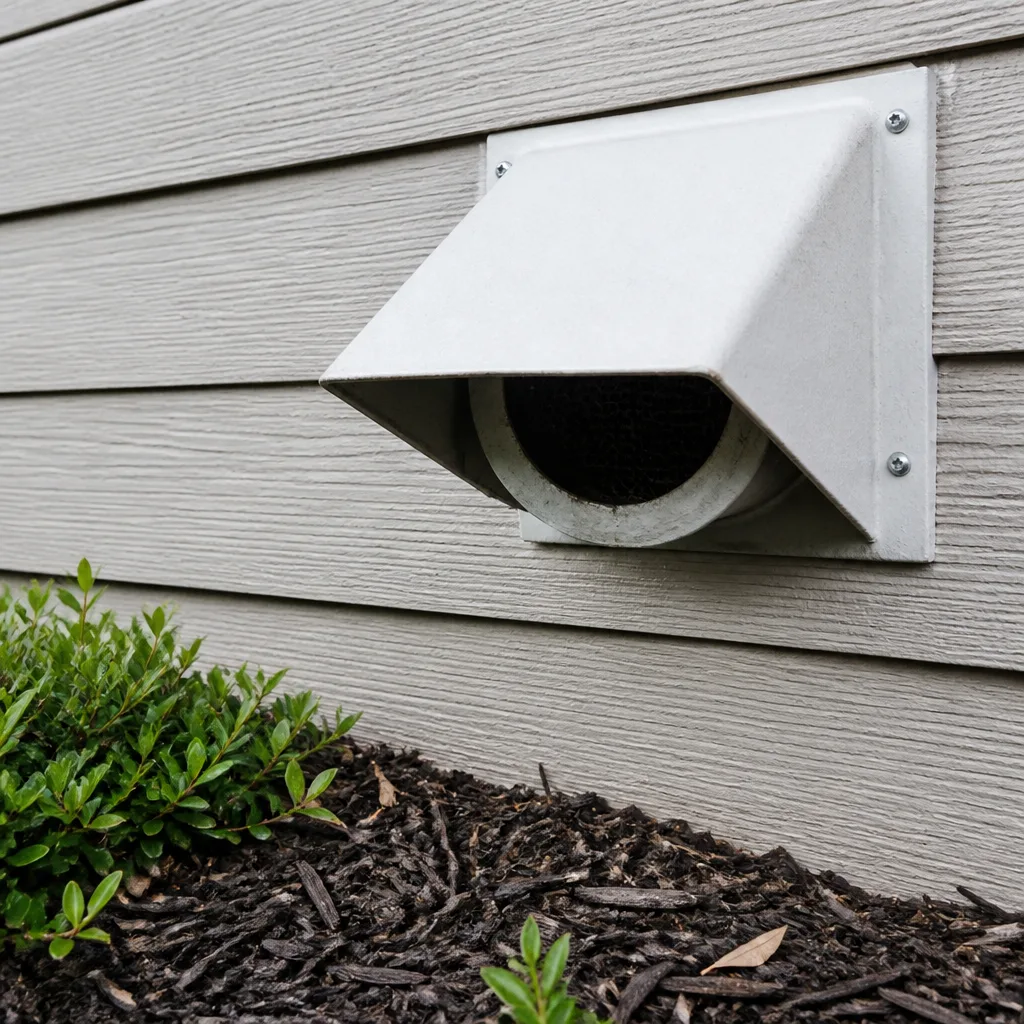 Dryer vent cleaning
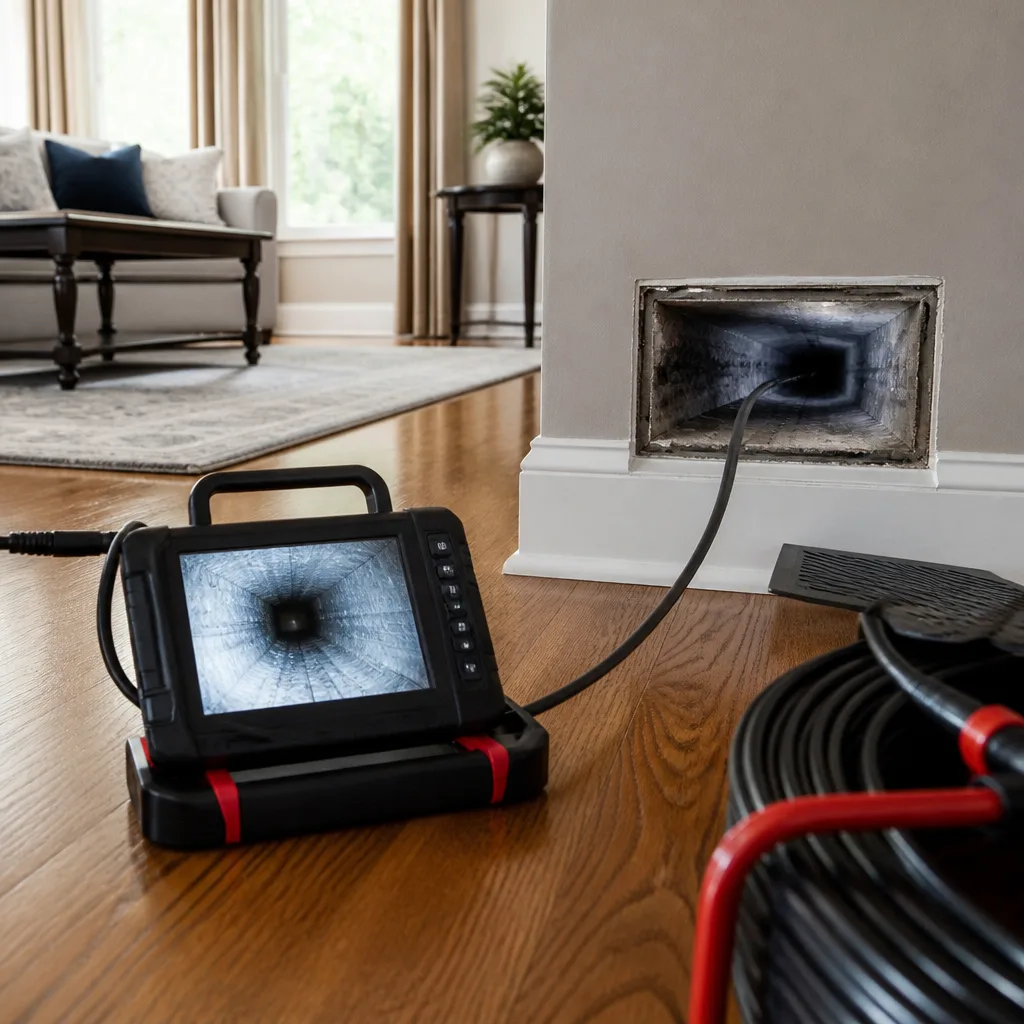 Camera inspection
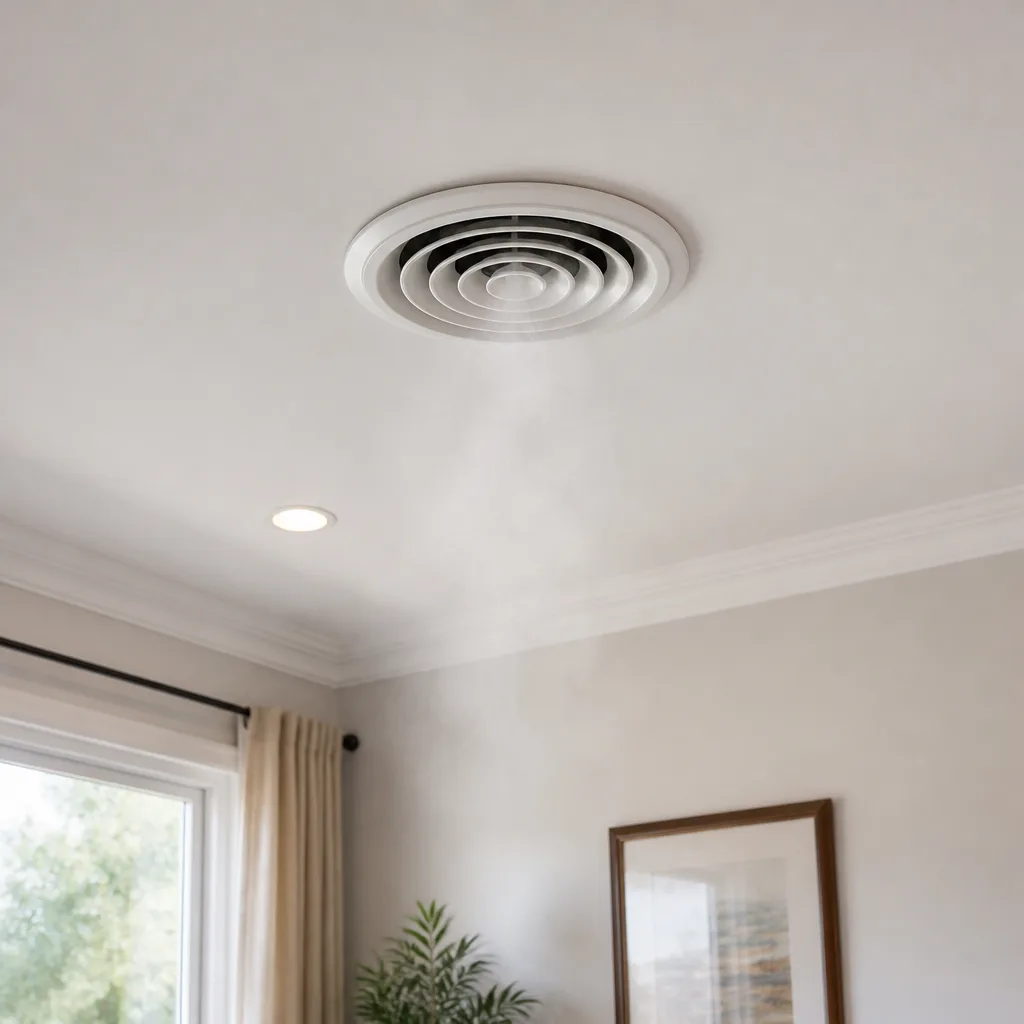 Sanitizing & deodorizing
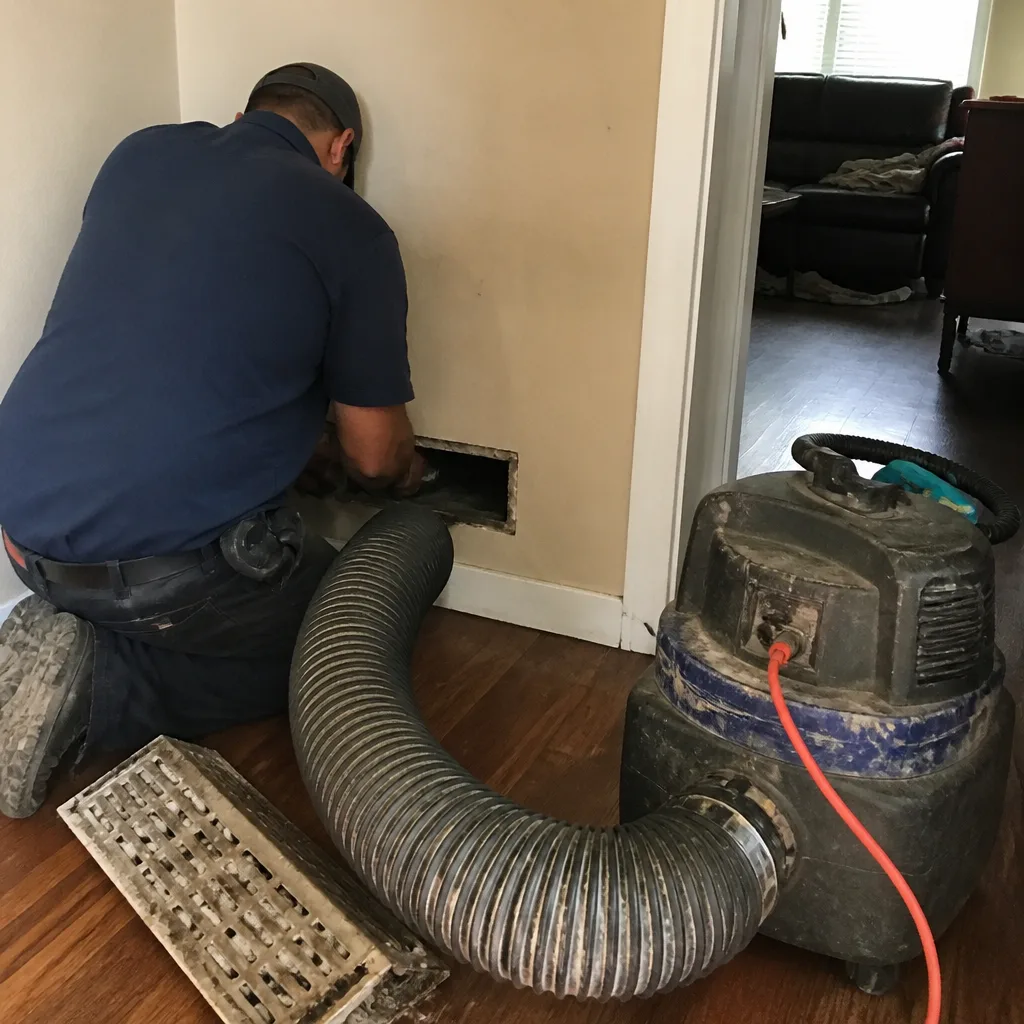
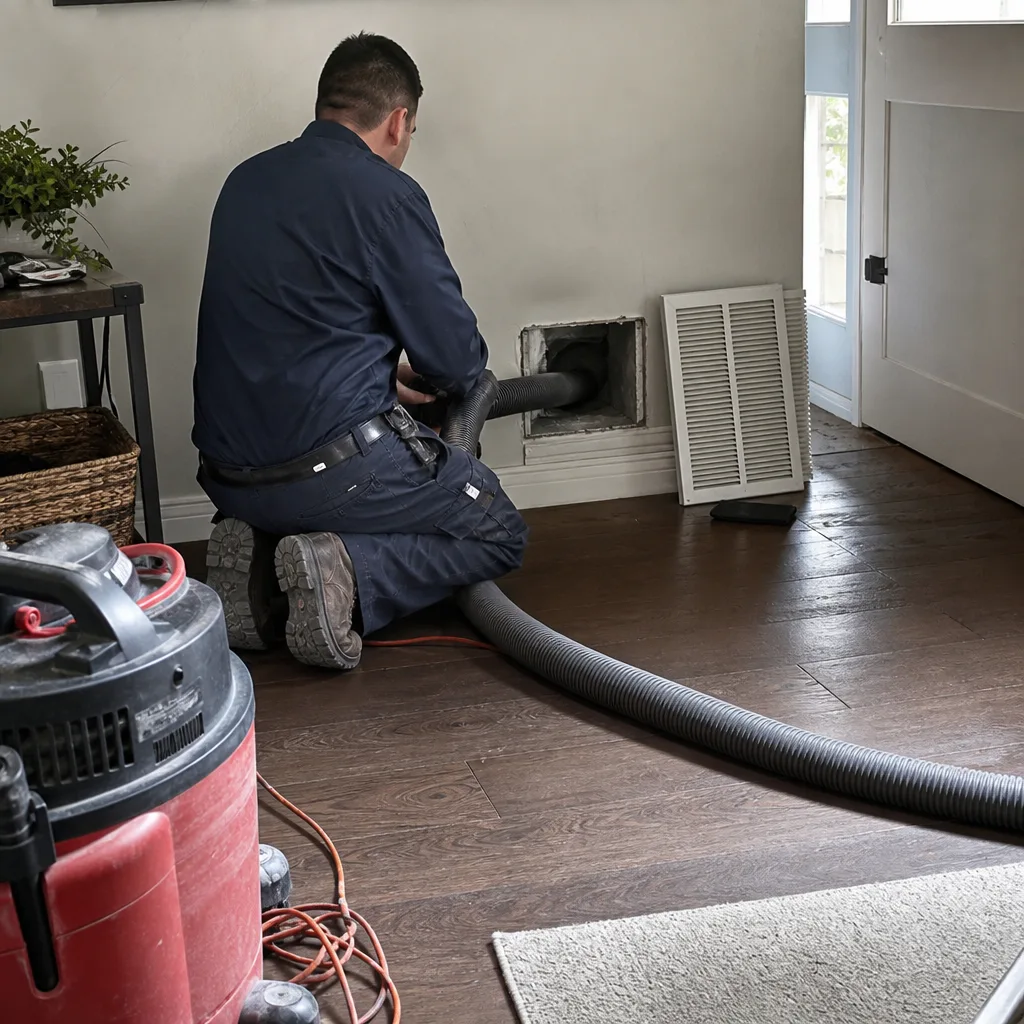
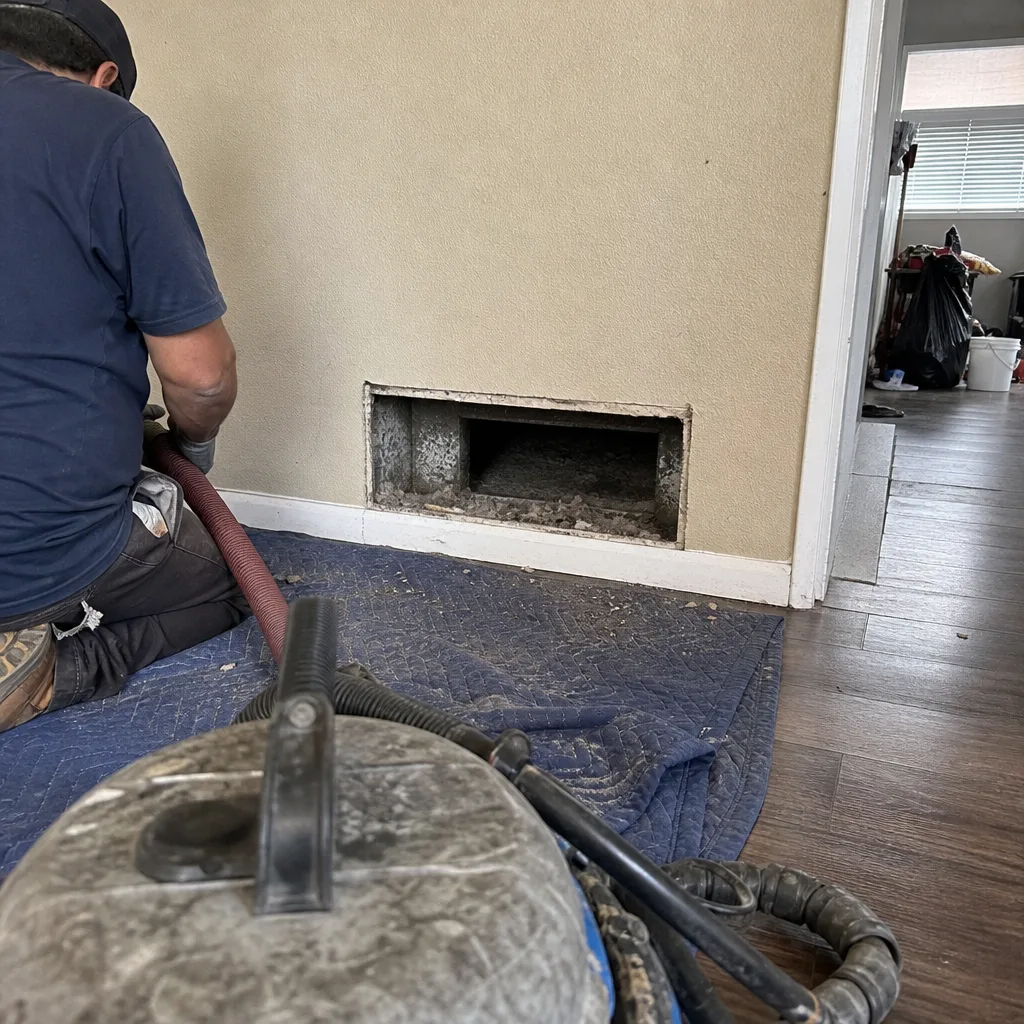
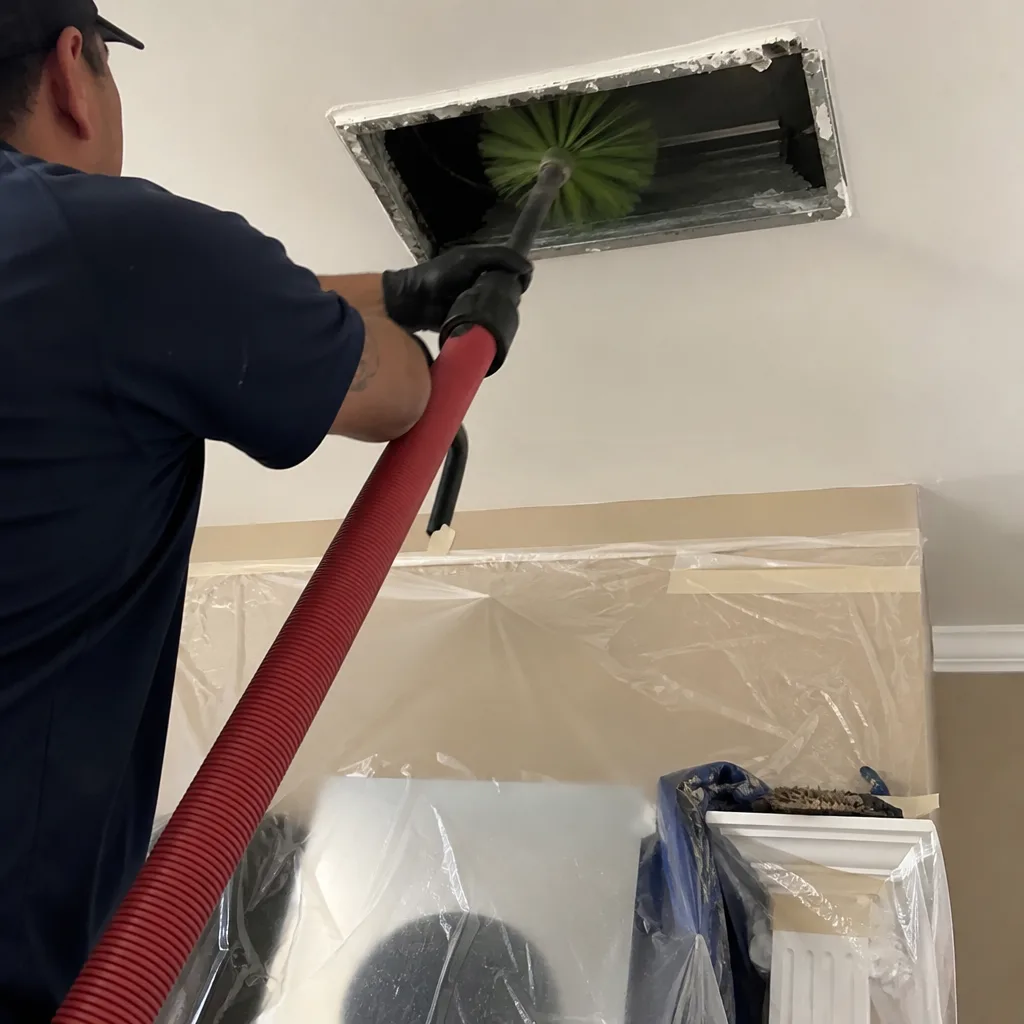
Whole-system duct and dryer vent check with before-and-after photos - you see exactly what came out of your vents
That "$99 whole-house special" is a bait ad - the real number appears once they are in your hallway, or the "clean" is a shop-vac at the register. We photograph the inside of your ducts before and after instead.
How to Hire an Air Duct Cleaning Contractor in Pocket: A Step-by-Step Guide
Most homeowners in Pocket assume that anyone who shows up with a vacuum and a flyer is qualified to clean their ducts. The uncomfortable truth is that California issues no state license for air duct cleaning, which means the $99 coupon crew and the professional remediation-grade contractor operate under the exact same legal standing. Your questions are the only filter between them. This Air Duct Cleaning guide walks through every question to ask, every document to request, and every red flag to recognize before anyone touches your ductwork, written from our experience cleaning systems across Pocket, Greenhaven, and the South Land Park corridor.
Quick Answer
To hire an air duct cleaning contractor in Pocket, verify their equipment is professional-grade (not a consumer shop vac), request a written scope of work that names specific components like supply ducts, return ducts, the plenum, and the air handler, and confirm they carry general liability insurance with adequate coverage. The absence of state licensing in California means the burden of verification is entirely on you.
Styles & brands we work with
- Whole-home duct cleaning
- Dryer vent cleaning
- Camera inspection
- Sanitizing & deodorizing
Table of Contents
- Why the Lack of State Licensing Changes How You Must Hire
- The Five Equipment Questions to Ask Before Booking
- How to Evaluate a Quote for Scope Completeness
- What Insurance and Liability Documentation to Request
- Red Flags Specific to the Sacramento Area Market
- How to Structure Post-Job Verification
- Common Mistakes to Avoid
- When to Call a Professional
- Frequently Asked Questions
Why the Lack of State Licensing Changes How You Must Hire
The California Contractors State License Board (CSLB) licenses HVAC contractors for installation and repair. Air duct cleaning, as a standalone service, falls outside that requirement. A company can legally clean residential ductwork in Pocket with zero state credential, zero mandatory training, and zero verified equipment standard. This is not a theoretical gap. We’ve walked into homes in the Pocket and Little Pocket neighborhoods where previous cleanings were performed with equipment that would barely handle a car interior.
The practical consequence: verification becomes your job. A professional air duct cleaning in Pocket should be able to prove capability through equipment brand, process documentation, and insurance coverage, not through a license number that means nothing for this trade. When a company cannot produce meaningful verification, that silence is information.
What you can verify independently:
- Insurance certificates: Request a certificate of insurance directly from the company’s insurer, not a photocopy from the contractor. A valid general liability policy with adequate limits (typically $1 million or more) is the baseline.
- Equipment reality: Ask for photos or a brief walkthrough of the equipment that will arrive at your Pocket home. Professional rotary-brush systems and negative-air machines are large, identifiable pieces of machinery. A truck-mounted unit is obvious. A consumer-grade shop vac is equally obvious.
- Documented process: A legitimate contractor should be able to describe, step by step, what happens when they arrive, open, clean, and verify. Vague answers indicate vague work.
- Written scope: Insist on written documentation that names specific system components. “Full system clean” is not a scope. It’s a sales phrase.
Pocket’s housing stock adds another layer. Many homes built from the 1960s through the 1980s have rigid metal ductwork that has been patched, extended, and sometimes poorly sealed during remodels. Older systems often hide disconnected sections, crushed flex runs, or return air gaps that simple vacuuming will never reveal. A contractor who only vacuums will leave those failures in place and never mention them. A contractor who inspects will find them and show you. That difference is why the hiring process matters more than the cleaning itself.
The Five Equipment Questions to Ask Before Booking
Equipment determines outcomes in a way that no sales pitch can override. Duct cleaning is a mechanical process, and the machinery defines the ceiling of what is possible. These five questions will separate remediation-grade operators from surface-level cleaners in about four minutes on the phone.
- Is the vacuum truck-mounted or portable, and what is the CFM rating? Airflow determines extraction capacity. A truck-mounted vacuum typically moves 10,000 to 15,000 CFM (cubic feet per minute). A portable unit might move 2,000 to 5,000 CFM. Low CFM means loosened debris is not actually removed from the system and resettles deeper in the ductwork. For Pocket homes with long duct runs servicing multiple rooms, extraction power is non-negotiable.
- What type of agitation system do you use? Airflow alone does not remove debris adhered to duct walls. Contact-based agitation is required. Rotary brush systems physically scrub the duct interior. Air sweep or air whip systems rely solely on compressed air, which is less effective on accumulated grease, dust film, or construction debris. Ask specifically whether the brush makes physical contact with the duct surface.
- Do you have camera inspection capability? Without a camera, no one, not the contractor, not you, can verify what the interior of a duct looked like before or after. Camera inspection turns duct cleaning from an act of faith into a verifiable service. A contractor who cannot show you what the inside of your ducts looked like is asking you to trust them without evidence.
- How do you establish and verify negative pressure? Proper duct cleaning requires the system to be placed under negative pressure so that dislodged particles are drawn out rather than pushed into your living space. A legitimate contractor can explain this concept clearly. Ask how they confirm negative pressure was achieved and maintained throughout the cleaning. The answer should involve specific equipment, not hand-waving.
- What access points will you create and how will you seal them afterward? Professional cleaning requires access to duct interiors. This often means creating small access points or using existing registers and returns. Ask what gets opened, how it gets closed, and what the final condition will be. A contractor who leaves gaps around newly cut access points has traded one problem for another.
At Purevent, we run Rotobrush rotary-brush cleaning systems paired with Nikro negative-air machines, and we use camera inspection to document what we find and what we leave behind. That equipment pairing is what allows us to clean, inspect, and repair in the same visit, because we can see what is actually wrong inside the system rather than guessing.
How to Evaluate a Quote for Scope Completeness
Most duct cleaning quotes in the Sacramento market are deliberately vague. The price looks low because the scope is undefined. “Full system clean” can mean anything from a 30-minute register vacuuming to a full mechanical cleaning of every supply and return duct, both plenums, the air handler, and the blower assembly. The price difference between those scopes is enormous, but the quote language often looks identical.
What a legitimate scope of work should name:
- Supply ducts: Every duct run from the plenum to each register, identified by room or zone.
- Return ducts: Including return air drops, wall cavities used as returns in older Pocket homes, and the return plenum.
- Supply and return plenums: The central distribution boxes attached to the air handler. These are high-accumulation areas and must be explicitly included.
- The air handler cabinet and blower assembly: The blower wheel and housing accumulate significant debris. Accessing and cleaning this component is labor-intensive, which is why vague quotes omit it.
- Registers and grilles: Should be removed, cleaned, and reinstalled, or replaced if damaged.
- Access point creation and sealing: If access points are needed, the quote should state what gets cut, how it gets sealed, and what the finished surface looks like.
What vague language hides:
- “System clean” without a component list: Assume only the main trunk line is touched.
- “Up to X vents”: You have a certain number of registers. “Up to” language means the quote is a starting point, not a fixed price.
- “As needed” for access or repair: A legitimate quote either includes access or excludes it with clear language about additional charges.
- No mention of the air handler: This is the most commonly skipped component because it requires real labor. If the quote does not name the air handler, it is not being cleaned.
A complete quote should also state exclusions clearly. Older Pocket homes sometimes have asbestos-containing duct wrap or duct sections that should not be disturbed. A legitimate contractor will identify those areas during inspection and exclude them in writing with a clear explanation, not mention them vaguely or skip over them quietly. The more specific the quote, the more it reflects a contractor who has actually thought through your system rather than one who plans to figure it out when they arrive.
What Insurance and Liability Documentation to Request
Duct cleaning involves physical access to your air handler, which means the contractor is working around electrical components, blower motors, and in many Pocket homes, gas furnaces. A general liability certificate is the floor, not the ceiling, of what you should request.
Request the following before booking:
- General liability certificate: Should list the company name exactly as it appears on the contract. Request the certificate be sent directly from the insurance agent or carrier, not as a PDF from the contractor. Invalid or expired certificates are a known problem in this industry.
- Coverage limits: $1 million per occurrence is a reasonable baseline for residential ductwork. $2 million is common among companies that also handle property management work.
- Workers’ compensation coverage: If a worker is injured in your Pocket home and the company lacks workers’ comp, the liability can fall on your homeowner’s policy. This is not a technicality. Request proof.
- Damage responsibility in writing: The contract should state what happens if the contractor damages ductwork, the air handler, or finishes during access. “We’ll make it right” is not a contractual commitment. Specific language about repair responsibility is.
Why an air handler demands more than a general liability certificate: the blower motor is an electrical component, the cabinet may contain gas furnace connections, and dislodged debris inside the handler can damage the blower wheel or be redistributed through every room in the house. A contractor working around these components without proper insurance is transferring risk directly to you. This is one reason we carry commercial coverage and why we document the condition of the air handler before and after we work on it, the same approach we use for air duct repair in Pocket.
Red Flags Specific to the Sacramento Area Market
The Sacramento duct cleaning market has its own recurring problems, and Pocket homeowners encounter them frequently because the neighborhood’s older housing stock makes it a target for high-pressure, low-verification operators. These are the patterns we hear about most often from customers calling us after a bad experience.
- The fake before and after photo set: A used, dirty filter photo presented as “your duct interior before.” A generic clean duct photo presented as “after.” Both stock images or images from a different job. A legitimate contractor can show you live camera footage from your own system during the visit. If the photos look like they could belong to any house, they probably do.
- The access panel upsell: A quote that becomes significantly more expensive after the technician opens the first access point, usually citing “additional contamination” or “hard to reach sections.” The quote should have identified these sections during inspection. If the price changes after the system is opened, the original quote was not a quote, it was a door opener.
- The mold scare without testing: A technician points to dark staining on duct surfaces and recommends fogging, sanitizing, or sealing at a premium price, all without moisture testing or lab sampling. In Sacramento’s dry climate, visible staining on ductwork is frequently old dust adhesion, not active mold. Anyone asserting mold should be able to support the claim with testing data.
- The flat-rate flyer with an expiration wheel: Prices that sound too good to be possible are too good to be possible. A professional cleaning of a typical Pocket home involves real labor hours, real equipment, and real insurance overhead. A $99 whole-house clean cannot cover any of that.
- The brand-name checklist without the machines: A contractor names professional equipment brands on their website but the van that arrives holds a consumer vacuum. Ask to see the equipment before work starts, not after. We list our equipment by name because the machines are real and they are what arrive at the house.
How to Structure Post-Job Verification
The cleaning is only as good as your ability to confirm it happened. A professional contractor makes verification easy because the process was designed to be verified. A surface-level operator makes verification difficult because the process was designed to be obscured. Here is a practical post-job checklist for a Pocket homeowner.
- Request camera footage from during the job: Not just before and after photos. Footage taken while the rotary brush is inside the duct and while the negative-air machine is running. This shows actual contact cleaning occurring, not just a vacuum attached to a register.
- Ask how negative pressure was verified: The answer should involve a specific method. Manometer readings, visible airflow demonstration, or equipment calibration are all legitimate answers. “We just know” is not.
- Inspect the access points: Check that any cut access points are sealed cleanly, with no gaps, no sharp edges, and no visible openings into the duct interior. A properly sealed access point is flush and airtight.
- Review the registers and grilles: They should be reinstalled properly. Any that were damaged or could not be removed should have been noted in the post-job report, not left silently.
- Request a written post-job summary: What was cleaned, what was found, what was recommended, and what access points were created and sealed. A professional contractor produces this document without being asked twice.
- Check airflow and listen: Run the system for a day. Airflow should be unchanged or improved. Any new rattling, whistling, or reduced airflow warrants a callback. A professional company responds to that call.
In our own work, every cleaning includes camera documentation before, during, and after, and we walk the homeowner through a post-job summary that names every component touched. That is what we would expect from any contractor working in our own homes, and it is what we deliver to every Pocket customer, whether we are handling air duct cleaning or a dryer vent cleaning in Pocket.
Common Mistakes to Avoid
- Hiring on price alone: Duct cleaning is labor- and equipment-intensive. The lowest quote in the Sacramento market is usually the lowest scope, not the best value. A professional cleaning of a typical Pocket home costs real money because it takes real hours and real machinery.
- Skipping the equipment conversation: “Do you clean ducts?” is not a qualifying question. The answer is always yes. Ask about CFM, agitation method, and camera capability. The difference in answers tells you everything.
- Accepting a verbal quote: If it is not written, it is not a quote. A written scope with named components and a fixed price is the only document worth considering. Verbal promises evaporate exactly when problems appear.
- Ignoring the air handler: The blower assembly is where a significant portion of system debris accumulates. A quote that omits the air handler is skipping the most labor-intensive part of the job and probably several other parts too.
- Not requesting proof of insurance: A certificate of insurance takes five minutes to verify and protects you from significant financial exposure. Skipping it because the contractor seems nice is a risk with no upside.
- Trusting before and after photos without context: Stock photos and cross-job photo reuse are common in this niche. Live camera footage from your own system is the only evidence that matters.
- Accepting upsells without documentation: Any recommendation for additional work, whether fogging, sealing, or repair, should come with visible evidence from your system and a written explanation. If it does not, decline and get a second opinion.
When to Call a Professional
Some signs point directly to professional intervention rather than continued research. Visible dust accumulation around supply registers despite regular cleaning. Reduced airflow from rooms that used to heat or cool properly. Musty odor that persists after HVAC filter replacement. Allergy symptoms that worsen when the system runs. A dryer that takes multiple cycles to dry clothes. Any of these indicate a system-level issue that a professional inspection can identify. In older Pocket homes, the cause is often disconnected or damaged duct sections, not just accumulated dust. That is exactly the kind of finding a cleaning-only contractor will miss and a full-system contractor will catch. Purevent Air Duct Cleaning offers free estimates in Pocket. Call (877) 752-5088 to schedule an inspection and get a written scope of work before any cleaning begins.
Frequently Asked Questions
A professional whole-system cleaning for a typical Pocket home, including supply ducts, return ducts, plenums, air handler, and blower assembly, generally runs $450 to $900 depending on system size, access difficulty, and the condition of the ductwork. Quotes below this range typically reflect reduced scope, not better value. Call (877) 752-5088 for an exact written quote for your home.
Cheaper quotes usually mean reduced scope. A $99 or $149 quote typically covers only the main trunk line, skips the air handler, uses portable low-CFM equipment, and may not include return ducts. The visible registers and short runs near the furnace get vacuumed while the majority of the system remains untouched. The quoted price is a marketing number, not a reflection of completed work.
Request camera footage from inside your ducts during the cleaning, not just before and after photos. Confirm that the contractor can demonstrate negative pressure was achieved. Inspect access points for proper sealing. Review a written post-job summary that names every component cleaned. A professional contractor provides all of these without being prompted twice.
For most Pocket homes, a professional cleaning every 3 to 5 years is reasonable. Homes with pets, recent remodeling, allergy-sensitive occupants, or smokers may benefit from cleaning every 2 to 3 years. If a contractor claims you need annual cleanings, ask for evidence from your own system, meaning camera footage showing significant accumulation one year after a previous professional clean.
No law or standard real estate contract in California requires duct cleaning at sale. However, many Pocket buyers request it after inspections reveal accumulated debris, especially in homes with older ductwork that has not been maintained. A pre-purchase cleaning with camera documentation is a reasonable request and gives you a clean baseline in a new home.
Professional cleaning removes accumulated dust, pollen, and particulate from the duct interior, which can reduce the volume of allergens circulated when the system runs. Sacramento’s spring pollen season is significant, and ducts accumulate that material over time. Cleaning is not a medical treatment for allergies, but a visibly clean duct system contributes to a measurably cleaner air stream.
The Bottom Line
The air duct cleaning industry in California operates without state licensing, which means every hiring decision you make is a self-verification process – explore more guides & resources to protect your home. Ask about equipment by name and specification. Demand a written scope that names specific components like the plenums and air handler. Verify insurance coverage directly with the insurer. Reject quotes that change after access points are opened. Require camera evidence from your own system. Pocket’s older housing stock makes these safeguards more important than average because hidden duct failures are common and surface-level cleaning will not reveal them. The right contractor makes all of this verification easy. That is the standard you should hold, and the standard we meet in every home we service.
Written by the team at Purevent Air Duct Cleaning, serving Pocket since 2017.
See the difference
 Before
 After
 Before
 After
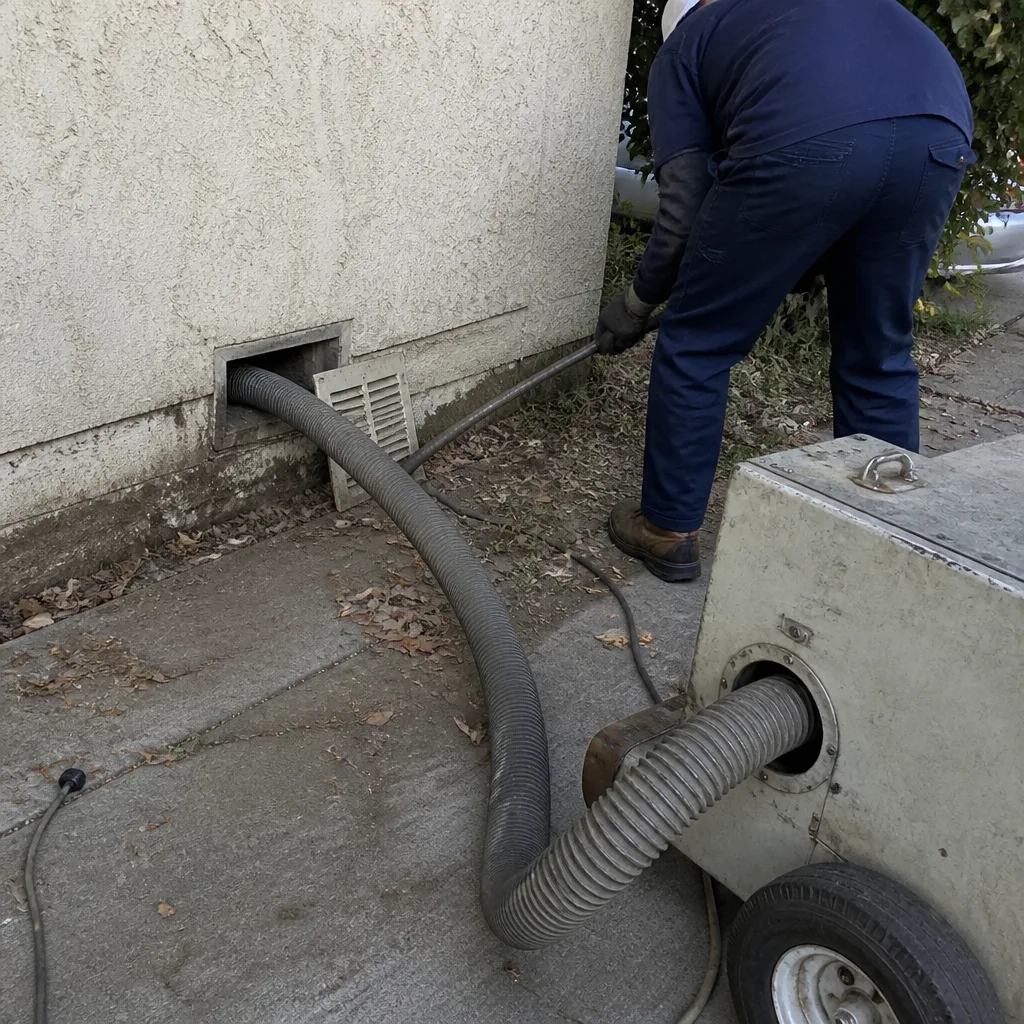 Before
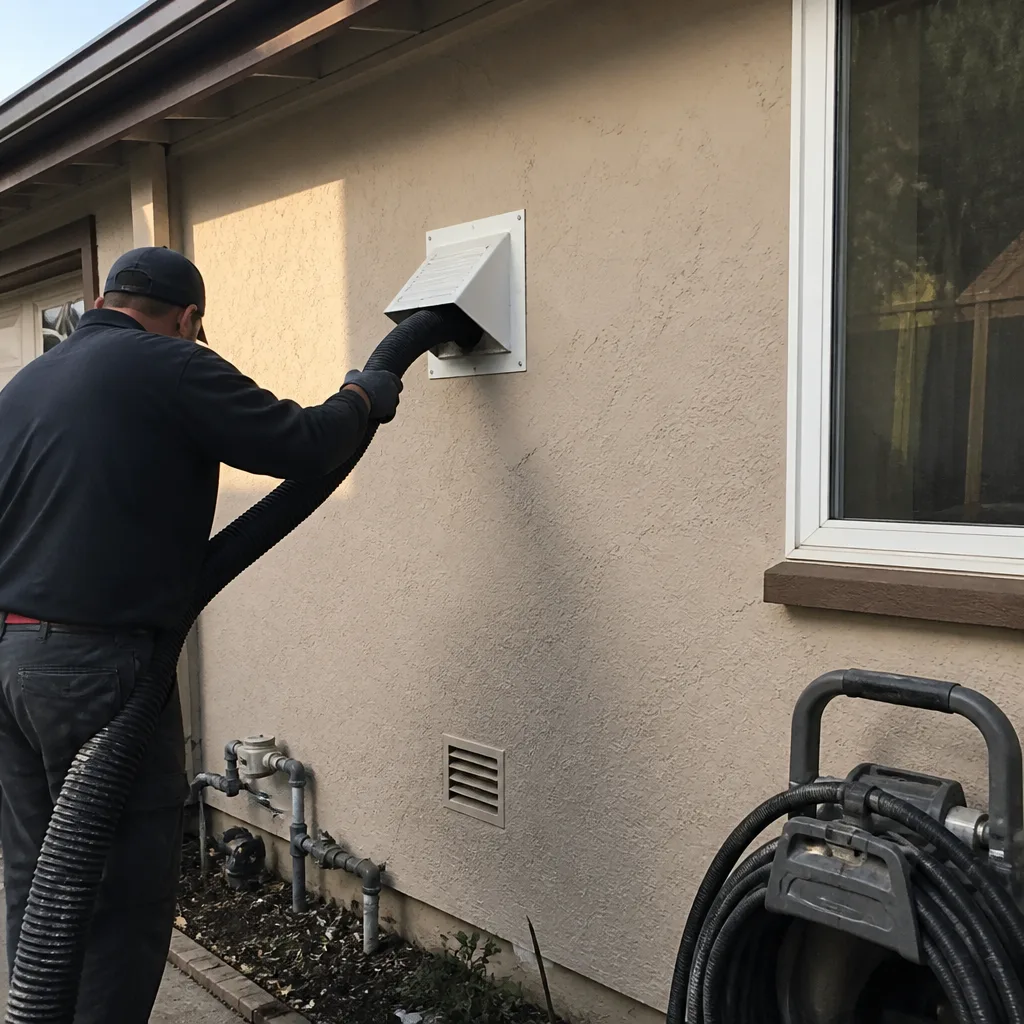 After