
Last updated November 2, 2026
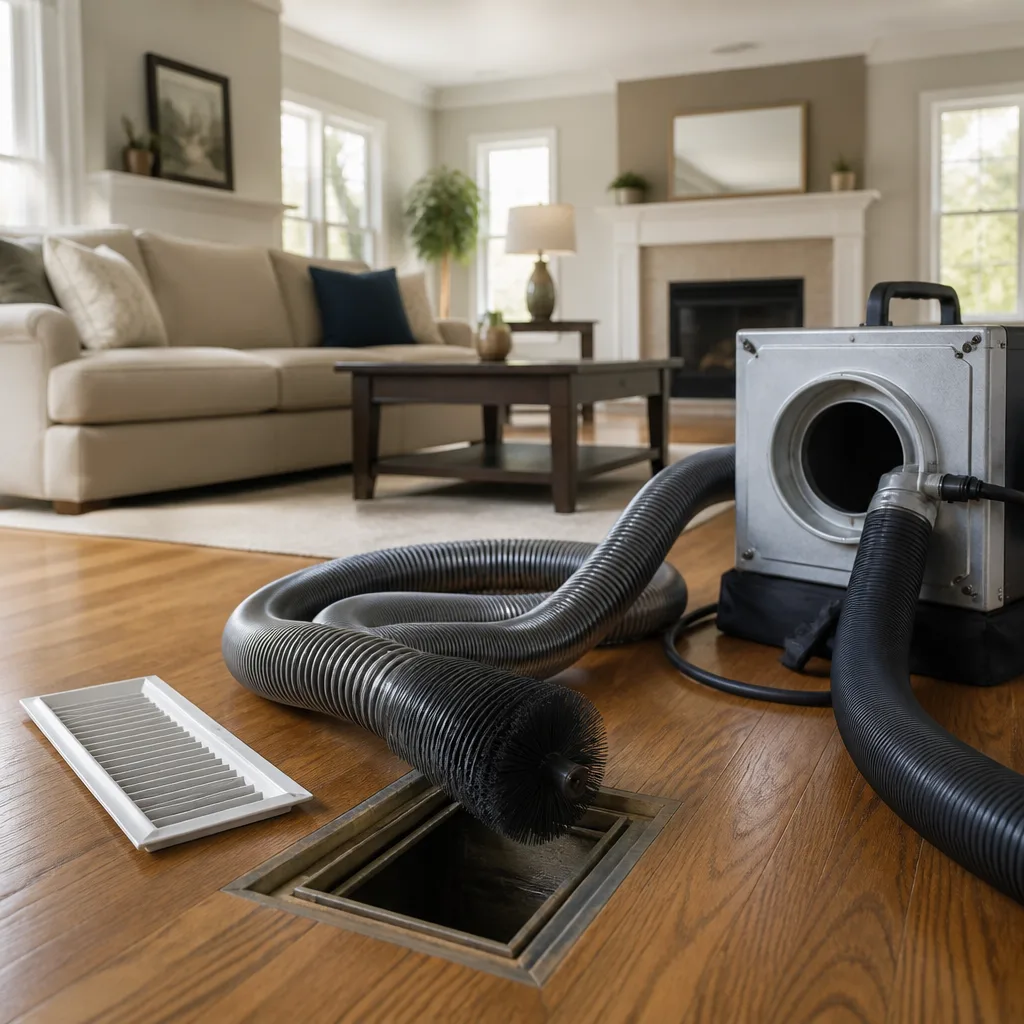 Whole-home duct cleaning
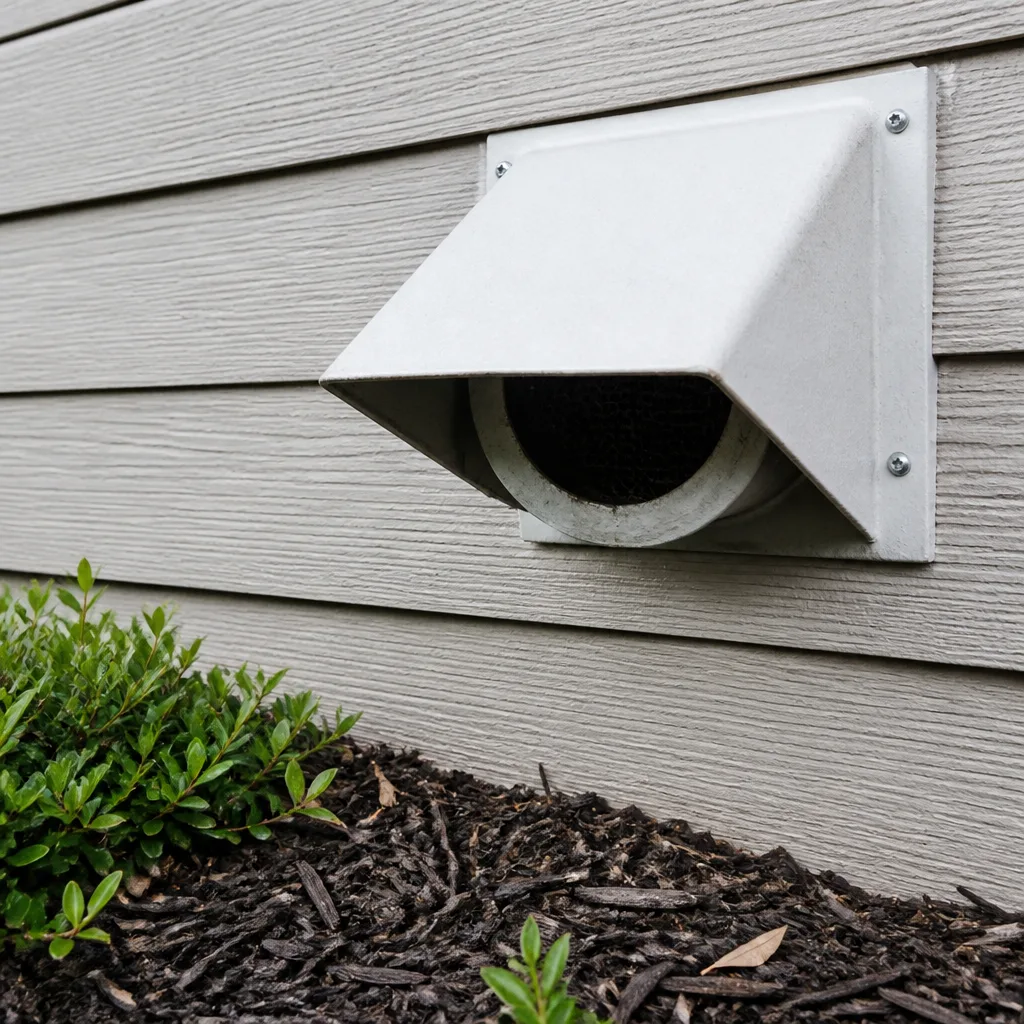 Dryer vent cleaning
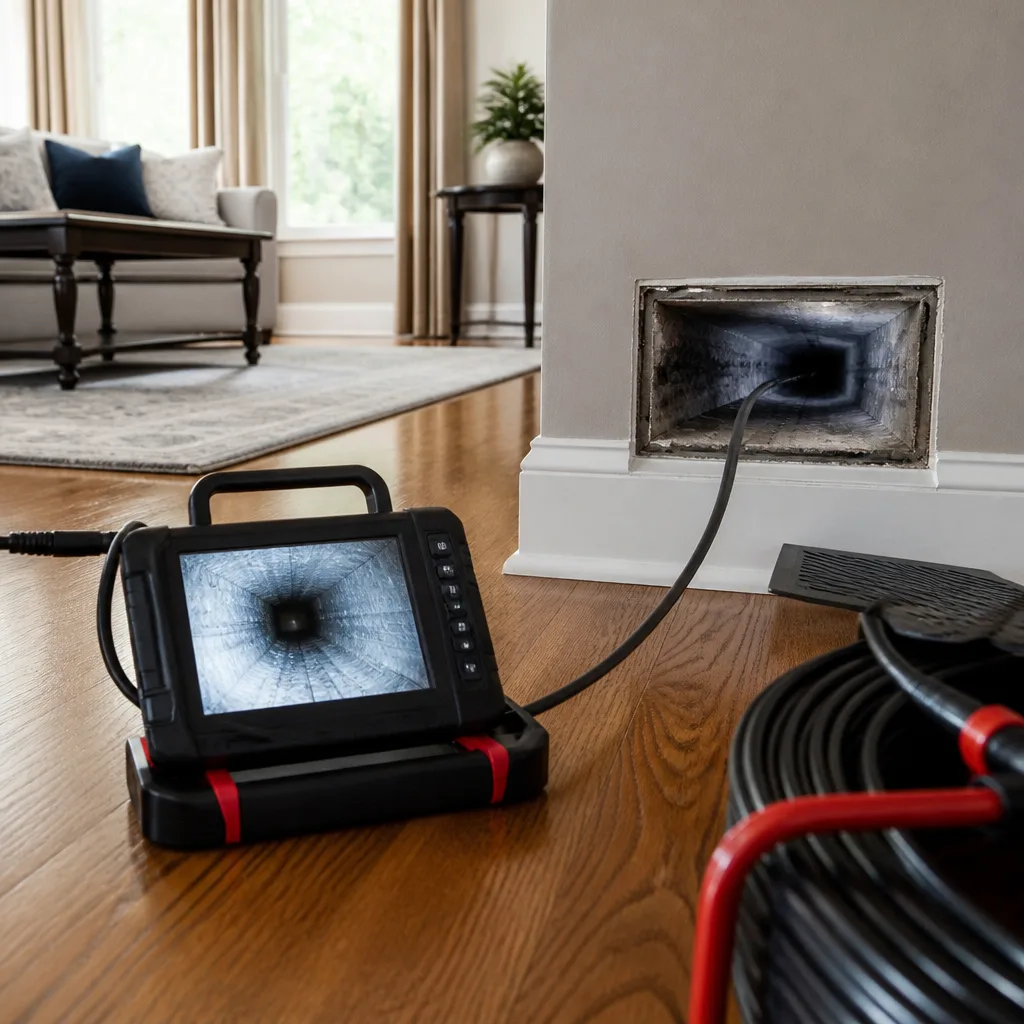 Camera inspection
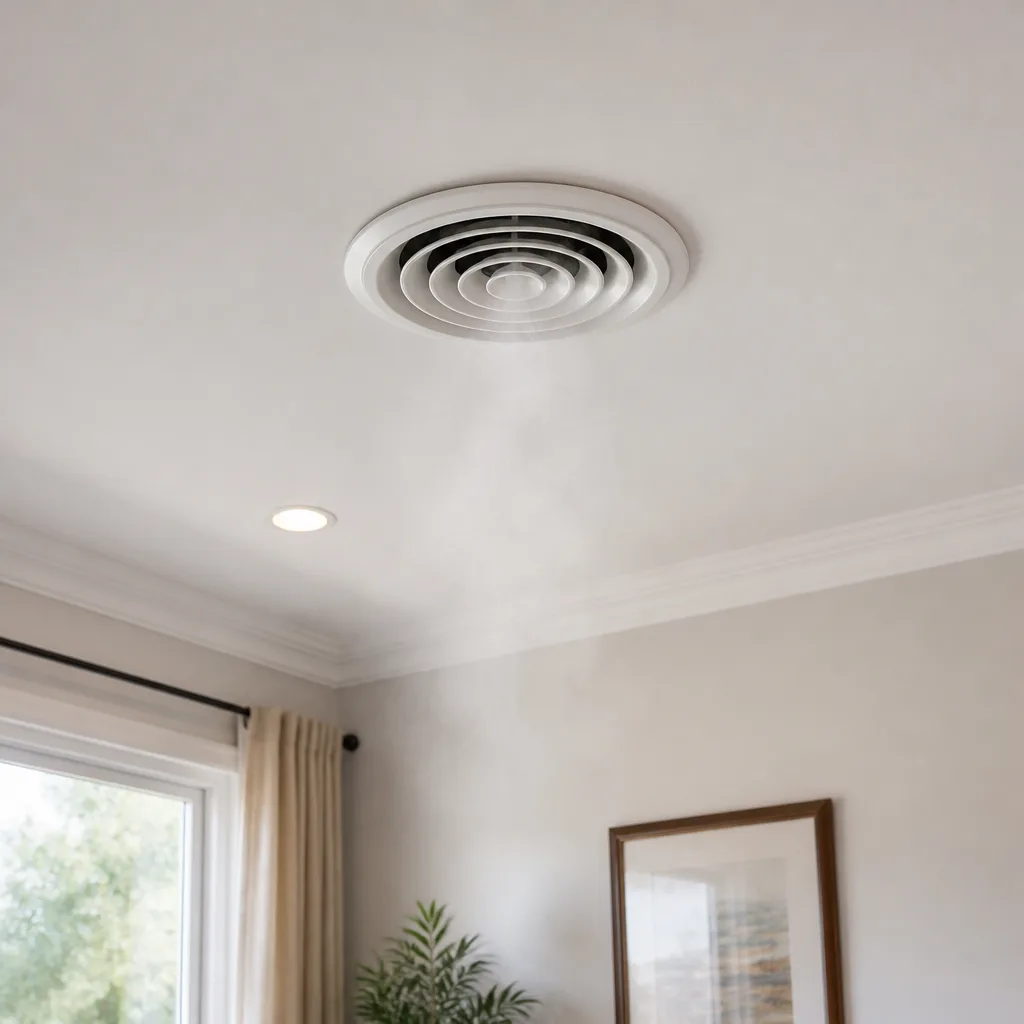 Sanitizing & deodorizing
Whole-system duct and dryer vent check with before-and-after photos - you see exactly what came out of your vents
That "$99 whole-house special" is a bait ad - the real number appears once they are in your hallway, or the "clean" is a shop-vac at the register. We photograph the inside of your ducts before and after instead.
Choosing the Right Air Duct Cleaning Brand: A Buyer’s Guide for Pocket
Most homeowners spend more time researching which coffee maker to buy than which company will crawl through the ductwork carrying the air their family breathes every day. That’s not a judgment, it’s just how buying decisions work when the product is invisible. But here’s the counterintuitive part: the single most revealing question you can ask a duct cleaning contractor in Pocket has nothing to do with price, scheduling, or years in business. It’s a question about machinery. Ask what brand of equipment they use, and their answer will tell you more about the quality of work you’ll receive than any review or sales pitch could. Our Complete Air Duct Cleaning Guide for Pocket Homeowners explains why, and gives you the vocabulary to evaluate that answer like a technician would.
Quick Answer
The right Air Duct Cleaning services use professional-grade rotary-brush and negative-air equipment from manufacturers like Rotobrush, Nikro, or Abatement Technologies, not adapted shop vacs or consumer-grade vacuums. These brands operate at remediation-contractor level, meaning they dislodge debris through contact and extract it under negative pressure, which is the only approach that fully cleans a residential duct system. In Pocket, where fine dust from the Delta breeze and seasonal pollen cycles load ductwork faster than many homeowners expect, equipment brand is the fastest proxy for whether a contractor can actually deliver a clean system or just a convincing estimate.
Styles & brands we work with
- Whole-home duct cleaning
- Dryer vent cleaning
- Camera inspection
- Sanitizing & deodorizing
Table of Contents
- Why Equipment Brand Matters in Air Duct Cleaning
- The Two Tiers of Duct Cleaning Equipment
- What CFM Ratings Actually Mean in Practice
- Brush and Agitation Systems by Brand: What Each Dislodges
- Camera Inspection as a Brand-Level Signal
- Three Questions That Reveal Equipment Quality Without Sounding Adversarial
- Why Equipment Brand Matters for Duct Repair, Not Just Cleaning
- A Word on Dryer Vent Equipment
Why Equipment Brand Matters in Air Duct Cleaning
Duct cleaning has a branding problem, and it’s not the kind a new logo can fix. The industry is split between two fundamentally different types of operators: those who invested tens of thousands of dollars in professional-grade machinery, and those who adapted equipment designed for other purposes to do a job it was never built for. The brand name on the machine is the easiest way to tell which kind you’re talking to.
Think of it this way. A Rotobrush system is engineered specifically for ductwork. Its rotary brush head is sized to the dimensions of residential ducts. Its vacuum is calibrated to create negative pressure throughout the system while the brush agitates the interior walls. A shop vac with an extended hose is a shop vac with an extended hose. It can reach into a duct, and it can pull some loose debris out of the first few feet. It cannot clean the entire length of a branch run, and it cannot dislodge the adhered dust film that builds up on duct walls over years of air movement.
In Pocket, this distinction matters more than in some other regions. Homes here deal with fine particulate dust that settles and adheres, not just loose debris that vacuums away easily. The Delta breeze carries in fine soil particles during warm months. Pollen from the valley oaks and ornamental trees that line so many Pocket streets works its way into duct systems through return air. That kind of contamination needs mechanical agitation and sustained negative pressure, the exact combination professional brands are built to deliver.
When we evaluate equipment, we look for manufacturers whose machines are also found on remediation job sites. Abatement Technologies, for instance, builds negative-air machines used in mold and asbestos abatement. Nikro is a name that shows up in restoration work. Rotobrush is purpose-built for HVAC duct cleaning. If a contractor runs equipment from a brand that also serves contamination control professionals, that’s a signal they’re operating at a different level than someone with a modified commercial vacuum. We clean, inspect, and repair in the same visit, and the ability to do that starts with machinery built for the task.
The Two Tiers of Duct Cleaning Equipment
When you strip away the marketing language, duct cleaning equipment falls into two basic tiers. Understanding this split gives you a framework for evaluating any contractor you speak with, including us.
Tier One: Truck-Mounted and Professional-Grade Systems
This is the tier occupied by brands like Rotobrush, Nikro, and Abatement Technologies. These are machines designed for ductwork, period. Truck-mounted systems in this tier typically generate 8,000 to 15,000 CFM of airflow, which creates true negative pressure across the entire duct system while cleaning is in progress. The vacuum unit stays in or on the truck, connected to the home’s duct system through a large-diameter vacuum hose attached at the plenum or a register. This setup means the vacuum pulls air through the entire system continuously while agitation happens inside the ducts.
Truck-mounted systems have a significant advantage: they’re pulling air at high volume through the whole system at once. A rotary brush in one branch run dislodges debris, and the negative pressure carries it immediately toward the collection point. Debris doesn’t just get knocked loose and resettle; it gets extracted. This matters for the fine dust that makes up most of the contamination in Pocket ductwork.
Tier Two: Portable Contractor-Grade and Adapted Equipment
Portable contractor-grade units are smaller, self-contained machines that a technician wheels into the home. Some are legitimate professional tools. Others are commercial vacuums with extended hoses and rotating brush attachments, adapted for duct work rather than designed for it. These machines typically operate at 1,000 to 3,000 CFM. They can clean the first several feet of ductwork from a register, and they can remove loose debris from visible sections. What they can’t do is create negative pressure throughout an entire system or extract fine particulate from the full length of every branch run.
The most honest way to understand the difference is this: a portable unit cleans the area where it’s applied. A truck-mounted professional system cleans the system as a whole. One treats ductwork as a series of openings. The other treats it as a connected, pressurized environment. Purevent uses professional-grade equipment from brands trusted by remediation and HVAC contractors, which means our process follows the second model.
What CFM Ratings Actually Mean in Practice
CFM stands for cubic feet per minute, and it’s the horsepower rating of the air-moving world. It measures how much air a vacuum system moves. When a contractor tells you their truck-mounted system runs at 12,000 CFM, that number describes the volume of air being pulled through your ductwork every minute during cleaning. More air moving means more negative pressure, and more negative pressure means better extraction of the debris that agitation dislodges.
Here’s what the numbers mean in practice, mapped to the typical duct system in a Pocket home:
- Under 1,000 CFM: This is the territory of shop vacs and small commercial vacuums. They can remove loose debris near the access point. They cannot clean a full system, and they create no meaningful negative pressure.
- 1,000 to 3,000 CFM: Portable contractor-grade units. Useful for targeted cleaning of specific duct sections. In a 2,000 square foot Pocket home with typical residential ductwork, this volume can clean a section at a time but struggles to pull air through the entire trunk line and branch runs simultaneously.
- 8,000 to 15,000 CFM: Truck-mounted professional systems from brands like Rotobrush and Nikro. This is the benchmark range for full negative-pressure cleaning of a residential system. At this airflow, the system is being evacuated continuously while agitation happens inside it. Fine dust doesn’t resettle because the air carrying it is constantly moving toward the extraction point.
A real-world example helps illustrate the difference. In a single-story Pocket home with a long ranch-style layout, the distance from the return plenum to the furthest register might be 25 to 30 feet of ductwork. At 1,500 CFM, dead air pools in those far reaches. A brush might dislodge dust there, but the dust stays suspended and settles again once the brush moves on. At 12,000 CFM, the airflow is moving continuously through that same 30 feet. Agitated debris is carried to the vacuum intake in seconds, not left to settle. That’s the difference between cleaning and rearranging dust.
Brush and Agitation Systems by Brand: What Each Dislodges
Vacuum power is only half the equation. The other half is agitation, the physical process of breaking the bond between dust and the duct wall. Different brands approach agitation differently, and each approach has strengths and weaknesses depending on duct material.
Rotary Brush (Rotobrush)
A rotary brush system uses a spinning brush head, typically nylon or poly bristles sized to the duct diameter, driven by an electric or pneumatic motor. The brush makes direct contact with all four walls of the duct as it’s fed through each run. This is contact cleaning, and it’s the only agitation method that reliably removes the fine, adhered dust film that builds up on duct walls over time. Rotary brushes work well in both galvanized steel ducts and flexible ductwork, though the technique differs: in flex ducts, the brush needs to be sized and fed carefully to avoid damaging the inner liner or the foil outer layer.
Contact Vacuum With Agitation
Some systems combine a rotating brush with vacuum at the tool head itself, so agitation and extraction happen at the same point. This approach is effective for spot cleaning and for short runs. Its limitation is the same as any portable system: it only cleans where the tool actually reaches, and it doesn’t create the whole-system negative pressure that prevents cross-contamination during the cleaning process.
Air Whip
An air whip uses compressed air forced through a small nozzle to essentially flail the duct interior with high-velocity air streams. It’s effective at dislodging loose debris and light dust coatings. It’s less effective on the kind of adhered film that Rotary brush contact action removes, and in some flex duct installations, aggressive air-whipping can stress the inner liner. Air whips are more commonly found in budget-tier and portable systems than in professional truck-mounted rigs.
For Pocket homeowners, the practical takeaway is this: the climate here produces fine, packed dust rather than chunky debris. Loose sawdust from a renovation vacuums up easily. The gray, flour-like dust from Delta breeze particulates and seasonal pollen that’s had months to settle and compress into a mat on the duct floor does not. That kind of contamination needs mechanical contact. A rotary-brush system is designed to break that bond and deliver it to the negative-air stream.
Camera Inspection as a Brand-Level Signal
Here’s a signal most homeowner checklists miss: what kind of camera equipment does the contractor use for inspection, and what do they actually deliver from it?
Professional duct cleaning companies that operate at a remediation-adjacent level typically use dedicated inspection camera systems. These are push-feed or crawl cameras with integrated lighting, built for pipe and duct inspection, from manufacturers like Ridgid or FLIR. The footage is recordable, date-stamped, and shareable. A homeowner can see their own ducts, before and after, with documentation in hand.
Then there’s the other end of the spectrum. Some contractors offer a “free inspection” that amounts to a technician with a phone camera and a flashlight, or worse, a borescope attached to a handheld screen that the homeowner never gets to see footage from. The inspection exists as a sales tool, not as documentation. The photo gets shown to you on site, you’re told how bad it looks, and no record is provided. You never receive anything you can verify.
This distinction matters for a reason that goes beyond trust. A duct system has sections you will never personally see: the return drops behind walls, the branch runs crossing through floor joists, the trunk line in a cramped crawlspace under a Pocket home with pier foundations. Camera documentation is the only way to verify that the far ends of those runs were actually cleaned. If a contractor can’t or won’t deliver before-and-after visual proof of the entire system, including the sections you can’t access yourself, you cannot independently confirm the work was done. We’re transparent about what we use and what you’ll receive, because a homeowner who can verify the work is a homeowner who calls again when it’s time for the next cleaning.
Three Questions That Reveal Equipment Quality Without Sounding Adversarial
You don’t need to interrogate a contractor to assess their equipment. The right questions, asked in a tone of genuine interest, will reveal everything you need to know. Here’s how to have that conversation:
- “What kind of system do you use, and is it truck-mounted or portable?” This is the single most informative question. The answer places the contractor in a tier immediately. If they name a brand like Rotobrush, Nikro, or Abatement Technologies, and describe a truck-mounted setup, you’re talking to a professional-grade operation. If they hesitate, give a vague answer like “industrial-strength vacuum,” or describe a portable unit, ask more questions before booking. Frame this as curiosity about their work setup, not a challenge.
- “Will I see before-and-after photos of my own ducts, including the far ends of the runs?” This question reveals whether camera inspection is part of their process or just a sales tactic. A contractor who uses professional inspection cameras and documents the work will answer yes without hesitation because it’s already part of how they operate. A contractor who uses inspection as a sales tool will hedge, offer to “show you some things on the phone,” or explain why full documentation isn’t standard.
- “How does the process work from start to finish, including the equipment setup?” Listen for a clear, confident explanation that includes system depressurization, agitation method, and extraction. A professional knows their process cold and can explain it in two minutes. A contractor operating with adapted equipment will often gloss over the technical details and focus on price or timeliness. The vaguer the answer, the more questions you should ask.
The tone matters. You’re not playing gotcha. You’re a homeowner asking a fair question the same way you’d ask a mechanic what diagnostic equipment they use before handing over your car keys. Any professional will appreciate the question. An operator who becomes defensive is telling you something worth hearing.
Why Equipment Brand Matters for Duct Repair, Not Just Cleaning
There’s a reason Purevent puts Air Duct Repair in Pocket on the same service menu as cleaning, and it connects directly back to equipment. A contractor running professional-grade inspection cameras will find things that a vacuum-only operator never sees. Disconnected sections at a joint. A crushed flex run. A return plenum that’s drawing air from the crawlspace instead of the living space. Leaks that are pulling in fine dust even as the system runs.
Finding those problems doesn’t matter if the contractor can’t do anything about them. Most duct-cleaning-only companies will note the problem and refer you to someone else, which means scheduling another visit, another estimate, and another contractor. Your duct system is only as clean as the repair it needs, because a disconnected or leaking section will re-contaminate every duct downstream within months of a cleaning.
This is where the single-company scope matters. We clean, inspect, and repair in the same visit, because the equipment that lets us see the problem is paired with the capability to fix it. In the older neighborhoods of Pocket, where homes range from 1960s ranchers to newer infill construction, aged ductwork with failing joints and loose connections is common. A cleaning that doesn’t address those structural issues is a temporary fix. A cleaning that includes repair is a solution.
A Word on Dryer Vent Equipment
Dryer vent cleaning is often treated as an add-on by general duct cleaners, but Dryer Vent Cleaning in Pocket deserves the same equipment scrutiny as HVAC ducts. The stakes are different. A dirty dryer vent isn’t just about performance; it’s about lint accumulation, which is combustible. Dryer vents are a fire risk, not just a performance issue.
The equipment question applies here too. A professional dryer vent cleaning uses rotary brushes sized specifically for dryer vent diameters, typically 3 to 4 inches, driven through the full vent run from the appliance to the exterior termination point. The brush dislodges packed lint, and the vacuum pulls it out. Consumer-grade approaches, like a leaf blower or a shop vac at the exterior vent, can remove some loose lint but won’t clear a packed section in the middle of a run.
Homes in Pocket often have longer-than-ideal dryer vent runs because of floor plan layouts, with the laundry room on an interior wall and the vent path running 20 to 30 feet through the ceiling or wall to reach the exterior. That kind of run accumulates lint faster and packs it tighter. When you’re evaluating a contractor, ask whether dryer vent cleaning is a dedicated service with its own equipment, or a line item they throw in with a duct job. The answer tells you how seriously they take it.
Common Mistakes to Avoid
- Letting a low price short-circuit the equipment question. A $79 whole-house duct cleaning is only possible with adapted equipment, because professional truck-mounted systems cost money to operate and maintain. The price and the equipment tier are linked; when one doesn’t match the other, the homeowner pays the difference in results.
- Assuming all “professional” claims mean the same thing. Any contractor can print “professional-grade” on a flyer. The brand name is the verifiable part. Ask for the actual manufacturer and model, not the marketing description.
- Booking without confirming before-and-after documentation. If you can’t see proof that the far end of every run was cleaned, you’re taking the contractor’s word for work you can’t observe. In Pocket homes with long branch runs and inaccessible crawlspace sections, this matters more than in simpler layouts.
- Treating cleaning and repair as separate, unrelated services. A duct system with a disconnected joint or a crushed flex run will get dirty again within months, no matter how well it’s cleaned. The right contractor addresses both in the same scope.
- Ignoring dryer vents as part of the home’s duct system. The dryer vent is connected to your home’s air system in the sense that it’s a duct, it moves air, and it carries combustible material. It deserves the same equipment scrutiny as the HVAC ducts.
- Asking about equipment but not listening to the answer format. A contractor who names specific brands and explains their process fluently is operating differently from one who speaks in adjectives. Specific answers are a professional signal. Vague answers are a caution flag.
- Paying on credit card before work starts without documenting what’s included. Professional companies define scope clearly before work begins. If the scope is vague and the price is low, the invoice after the work is done rarely stays low.
See the difference
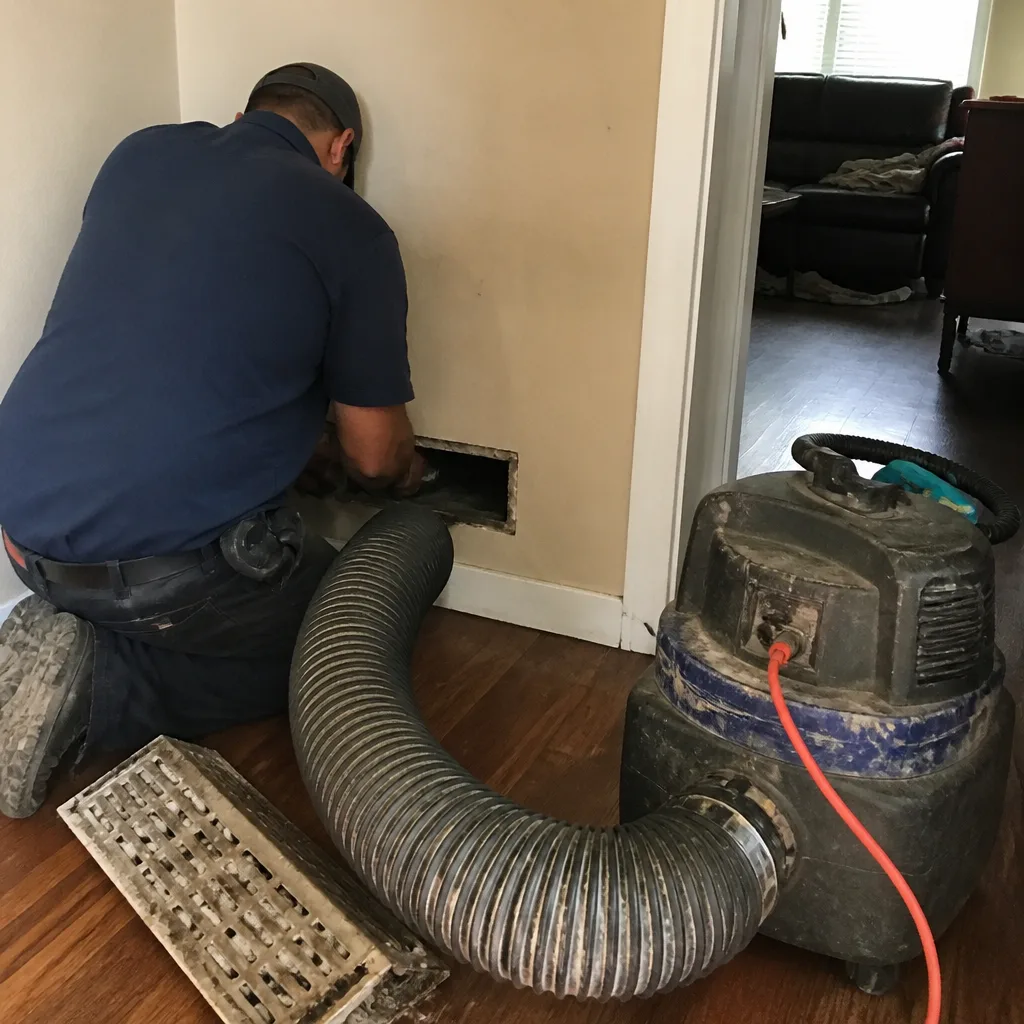 Before
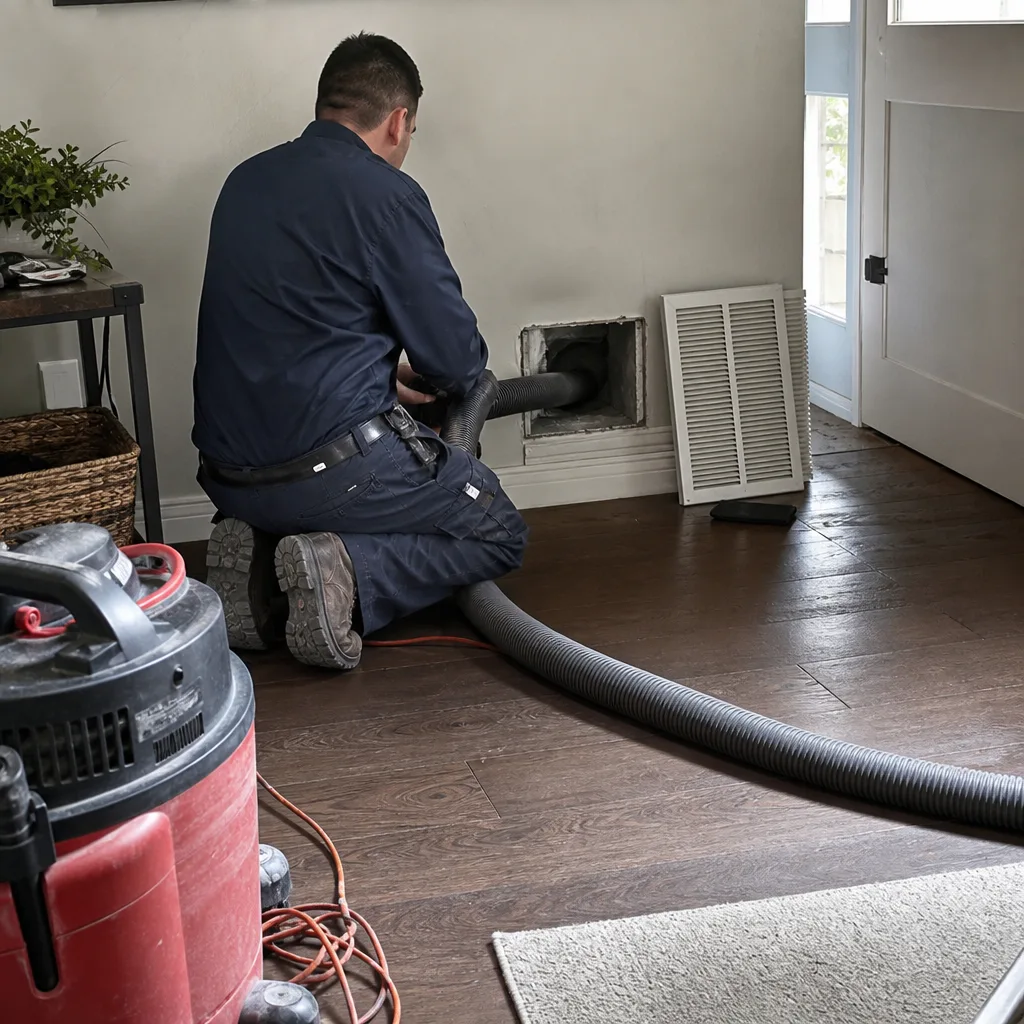 After
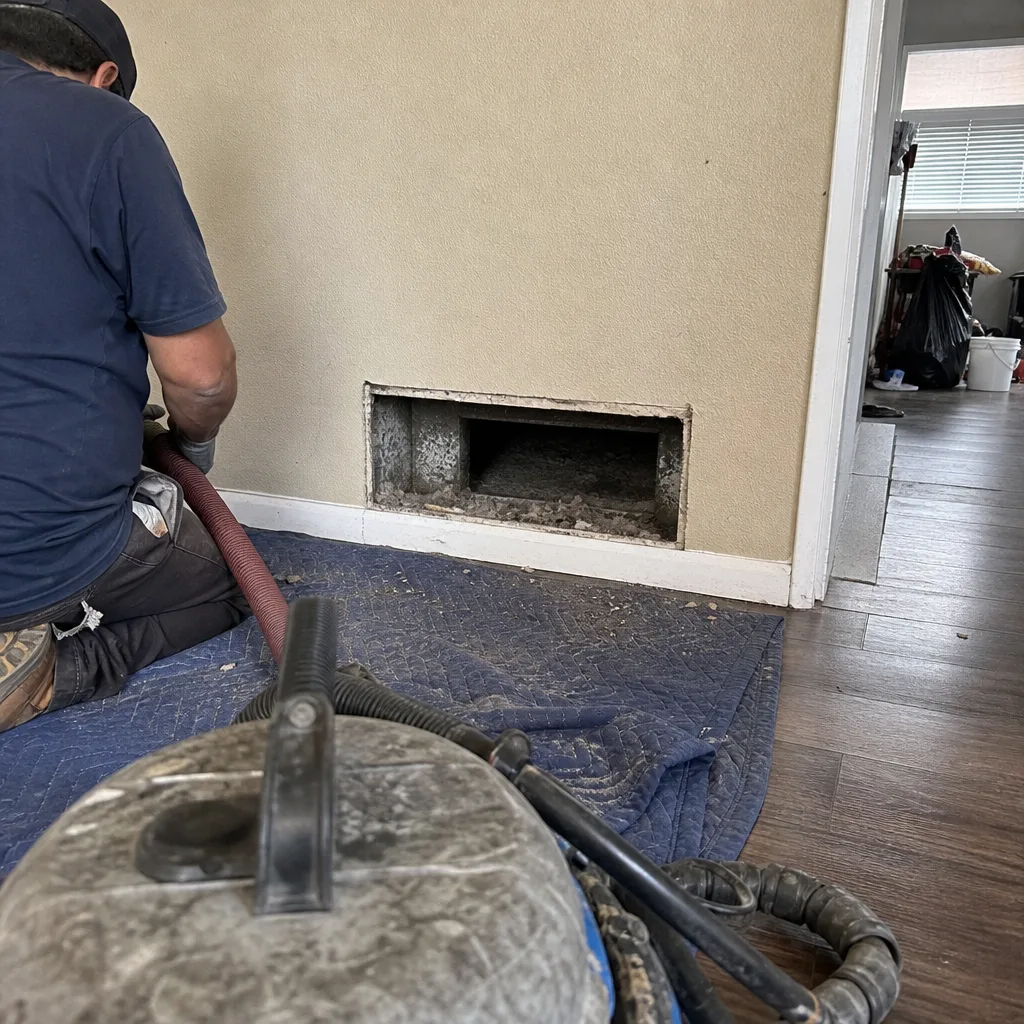 Before
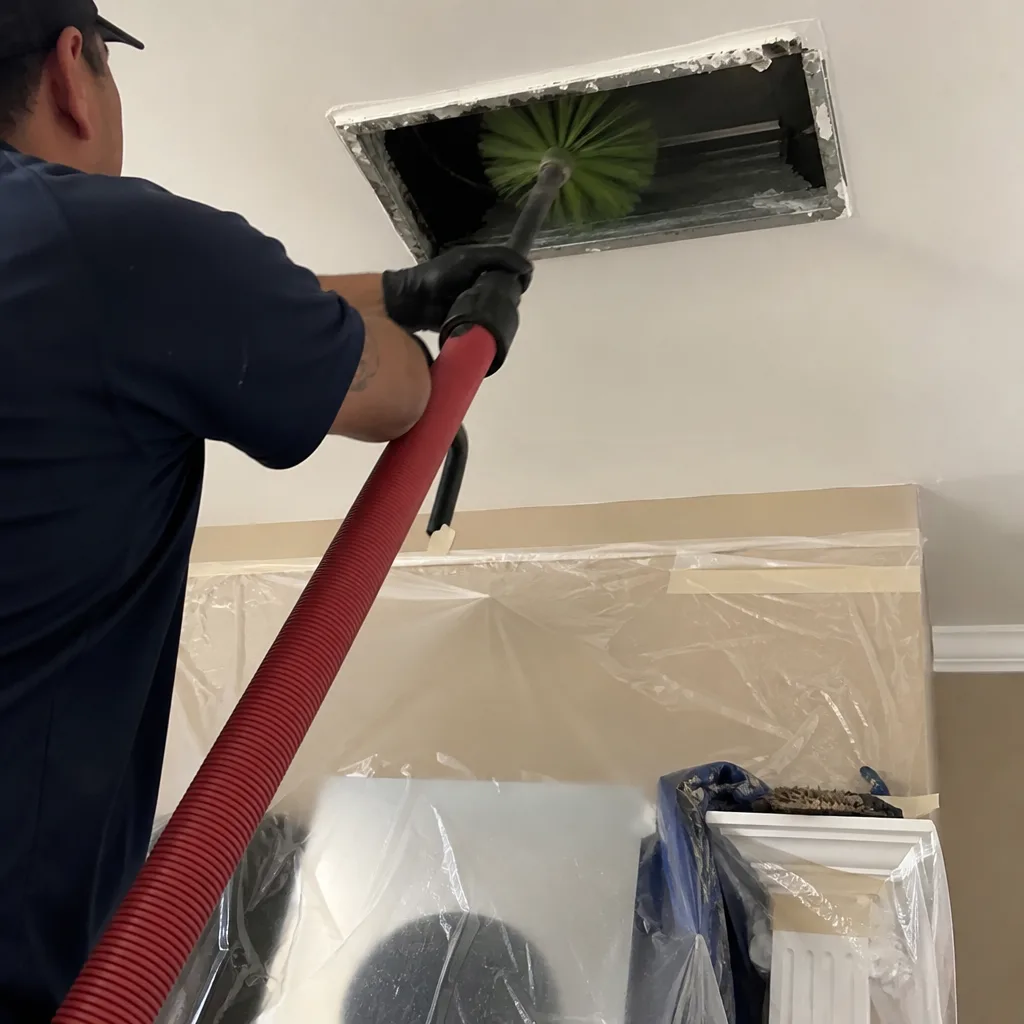 After
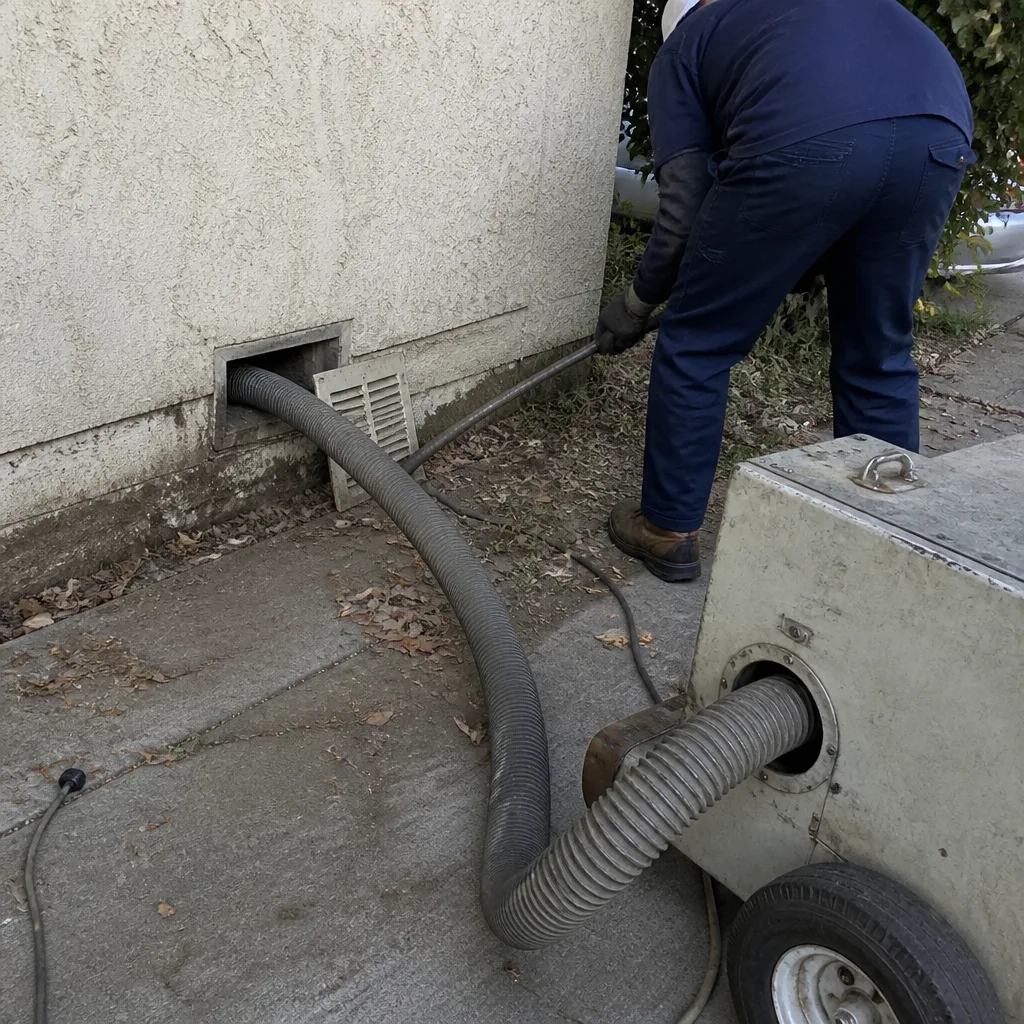 Before
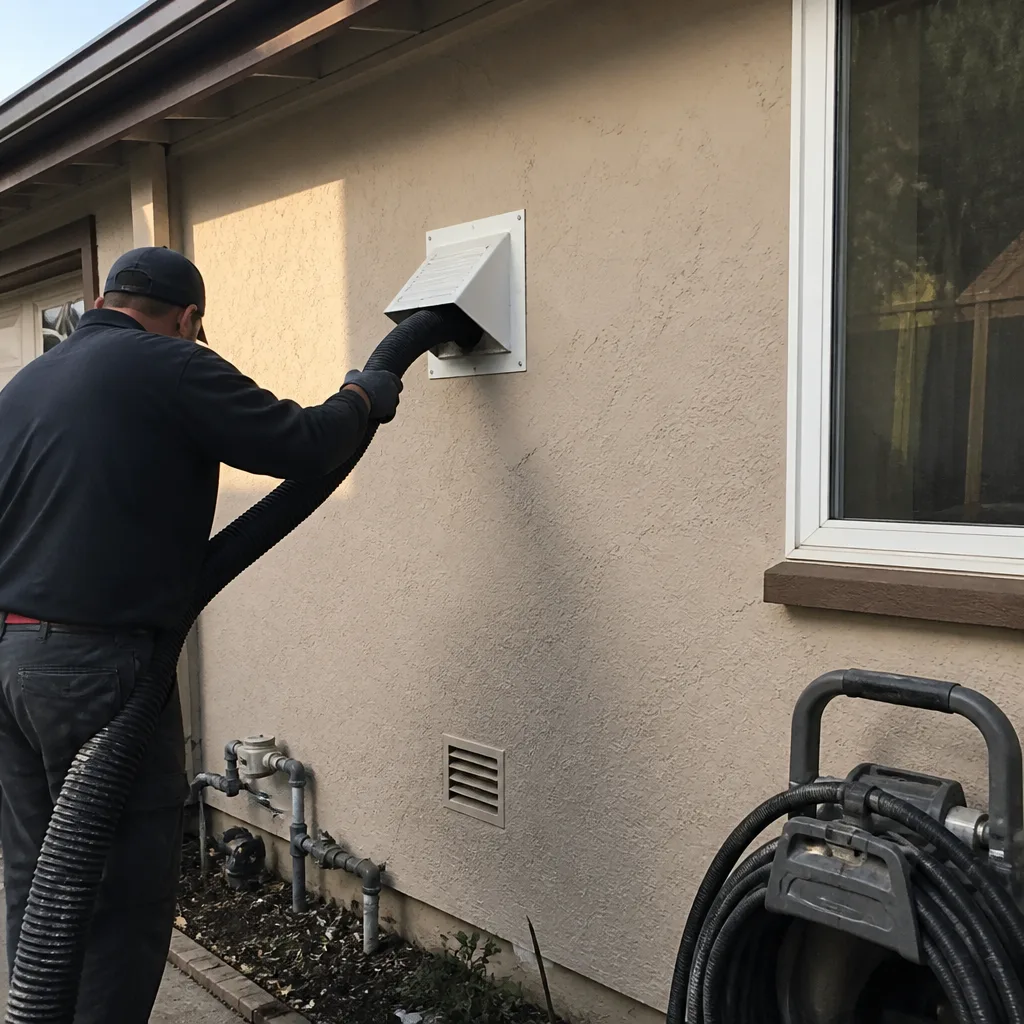 After
When to Call a Professional
You can evaluate equipment brands and contractor qualifications for only so long on your own. At a certain point, you need someone who does this professionally to actually look at your system. Call a professional when visible dust accumulation returns within days of cleaning surfaces, when airflow from registers has noticeably dropped in specific rooms, when you notice a musty odor that lingers when the HVAC runs, or when a renovation has introduced construction dust and debris into the system. If you’re in Pocket and ready to have an equipment-level conversation, Purevent Air Duct Cleaning offers free estimates. Call (877) 752-5088 and ask us the three questions from this guide. We welcome them.
Frequently Asked Questions
For residential duct cleaning, Rotobrush is the most widely recognized purpose-built rotary-brush system, while Nikro and Abatement Technologies are respected for negative-air machines used in remediation and restoration work. The best brand is the one the contractor uses correctly, but names like these indicate professional-grade equipment rather than adapted consumer tools. For a more detailed breakdown, see our guide to Air Duct Cleaning in Pocket.
Ask what brands they use and whether their system is truck-mounted or portable. A specific answer naming manufacturers like Rotobrush, Nikro, or Abatement Technologies signals professional equipment. A vague answer about “powerful vacuums” or “industrial suction” means you should ask more questions before booking.
Yes, significantly. Professional truck-mounted systems generate 8,000 to 15,000 CFM of negative pressure across the entire duct system, while portable units typically operate at 1,000 to 3,000 CFM and only clean the section where the tool is applied. Fine adhered dust in Pocket ductwork needs both contact agitation and whole-system extraction, which only professional-grade equipment delivers.
Low-priced duct cleaning almost always uses portable, adapted equipment that cleans only the first few feet of accessible ductwork and cannot create system-wide negative pressure. Professional truck-mounted equipment is expensive to own, maintain, and operate, which is reflected in honest pricing. A quote that’s dramatically below the market average is usually a signal about equipment tier, not a discount.
Request before-and-after camera documentation of your own ducts, including the far ends of branch runs and sections you can’t physically access. Professional companies using inspection camera systems can deliver this without hesitation. If a contractor can’t or won’t provide verifiable documentation of the full system, you have no way to independently confirm the work.
Ideally, yes. Cleaning reveals problems like disconnected joints, crushed flex runs, and leaking plenums that will re-contaminate the system within months if left unaddressed. A company that offers both Air Duct Repair in Pocket and cleaning can address these issues in a single visit rather than referring you to another contractor. Call (877) 752-5088 for a free estimate that covers cleaning, inspection, and any necessary repair.
The Bottom Line
Air duct cleaning equipment brand is the most efficient qualification question a Pocket homeowner can ask, because the answer immediately reveals the contractor’s operating tier. Professional truck-mounted systems from Rotobrush, Nikro, and Abatement Technologies deliver whole-system negative pressure and contact agitation that portable, adapted equipment simply cannot match. Pair the equipment question with a camera documentation request and a repair capability check, and you’ve effectively screened for everything that separates a full-system specialist from a surface-level cleaning crew. For more guides & resources to help you evaluate contractors, explore our blog. When you’re ready to put us through the same screening, call (877) 752-5088. We’d rather talk equipment than talk you into anything.
Written by the team at Purevent Air Duct Cleaning, serving Pocket since 2017.