
Last updated November 2, 2026
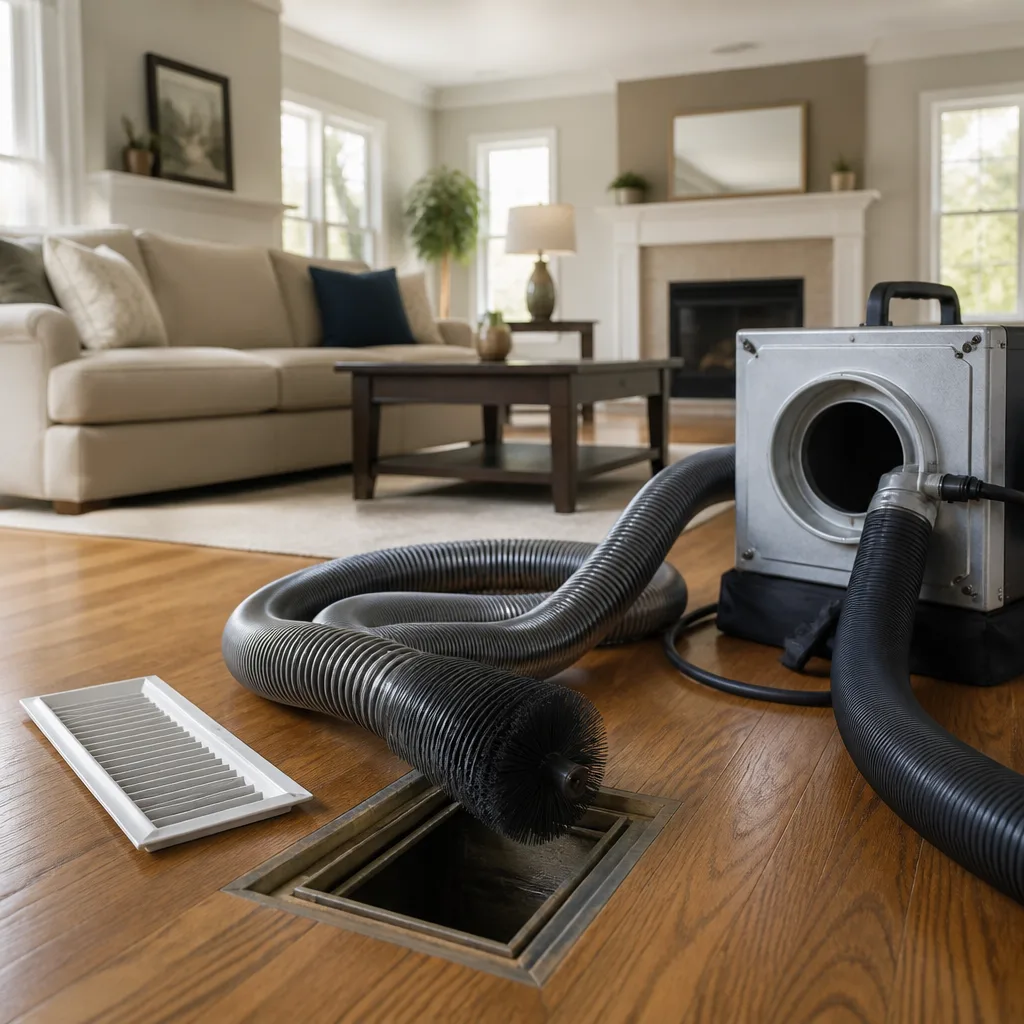 Whole-home duct cleaning
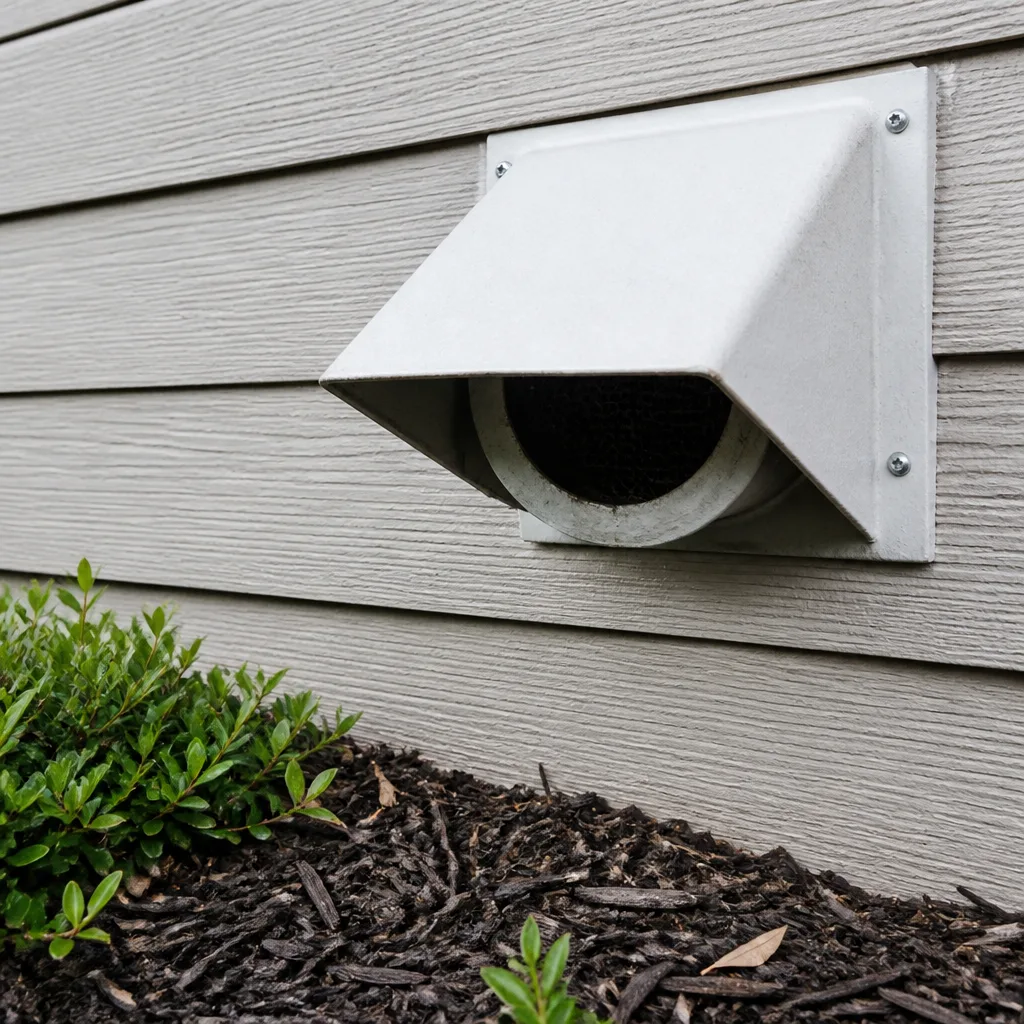 Dryer vent cleaning
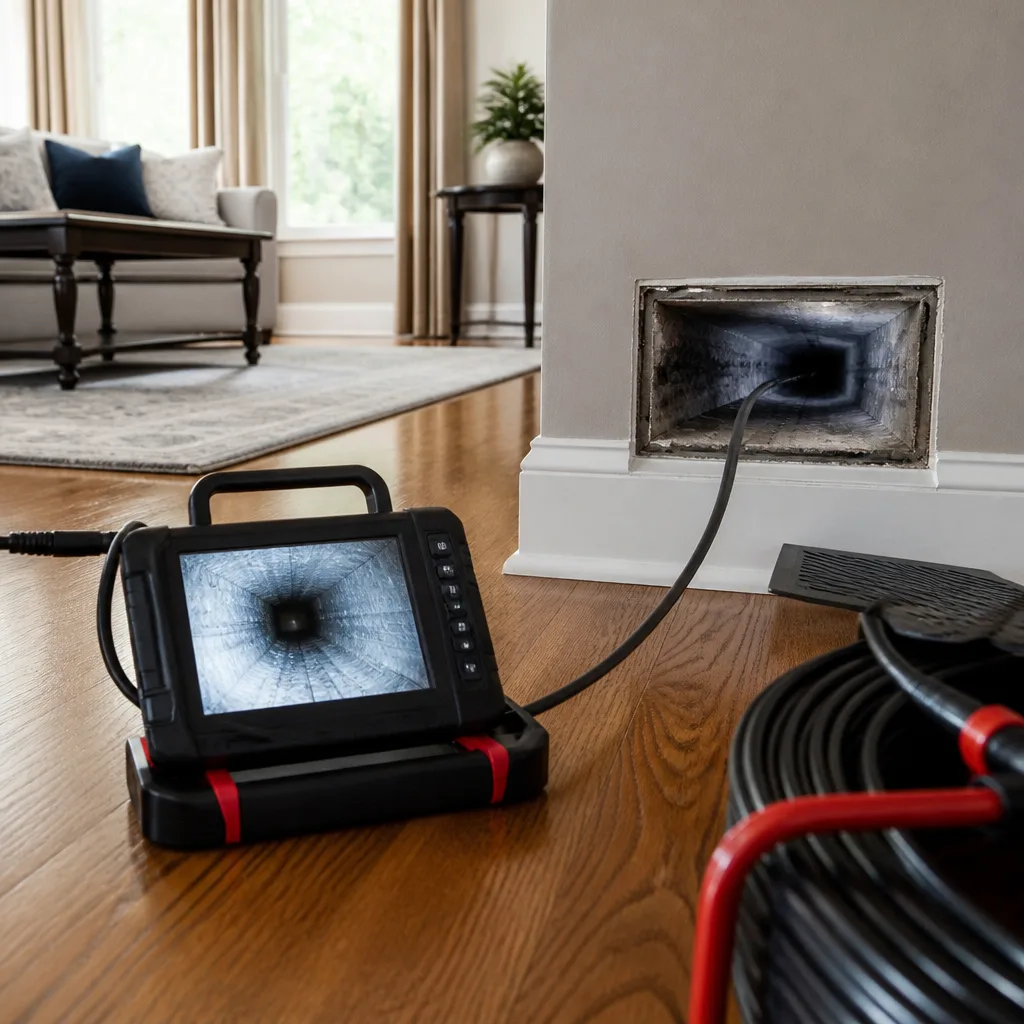 Camera inspection
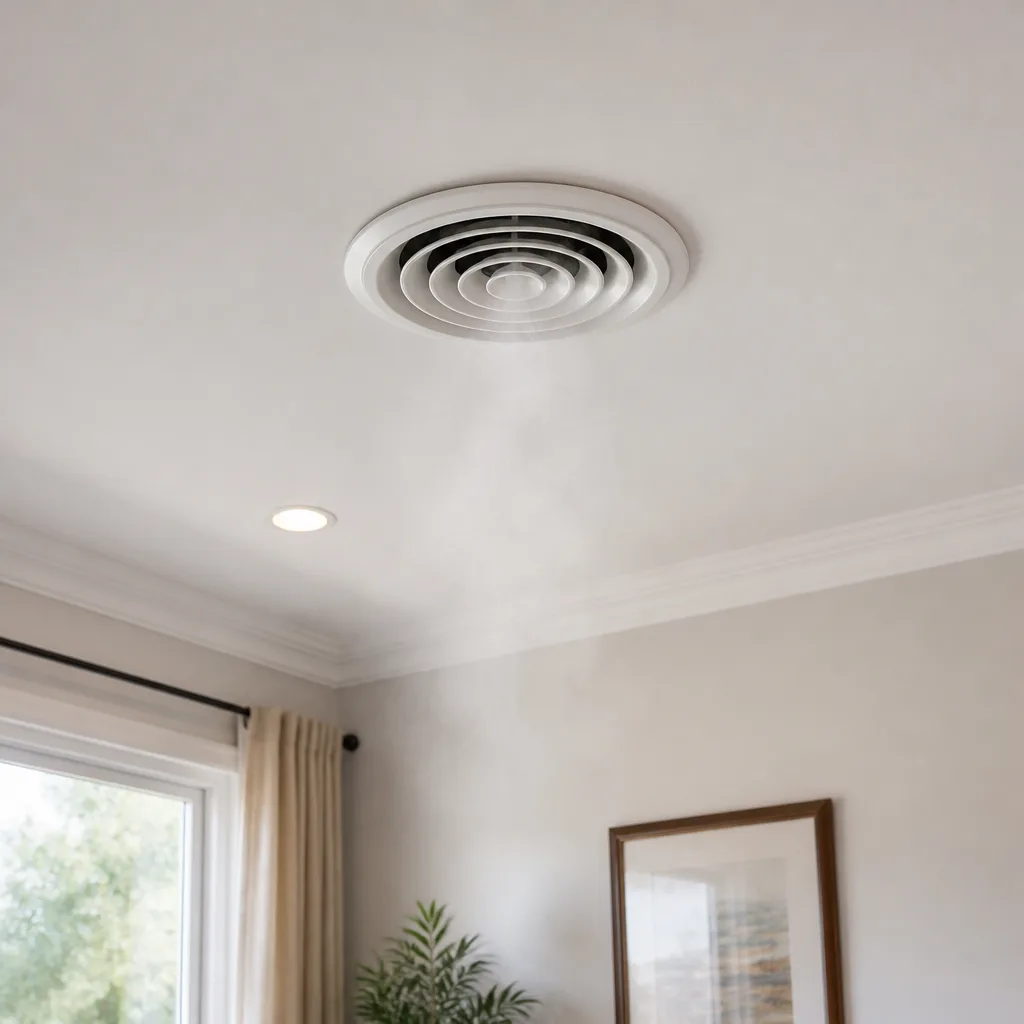 Sanitizing & deodorizing
Whole-system duct and dryer vent check with before-and-after photos - you see exactly what came out of your vents
That "$99 whole-house special" is a bait ad - the real number appears once they are in your hallway, or the "clean" is a shop-vac at the register. We photograph the inside of your ducts before and after instead.
DIY vs Professional Air Duct Cleaning: The Pocket Homeowner’s Decision Guide
Every DIY air duct cleaning tutorial you’ll find online involves the same three tools: a shop vac, a brush, and a flashlight. None of them can generate the sustained negative pressure required to actually dislodge and capture particulate from inside duct walls. What they do instead is stir up settled dust, push debris deeper into runs, and leave you convinced you’ve accomplished something when the system is now arguably dirtier than when you started. If you’re a homeowner in Pocket weighing whether to tackle your ducts yourself or call someone with professional equipment, this guide – along with our detailed How to Hire an Air Duct Cleaning Contractor in Pocket: A Step-by-Step Guide – walks you through the physics, the costs, the scenarios where DIY makes sense, and the moments where it backfires badly. By the end, you’ll know exactly what’s realistic to do yourself and what genuinely requires a professional-grade setup.
Quick Answer
Professional air duct cleaning is the only method that creates the sustained negative pressure (measured in thousands of CFM) required to extract particulate from duct interiors rather than redistribute it. Homeowners in Pocket can legitimately handle grille cleaning, filter replacement, and visible flex duct inspection themselves, but anything beyond surface-level access needs professional equipment to be meaningful. If your goal is actually cleaner air rather than the appearance of effort, rentable consumer tools won’t get you there.
Styles & brands we work with
- Whole-home duct cleaning
- Dryer vent cleaning
- Camera inspection
- Sanitizing & deodorizing
Table of Contents
- The Physics That Separates Cleaning from Redistribution
- What Homeowners Can Legitimately Do Themselves
- What DIY Cannot Do, No Matter How Determined You Are
- When DIY Attempts Make Professional Cleaning Harder
- How to Assess Your Own System’s Complexity
- The Honest Cost Comparison: Rental vs Professional
- Signs Your Ducts Actually Need Attention
- Why the Equipment Brand Names Matter
The Physics That Separates Cleaning from Redistribution
Duct cleaning is not like wiping a counter. You cannot see the surface you’re working on, you cannot reach most of it, and the particulate you’re trying to remove is microscopic enough to become airborne the moment you disturb it. The only mechanism that actually removes dust, dander, and debris from a duct system is a pressure differential: air moving fast enough, in a controlled direction, to carry particulate out of the ducts and into a containment system.
Here’s the number that matters. Professional negative-air machines used in duct cleaning are rated in thousands of CFM (cubic feet per minute). A consumer shop vac, even a good one, moves somewhere between 100 and 200 CFM. That’s not a small gap. That’s an order-of-magnitude difference that determines whether dust gets extracted or simply gets relocated.
When a professional system runs, the negative pressure created inside the ductwork means every particle loosened by the agitation tool gets pulled toward the collection point. The air inside the ducts is actively moving toward containment at all times. When you run a shop vac through a register, you’re creating localized suction at the point of contact only. The rest of the duct run remains undisturbed, and anything you dislodge within reach of your brush has nowhere to go except deeper into the system or back into the room air.
In Pocket’s climate, this distinction matters more than in some other regions. The Sacramento Valley’s dry summers mean more fine dust in ambient air, and that dust settles into ductwork throughout the cooling season. The heavier the accumulation, the more a partial cleaning approach simply redistributes rather than removes. We hear from Pocket homeowners regularly who spent a weekend with rental equipment only to find dust reappearing on surfaces within weeks. That’s not a cleaning failure of effort. That’s physics.
What Negative Pressure Actually Does
Think of it as a continuous draw. When negative pressure is maintained throughout the duct system, every disturbance of the duct walls results in particulate being swept toward the vacuum source. The agitation (in professional systems, a rotary brush) breaks the mechanical bond between dust and duct surface. The negative pressure carries it away. Both elements must happen simultaneously and continuously. Remove either one and you’re doing something closer to rearranging than cleaning.
What Homeowners Can Legitimately Do Themselves
This is not an argument that homeowners are helpless. There are several maintenance tasks within reach of anyone with basic hand tools and a willingness to get slightly dusty. The key is understanding what these tasks accomplish and what they don’t.
- Register and grille cleaning. Remove the register covers, wash them with warm soapy water, dry them, and reinstall. This addresses the visible surface where dust accumulates and gets blown back into rooms. It does not reach the duct interiors, but it’s worthwhile maintenance that takes minutes per register.
- Filter replacement. This is the single highest-impact maintenance task for indoor air quality, and it takes 30 seconds. In Pocket’s dusty summer months, checking filters monthly and replacing them quarterly (or more often if you have pets) prevents a significant portion of particulate from entering the duct system in the first place.
- Visible flex duct inspection. If you have accessible attic or crawlspace areas, you can visually inspect flex duct runs for obvious sagging, kinking, or disconnections. You’re looking for sections that have separated from register boots or trunk lines. This is diagnostic, not cleaning, but it gives you useful information about whether professional attention is warranted.
- Dryer vent lint removal at the exit point. The exterior dryer vent hood is accessible from outside. Removing the hood and clearing the visible lint accumulation is straightforward and genuinely useful for fire prevention. Note that this addresses only the last few inches of the vent run. Lint accumulates along the entire length of the duct, and accessing those sections typically requires professional tools.
These tasks share a common trait: they’re all accessible. You can see the surfaces you’re working on, or you’re working at the entry/exit points of the system where buildup is external. None of them require inserting tools into duct interiors, and none of them risk damaging ductwork through improper agitation.
What DIY Cannot Do, No Matter How Determined You Are
Once you move beyond the accessible surfaces, every DIY method runs into hard limits imposed by equipment physics and system geometry.
You cannot reach more than a few feet into any duct run. Residential duct runs in Pocket homes commonly extend 10 to 30 feet from the trunk line to individual registers. A shop vac hose with a brush attachment reaches maybe 3 to 4 feet. A rotary-brush cleaning system runs the full length of each run because it’s designed for exactly this geometry, with agitation heads sized to the duct diameter and powered by a motor that maintains contact throughout the run.
You cannot create containment. Professional cleaning uses a containment system that seals the duct system and maintains negative pressure throughout the cleaning process. Without containment, every particle you disturb inside the ducts either settles back down or escapes into your living space. You are literally aerosolizing dust from inside your walls and depositing it on your furniture.
You cannot see what you’re doing. Professional equipment includes inspection cameras that document conditions before and after cleaning. DIY methods are blind. You have no way to verify whether anything was accomplished, and no way to identify damage you may have caused.
You cannot address what you find. This is where the distinction between cleaning and full-system service becomes clearest. When a professional cleaning reveals a disconnected flex duct, a crushed section in a crawlspace, or a duct that has separated from its register boot, that’s a repairable finding. Companies that clean, inspect, and repair in the same visit can address it immediately. A DIY approach either never discovers the problem or discovers it and requires the homeowner to find a separate contractor to fix it, often after the duct system has been operating inefficiently for years.
When DIY Attempts Make Professional Cleaning Harder
This is the section most DIY tutorials skip. We’ve cleaned ducts in Pocket homes where a previous DIY attempt had made the professional job significantly more complex. Here’s what actually happens when well-intentioned homeowners go after interior ducts with consumer tools:
Debris gets packed deeper into runs. A brush on the end of a drill or shop vac hose pushes against accumulated dust and compresses it into the duct walls. That compressed layer is harder to remove than the original loose accumulation, requiring additional agitation passes and longer cleaning times. The homeowner’s effort has effectively increased the difficulty of the eventual professional cleaning.
Flex duct gets torn or pulled loose. Residential ductwork in Pocket homes built in the last 30 years is predominantly flex duct: a wire coil wrapped in insulation and an outer vapor barrier. Aggressive brushing, especially with improvised tools, can tear the inner liner, pull sections loose from connections, or compress the insulation. A torn flex duct doesn’t just leak air; it actively pulls attic or crawlspace air (and whatever’s in it) into the air stream.
Fasteners end up inside duct sections. Sheet-metal duct sections are held together with screws. When a homeowner removes register boots or attempts to open a duct section for access, those small fasteners have a way of disappearing into the duct interior. A screw rattling inside a duct run isn’t just annoying. It can catch and tear other debris into clumps, creating blockages that were never there before.
Access panels get damaged. Professional cleaning often requires cutting access panels into trunk lines, especially in systems that lack existing cleanouts. Cutting a panel into sheet metal and properly sealing it afterward is a straightforward task with the right tools, but a botched DIY panel that isn’t resealed properly becomes a permanent leak, letting conditioned air escape into unconditioned spaces.
None of these outcomes are the result of homeowner carelessness. They’re the result of working on a system with tools that weren’t designed for it. The honest assessment is that interior duct cleaning without professional equipment doesn’t end at “less effective.” It often ends at “more work required later.”
How to Assess Your Own System’s Complexity
Not all duct systems are equally demanding. The complexity of your system determines how realistic a DIY approach is and how much professional cleaning matters. Here’s how to think about what you’re dealing with.
Single-Story Slab Foundation
Ductwork in these homes typically runs through the slab or through a chase in the conditioned space. Runs are short, accessible only at the registers, and especially prone to dust accumulation because slab ductwork handles moisture differently than attic runs. If you’re in this configuration, your DIY options are limited to grille cleaning and filter replacement. The duct interiors are simply not reachable without professional equipment, and slab ducts are particularly unforgiving of improvised tools.
Two-Story with Attic Runs
This is common throughout Pocket’s newer developments. Supply ducts run through attic space, dropping down to registers on the upper floor as vertical drops. These systems are accessible from the attic end if you have attic access, but the runs themselves are long and often include multiple bends. Flex duct in attic spaces is also exposed to significant temperature swings, which ages the material and makes it more susceptible to tearing during aggressive cleaning. Professional cleaning handles these systems with rotary-brush agitation paired with negative-air extraction, working from the register end while maintaining containment.
Crawlspace Routing
Older Pocket homes often route ductwork through crawlspaces. These systems face distinct challenges: humidity exposure in winter months, pest activity, and the accumulation of fine particulate from the crawlspace itself. If a duct connection fails in a crawlspace, the system actively pulls crawlspace air into the home. For these systems, the inspection component of professional cleaning is as valuable as the cleaning itself. A camera run through crawlspace ducts can identify disconnections and damage that would otherwise remain invisible until the system’s performance degrades badly enough to notice.
Complexity reality check: If your system has more than six supply runs, includes runs in unconditioned spaces, or hasn’t been professionally cleaned since you’ve owned the home, the DIY math stops working. The time required, the physical difficulty of the work, and the certainty that you’re leaving meaningful accumulation in place all point toward professional equipment.
The Honest Cost Comparison: Rental vs Professional
The DIY pitch usually starts with the assumption that professional cleaning is expensive and DIY is nearly free. Neither assumption holds up under scrutiny. Here’s what the numbers actually look like for a Pocket homeowner.
DIY Equipment Rental Reality
- Equipment rental for a consumer-grade duct cleaning package: These rental kits, where available, typically include a rotary brush on a flexible shaft, a lightweight vacuum, and basic attachments. Rental fees at regional equipment houses run $75-150 per day, but availability in the Sacramento area is inconsistent. Most homeowners end up driving to multiple locations or substituting tools they already own.
- Supplemental purchases: You’ll need a drill with sufficient torque (if the rental kit doesn’t include one), drop cloths, PPE (mask, eye protection, gloves), and potentially an inspection camera to see what you’re doing. Add $50-100 for a homeowner who doesn’t already have these items.
- Time cost: A full DIY duct cleaning attempt on an average Pocket home takes 6-10 hours if you’re thorough and working alone. That’s a full weekend day, with all the physical difficulty of working in attics, crawls, and awkward register positions.
- Outcome risk: The rental equipment does not create meaningful negative pressure. You’re paying for the appearance of cleaning without the mechanism that makes cleaning real. You may also damage flex ducts, which then requires professional repair to address.
Professional Cleaning Reality
- Whole-system pricing: Professional cleaning for an average single-family home in the Sacramento area typically ranges from $400 to $800 depending on system size, number of runs, and accessibility. This includes the entire process: containment setup, agitation, extraction, and post-cleaning inspection.
- Equipment amortization: The professional price reflects equipment that costs tens of thousands of dollars. A Nikro negative-air machine alone costs more than most homeowners spend on a used car. Rotobrush rotary-brush systems are comparably priced. These machines exist to do one thing: create the pressure differential that makes cleaning possible.
- Inspection value: Professional cleaning includes camera inspection before and after. You see what the ducts looked like, and you see what they look like when the work is done. That documentation matters for your own confidence and for any future buyer if you sell.
- Repair capability: If the cleaning reveals a disconnected duct, a crushed section, or damaged flex, a full-system company can repair it on the spot. That’s not an add-on sales pitch; it’s the difference between identifying a problem and solving it in the same visit.
The honest math is this: DIY costs $150-250 in rental and materials, consumes a full day, delivers incomplete results, and carries a non-trivial risk of causing damage. Professional cleaning costs more in absolute dollars but delivers a verifiable result with documented before-and-after evidence. For Pocket homeowners who value their time at even minimum wage, the gap narrows further. And for those with complex systems, DIY simply isn’t a viable option at any price.
Signs Your Ducts Actually Need Attention
Not every home needs duct cleaning, and the industry’s own reputation for unnecessary upsells is one reason homeowners remain skeptical. Here’s how to tell when your system in Pocket genuinely warrants professional attention:
- Visible dust on register covers that returns within days of wiping. This means particulate is being pushed out of the ducts, not settling from ambient room air. The accumulation is inside the system.
- Uneven airflow between rooms. Some rooms stay warm in summer or cold in winter regardless of damper settings. Restricted airflow often points to a blockage or disconnection somewhere in the run.
- Musty or stale odor from registers when the system runs. This is especially common in Pocket homes with crawlspace-routed ducts, where moisture and pest activity leave residues inside the ductwork.
- Recent construction or renovation. Drywall dust, sawdust, and construction debris get pulled into the return side of the system during renovations. In Pocket’s active remodeling market, post-renovation cleaning is one of the most common reasons homeowners call for professional service.
- Allergy symptoms that improve when you leave home. This is not diagnostic by itself, but when combined with other signs, it suggests the ducts are recirculating particulate that your filter isn’t catching.
If none of these signs are present, your ducts may genuinely not need cleaning. That’s an honest answer that a professional should be willing to give you. The goal is cleaner air where it’s needed, not cleaning for its own sake.
Why the Equipment Brand Names Matter
You’ll see the same vague language on nearly every duct cleaning website: “powerful equipment,” “professional-grade tools,” “advanced technology.” None of it tells you anything. The specific machines matter because they determine what’s actually possible.
Rotobrush is a rotary-brush cleaning system that agitates duct walls with a powered brush head sized to the duct diameter. The brush makes contact with the duct surface, breaking the bond between dust and duct wall. It’s not a vague “deep cleaning” claim. It’s a mechanical process with a specific name.
Nikro makes negative-air machines rated in the thousands of CFM. These are the same machines used in remediation work, where the stakes are higher and the particulate more dangerous. A negative-air machine creates the containment environment described earlier: the continuous pressure differential that carries dislodged particulate out of the system rather than letting it settle elsewhere.
Honeywell and Aprilaire are names you likely recognize from thermostats, filters, and whole-home air quality equipment. Their relevance here is context: a duct cleaning company that works with these brands understands the full ecosystem of indoor air quality, from filtration to mechanical cleaning.
What these names have in common is that they’re not consumer brands. You can’t buy them at a hardware store. They belong to the remediation and professional HVAC world, which is exactly where effective duct cleaning lives. When you call a professional, you’re not paying for labor. You’re paying for the machines that make the labor meaningful.
Common Mistakes to Avoid
- Assuming a shop vac with a brush attachment constitutes cleaning. A shop vac creates localized suction at the point of contact only. It does not create the pressure differential required to extract particulate from the duct run as a whole. What you dislodge settles elsewhere in the system and becomes a problem for later.
- Using improvised brush attachments on drill shafts. The spin rate and torque of a drill are not calibrated for duct walls. Flex duct tears easily under aggressive agitation, and a tear in an attic run is worse than the dust you were trying to remove. The damage often requires professional repair to correct.
- Opening duct sections without a plan for resealing. Every seam you break is a potential leak point if not properly resealed. Duct leaks in unconditioned spaces pull attic or crawlspace air into the system, which defeats the purpose of cleaning in the first place.
- Assuming cheap professional quotes are equivalent to professional cleaning. The low-bid operators in the Sacramento market often run a basic vacuum through the registers and call it done. They do not set up containment, do not agitate the duct walls, and do not inspect the results. If the price seems too good to be true for a full-system cleaning, you’re probably buying the appearance of service rather than the service itself.
- Neglecting the filter during or after cleaning. A clogged filter after cleaning sends the system right back to accumulating particulate. Filter replacement is the cheapest, highest-impact air quality task, and it’s the one most often skipped.
- Forgetting that dryer vents are a separate system with different stakes. HVAC duct cleaning and dryer vent cleaning are not the same job. A clogged dryer vent is a fire risk, not just a performance issue. Homeowners who’ve had their HVAC ducts cleaned sometimes assume the dryer vent was included. It typically isn’t unless specifically arranged.
- Believing that one good cleaning lasts forever. Ducts re-accumulate particulate based on household activity, filter quality, and ambient conditions. In Pocket’s dusty summer months, the accumulation rate increases. The National Air Duct Cleaners Association recommends inspection every 2-3 years for most homes, with cleaning as needed based on what the inspection shows.
See the difference
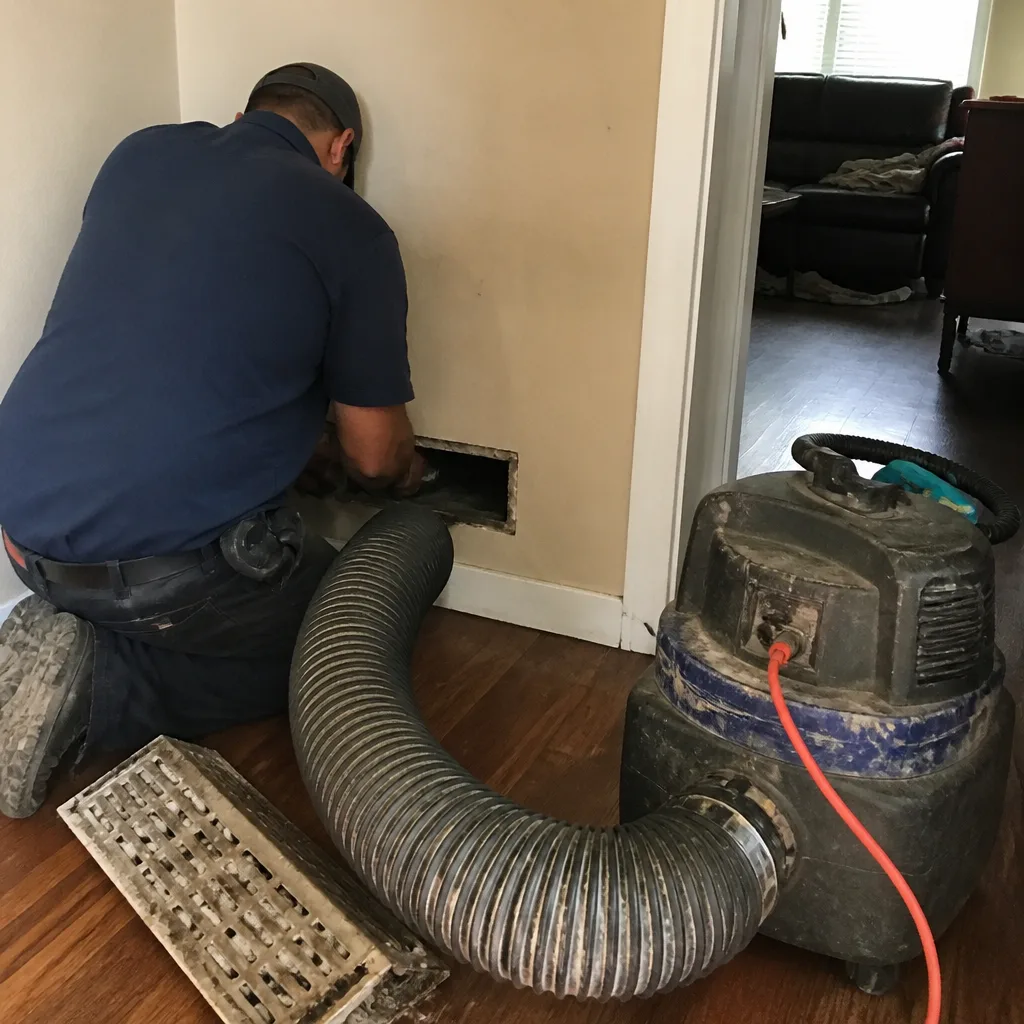 Before
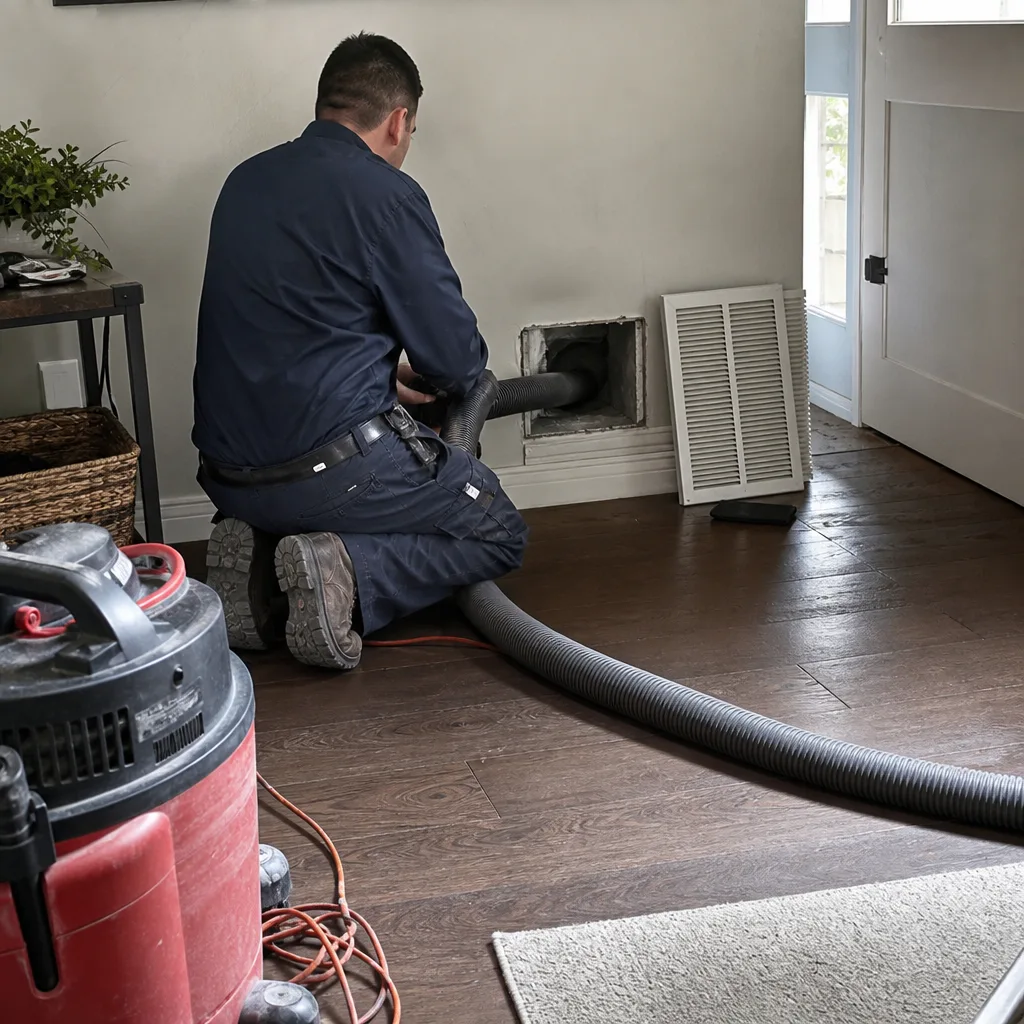 After
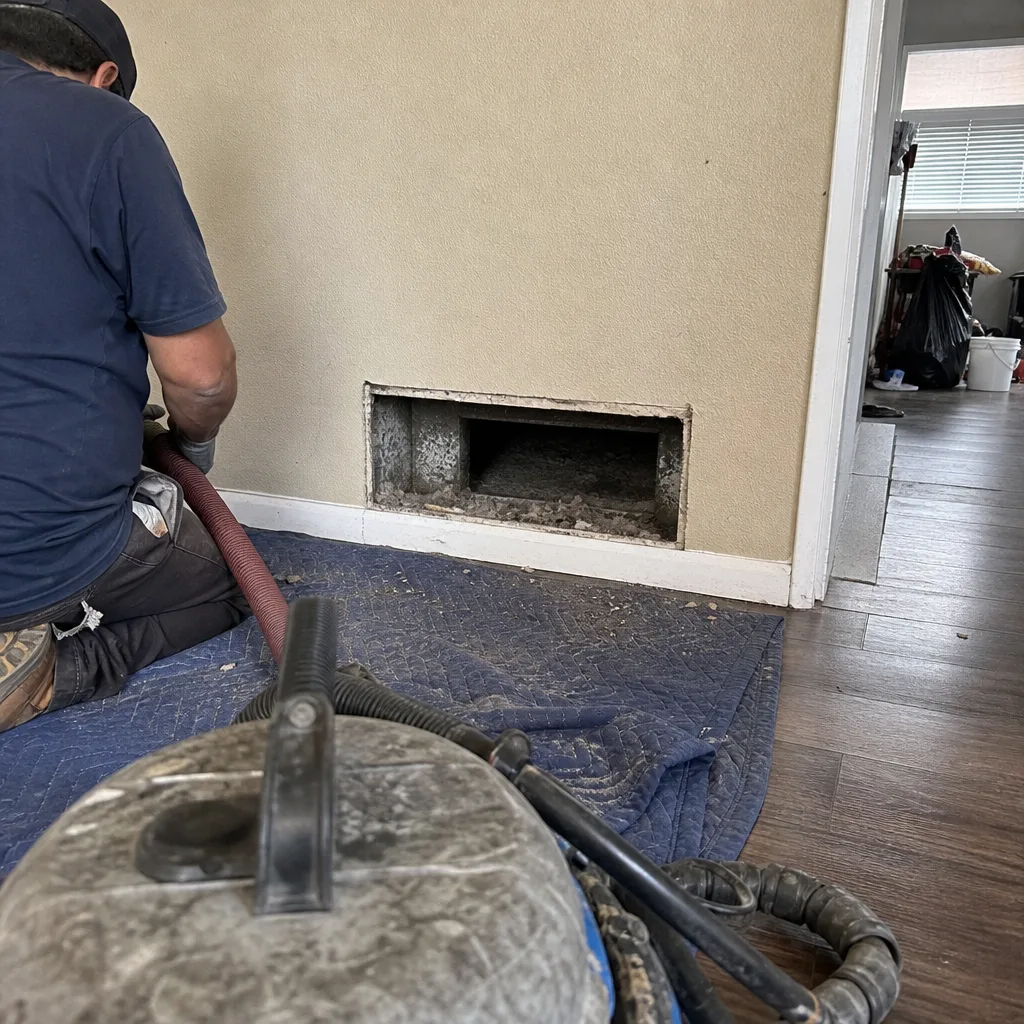 Before
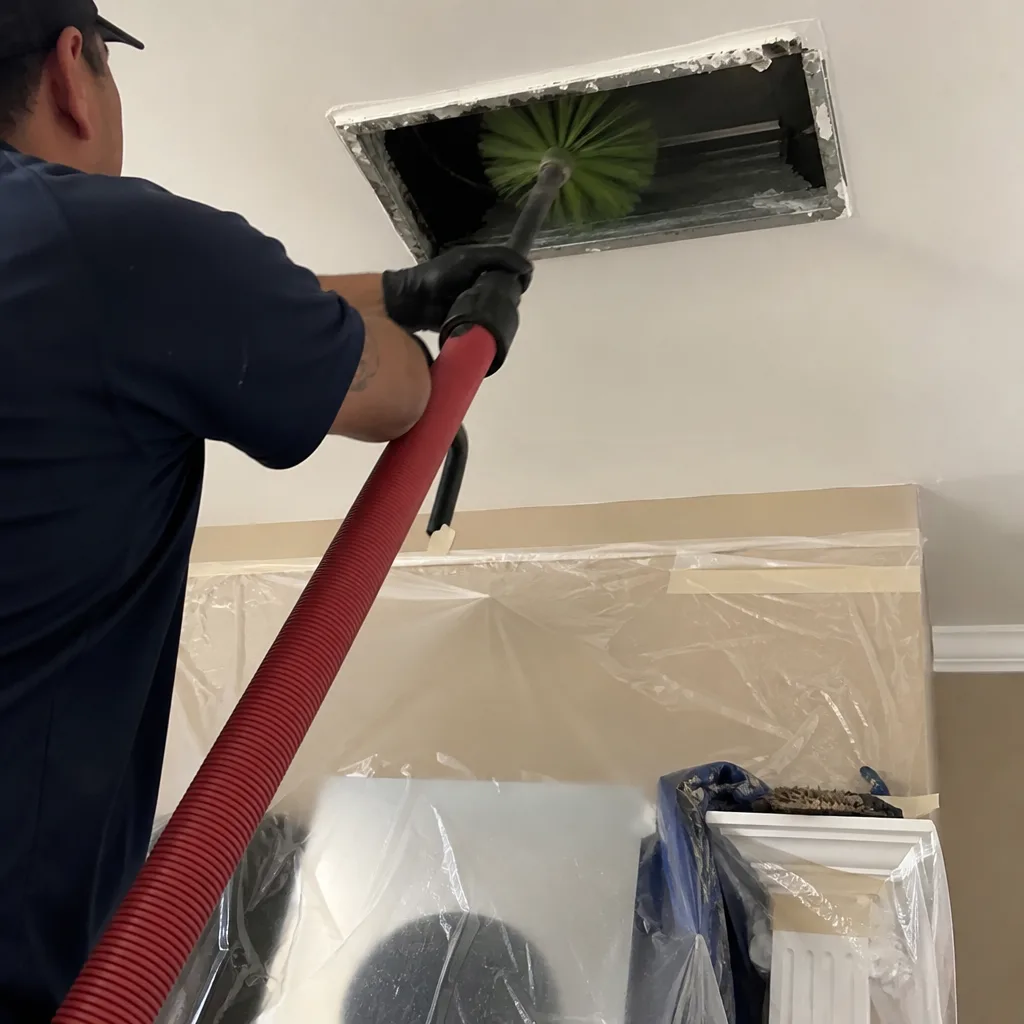 After
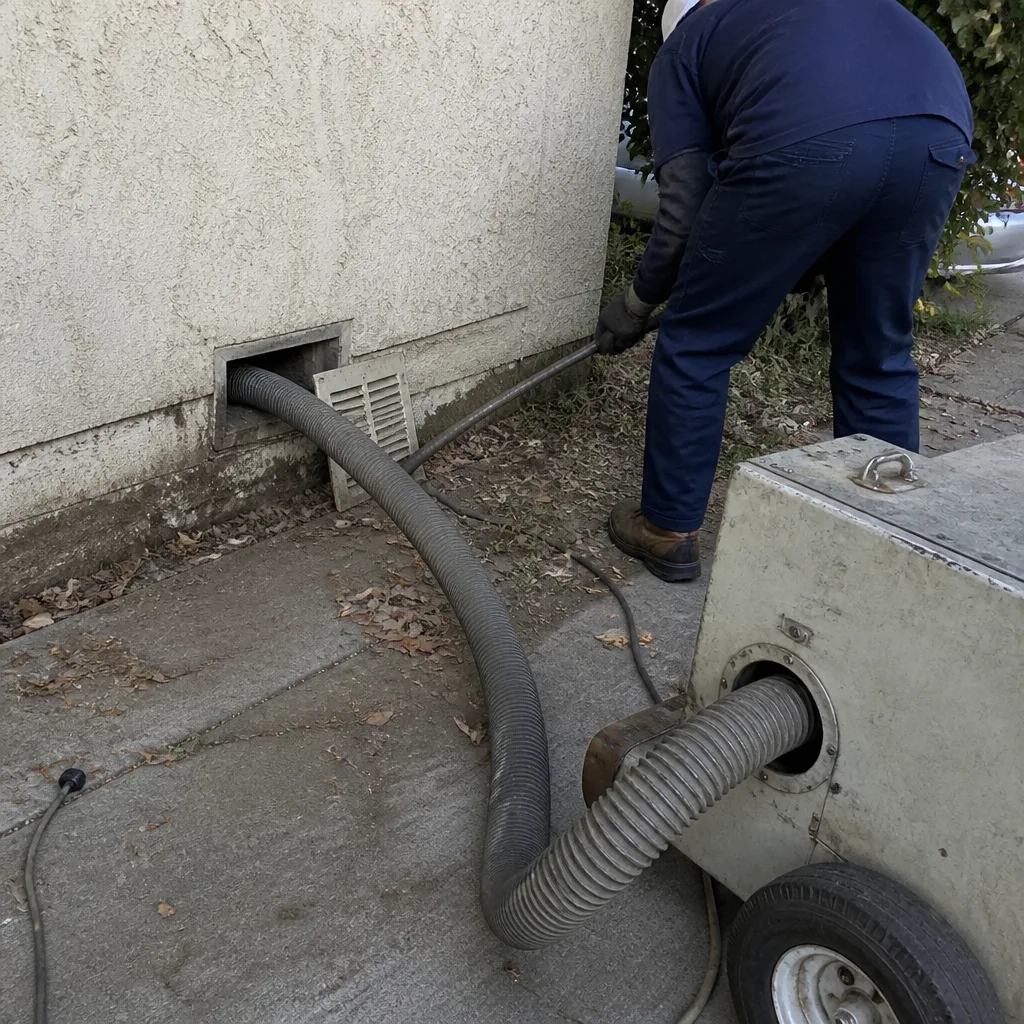 Before
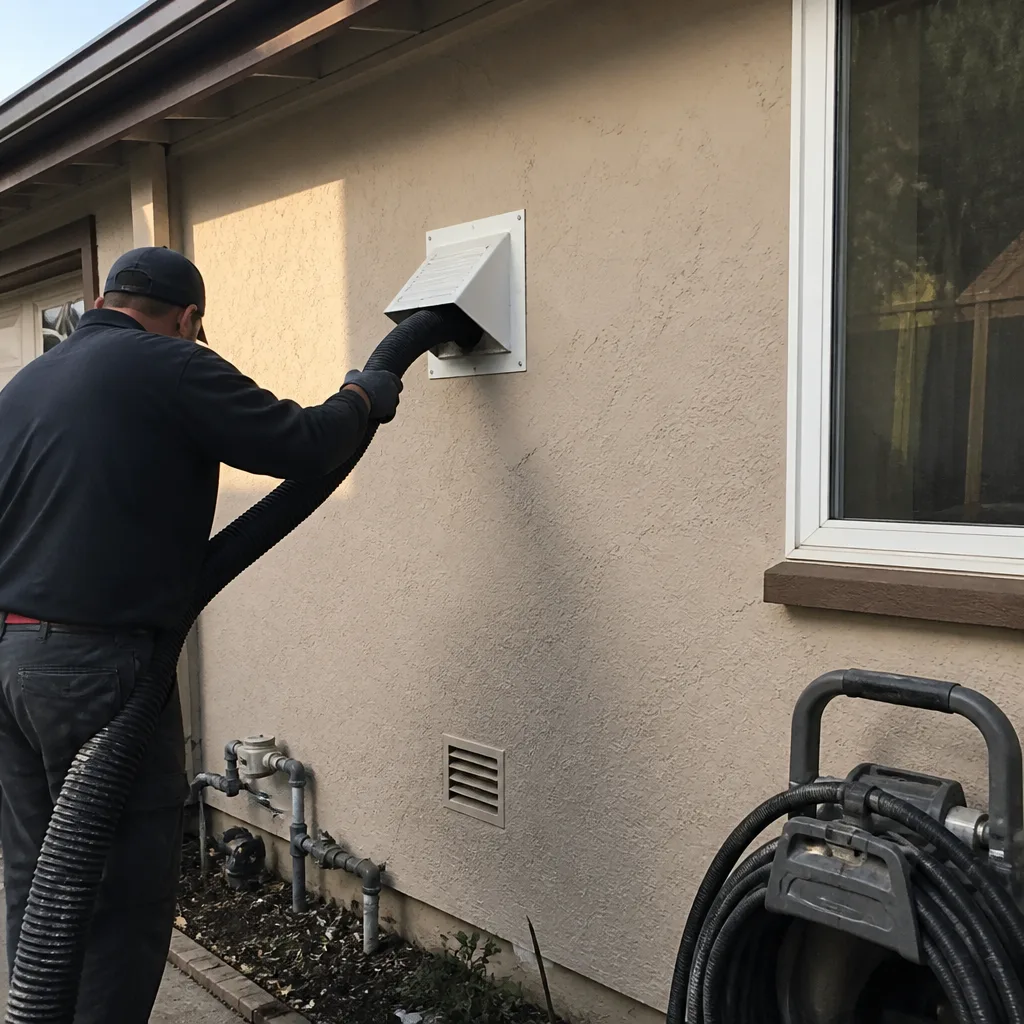 After
When to Call a Professional
If your system shows signs of meaningful accumulation, if it’s been more than three years since the last professional cleaning, if you’ve completed a renovation, or if you’ve come to the end of your own thorough assessment and realized the runs you need to reach are inaccessible, professional equipment is the only realistic path. The duct runs in your Pocket home are designed to move air efficiently. Cleaning them properly requires machines designed for that specific job, not tools adapted from other purposes.
Purevent Air Duct Cleaning offers free estimates in Pocket. Call (877) 752-5088 and we’ll walk your system, show you what the camera sees, and give you an honest assessment of whether cleaning is warranted and what the result will look like. For guidance on what professional cleaning involves, start with our Purevent Air Duct Cleaning home page. If you’re in the area and want specifics on local service, Air Duct Cleaning in Pocket covers the process end to end.
Frequently Asked Questions
DIY worth doing is limited to accessible surfaces: register covers, filters, visible dryer vent exits, and visual inspection of accessible flex duct runs. Those tasks have real value and zero risk. Anything involving tools inserted into duct interiors is not worth doing without professional equipment, because the physics works against meaningful results and the risk of damage is real.
Professional whole-system cleaning for an average single-family home in the Sacramento area typically ranges from $400 to $800 depending on system size, number of runs, and accessibility. The pricing is per system, not per vent, and a reputable company will explain what’s included before work starts. Call (877) 752-5088 to get an exact quote for your home, and make sure any quote you compare includes containment, agitation, extraction, and before-and-after inspection.
Cheap quotes usually mean the operator is skipping the mechanisms that make cleaning work: no containment setup, no rotary-brush agitation, no negative-air extraction. What you get for a low price is a vacuum run through the registers, which disturbs surface dust without extracting it from the system. The price difference isn’t about overhead or greed. It’s about whether the cleaning equipment used is capable of creating the necessary pressure differential.
Ask for before-and-after camera documentation. Professional cleaning includes inspection footage that shows the duct interiors before work begins and after it’s complete. If a company cannot or will not show you this documentation, you have no way to verify the result. Any legitimate operator will provide it as standard practice.
Inspection every 2-3 years, with cleaning as needed based on what the inspection shows. Homes with pets, recent renovations, crawlspace duct routing, or smokers will accumulate particulate faster. Pocket’s dry, dusty summers also increase accumulation rates. A good rule is to inspect annually by looking at your register covers and filter condition, and to schedule professional inspection when those visible signs show consistent buildup.
Pocket’s climate and housing stock create specific conditions. Dry summers mean fine particulate is more prevalent in ambient air and settles into ducts throughout the cooling season. Many Pocket homes, especially older ones, route ducts through crawlspaces that introduce humidity and particulate challenges. And newer developments in the area commonly use flex duct in attic spaces, which ages in response to temperature swings. A local company that has cleaned and inspected systems across Pocket understands these patterns without having to learn them on your house.
The Bottom Line
The DIY vs professional framing implies a choice between equivalents with different price tags. That’s not what this is. What you can do yourself (grilles, filters, dryer vent exits, visual checks) and what professional equipment does (contained agitation and extraction across the entire duct run) are different activities with different outcomes. The question isn’t whether you’re capable of the work. It’s whether the tools you own can do the physics the job requires. If they can’t, the only thing you’re saving is money, and you’re spending time and risk to save it. Cleaner air is a mechanical result, and it takes the right machines to produce it.
Written by the team at Purevent Air Duct Cleaning, serving Pocket since 2017.
Want to understand the connected systems in your home? Dryer Vent Cleaning in Pocket covers the fire-safety side of vent maintenance, and Air Duct Repair in Pocket explains what happens when cleaning reveals structural problems that need fixing.