
Last updated November 2, 2026
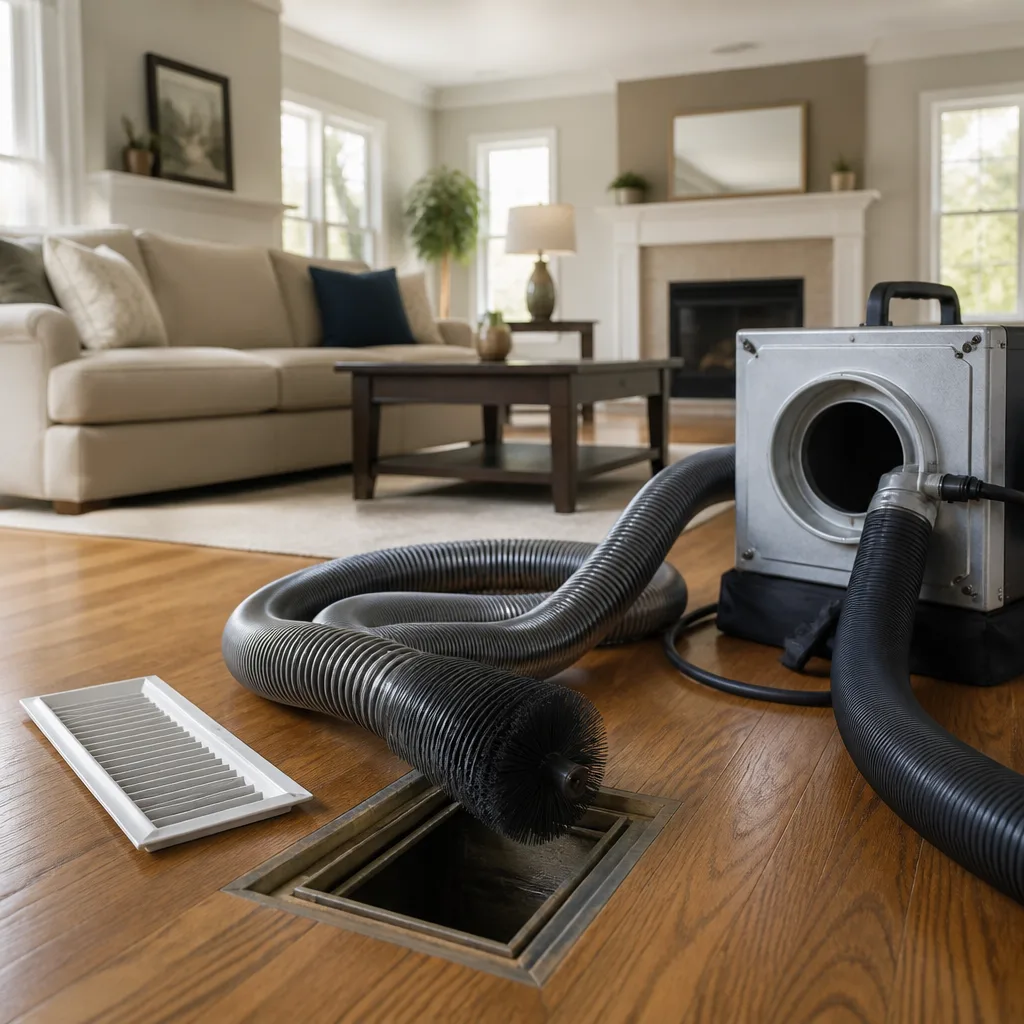 Whole-home duct cleaning
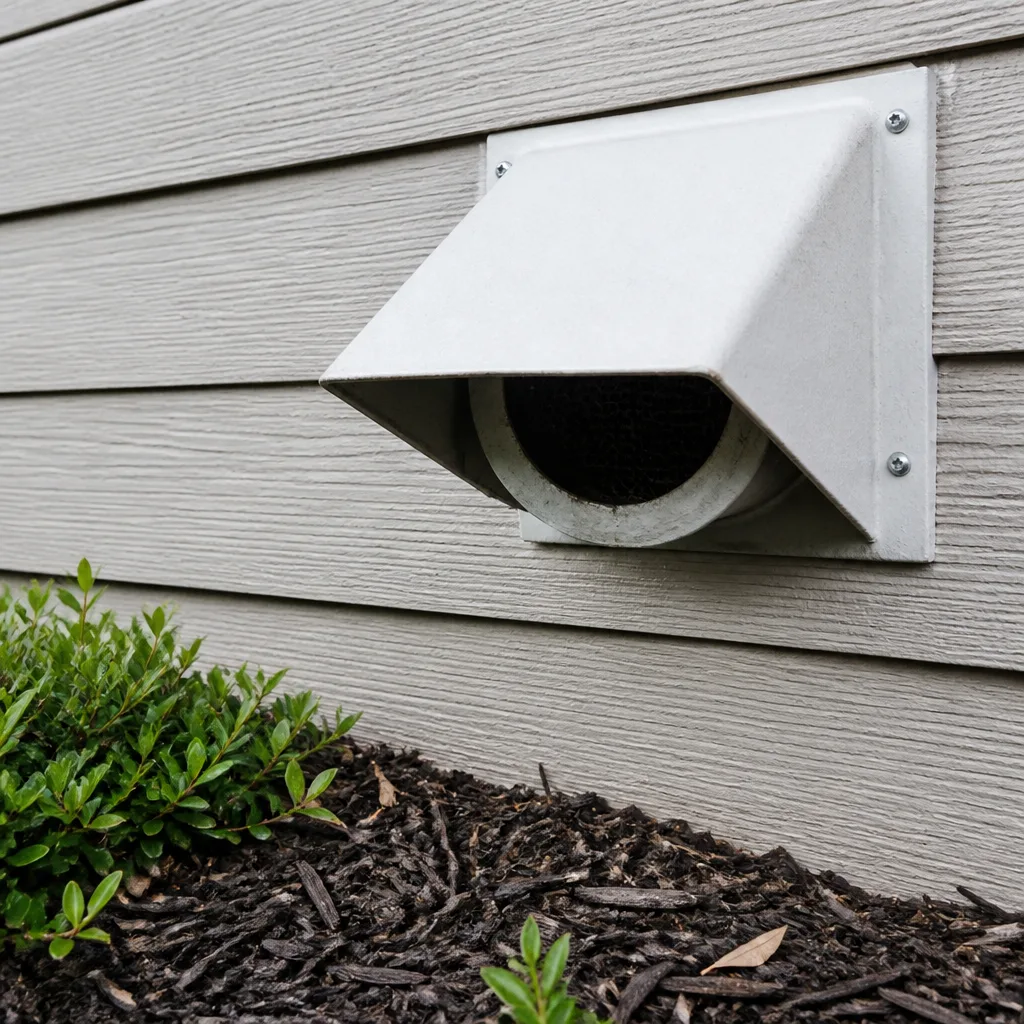 Dryer vent cleaning
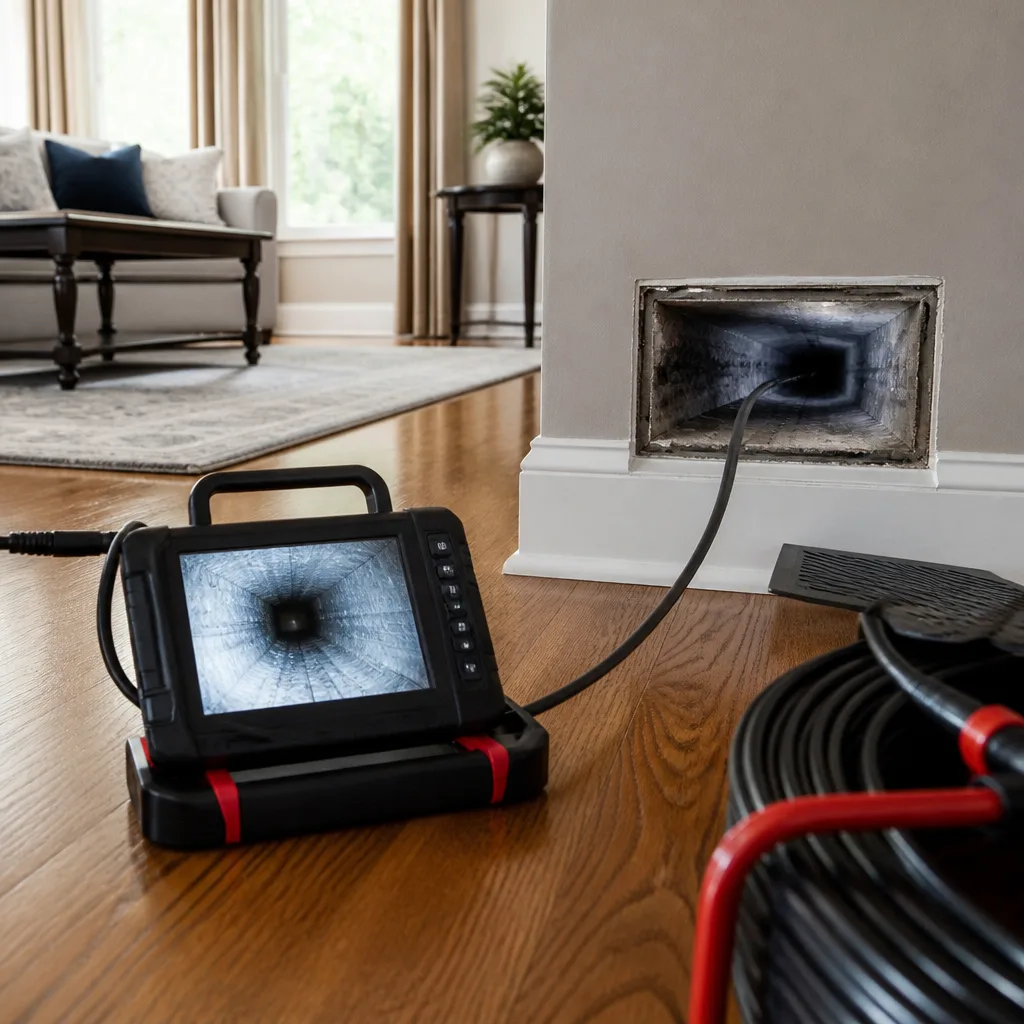 Camera inspection
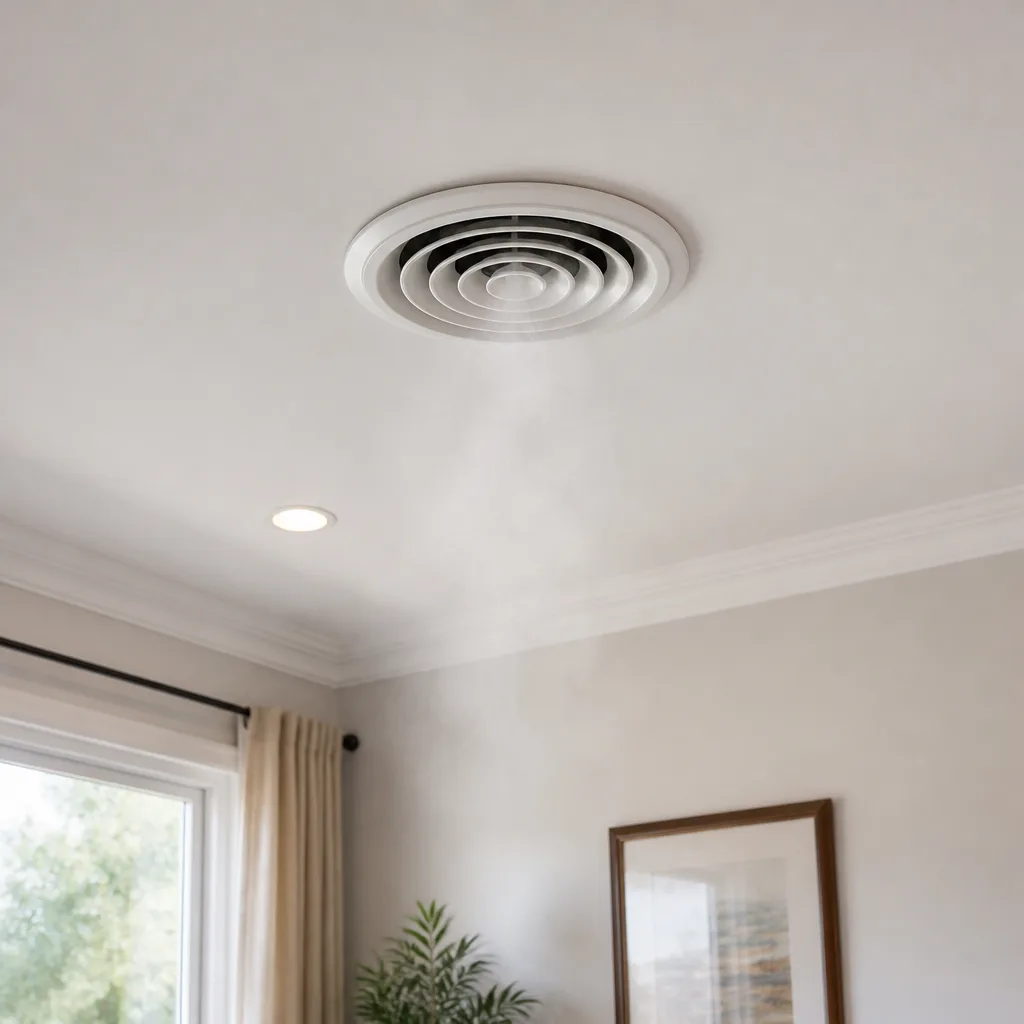 Sanitizing & deodorizing
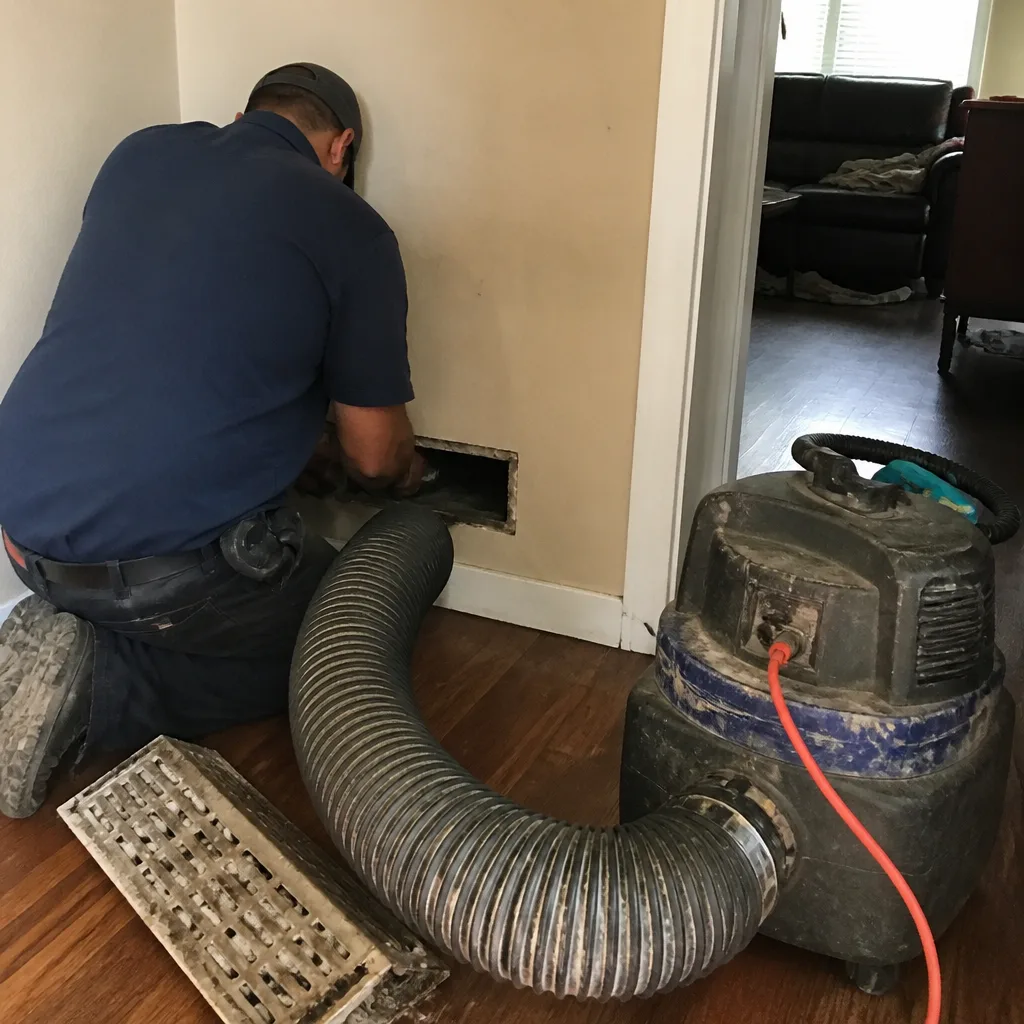
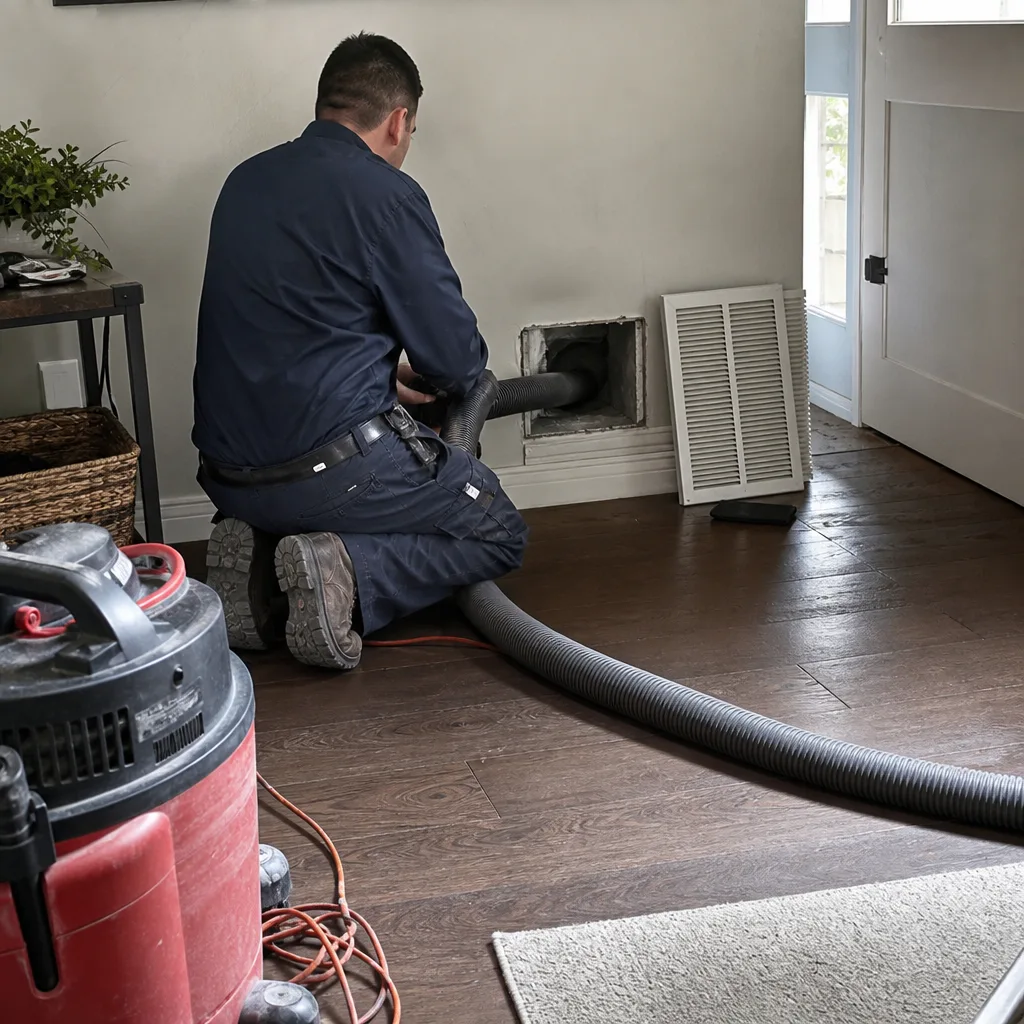
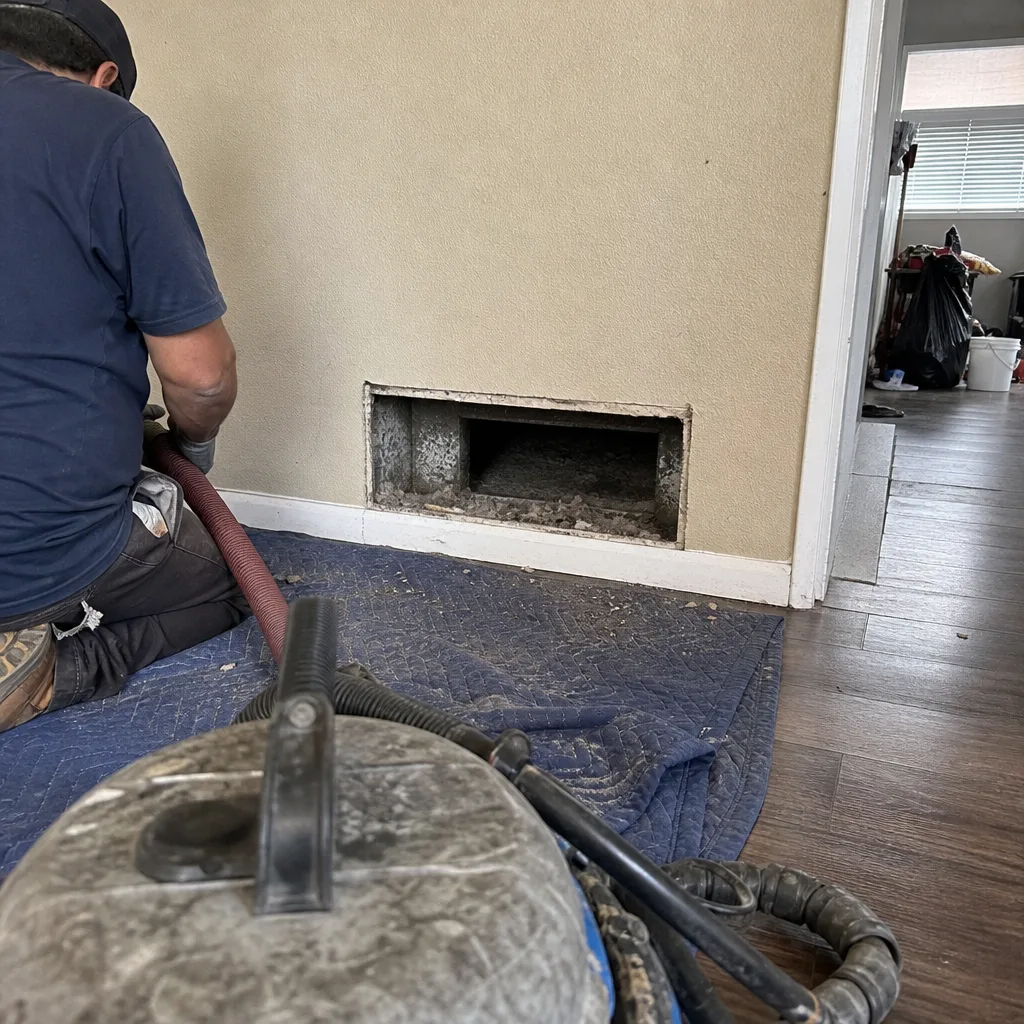
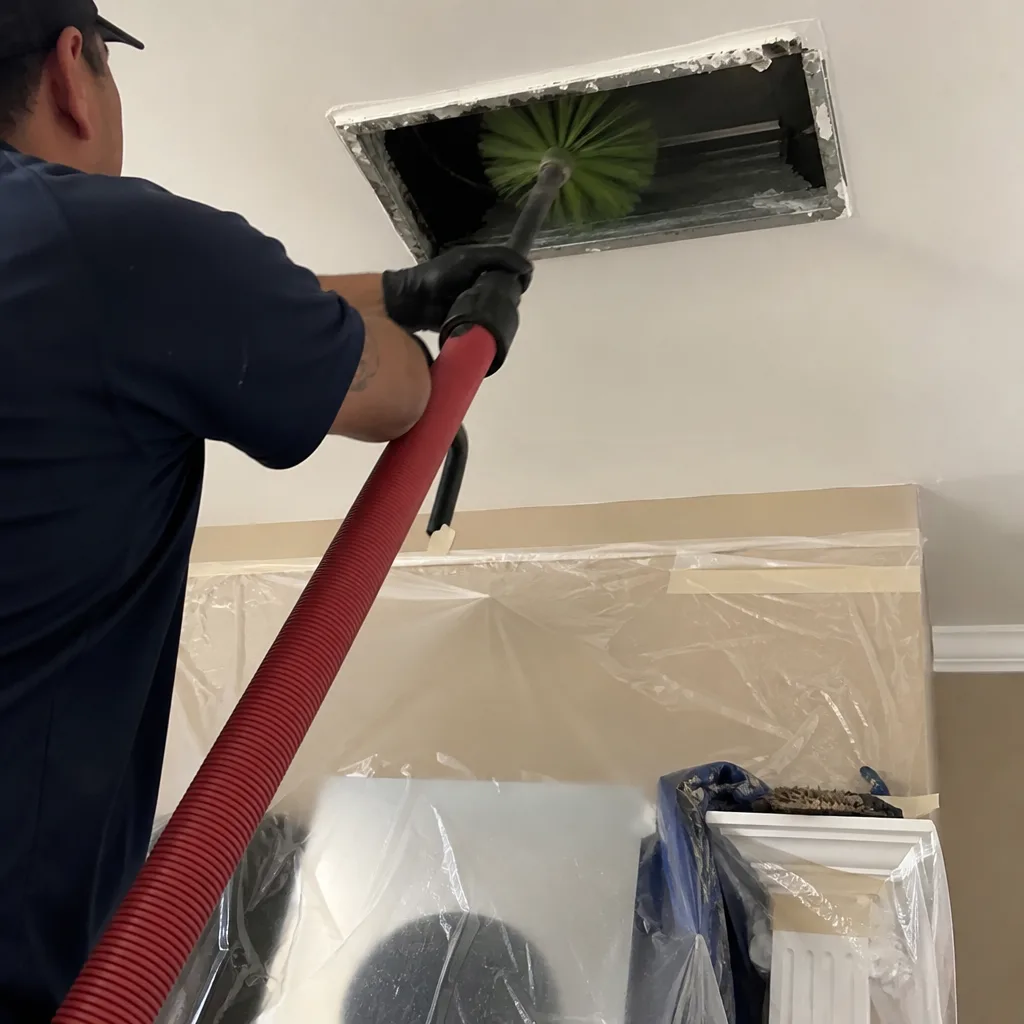
Whole-system duct and dryer vent check with before-and-after photos - you see exactly what came out of your vents
That "$99 whole-house special" is a bait ad - the real number appears once they are in your hallway, or the "clean" is a shop-vac at the register. We photograph the inside of your ducts before and after instead.
Air Duct Cleaning Emergency Preparedness Guide for Pocket Homes
After a flood or a severe wildfire smoke event, most homeowners in Pocket do exactly what instinct tells them: they tear out wet drywall, run fans, replace air filters, and scrub visible soot. Then they call it done. But ductwork is invisible, and it sits behind walls and under floors, quietly holding whatever the disaster pushed into it. In Pocket specifically, where the Sacramento River levee system defines the neighborhood’s flood risk and where wildfire smoke settles into the Sacramento Valley for weeks each summer, the duct system becomes a contamination vector that almost nobody addresses until symptoms show up. This guide is built for Pocket homeowners who want a response plan before the next event, so when water or smoke arrives, the ductwork is part of the recovery checklist from hour one, not week three.
Quick Answer
Emergency air duct preparedness for Pocket homes means having a documented baseline of your duct system’s condition before disaster hits, knowing the 72-hour assessment window after a flood, understanding the difference between a smoke-affected filter and smoke-affected ductwork, and having a qualified contractor’s number on hand before storm-chasers flood the market. After flood or smoke exposure, duct systems need our Air Duct Cleaning services, professional inspection and often rotary-brush contact cleaning or repair, because residual moisture or particulate matter inside ducts continues circulating through the home long after visible damage is addressed.
Styles & brands we work with
- Whole-home duct cleaning
- Dryer vent cleaning
- Camera inspection
- Sanitizing & deodorizing
Table of Contents
- The 72-Hour Flood Response Protocol for Ductwork
- Wildfire Smoke: Filters Versus Ductwork
- Pocket’s Flood Geography and What It Means for Crawlspace Ducts
- Building a Pre-Event Duct Documentation Baseline
- How to Evaluate Emergency Duct Cleaning Contractors
- What Moisture Does to Ductwork Over Time
- Testing Options for Smoke and Moisture Contamination
- Insurance Claims and Duct System Documentation
The 72-Hour Flood Response Protocol for Ductwork
Water intrusion in a crawlspace or wall cavity reaches ductwork faster than most homeowners realize. Flexible ducts resting on crawlspace ground absorb moisture on contact. Metal ducts sweat and hold water in low spots. Insulated ducts wick water into their fiberglass lining. The clock starts the moment water touches the duct system, and the first 72 hours determine whether you’re dealing with a cleanable surface or a full replacement.
Here’s the protocol we recommend for Pocket homeowners after any water event, whether it’s a levee scare that didn’t breach, a broken supply line, or actual flooding:
- Hour 0 – 24: Shut down the HVAC system if there is any chance water reached the ducts. Running air through wet ducts spreads humidity into every room and turns a localized water problem into a whole-house moisture problem.
- Hour 0 – 48: Document everything with photos before cleanup begins. Insurance adjusters and restoration contractors need to see the pre-mitigation condition.
- Hour 24 – 72: Have the duct system visually inspected. A technician with a scope camera can assess whether water pooled inside ducts, whether insulation is saturated, and whether the duct connections are still intact.
- Hour 48 – 72: Determine whether drying is possible or replacement is necessary. Wet fiberglass duct insulation cannot be effectively dried and must be replaced. Wet metal duct interiors can sometimes be cleaned and dried, but only if the moisture was brief and the access is sufficient.
- Week 1 and beyond: If ducts were cleaned rather than replaced, schedule a follow-up inspection to confirm no mold growth developed in the weeks after drying.
This protocol assumes something most Sacramento emergency guides skip: that ductwork is part of the structure being restored, not an accessory. Pocket homes built in the 1960s through 1980s often have duct runs through crawlspaces that flood first and drain last. By the time a homeowner sees standing water recede, the ducts have been sitting in moisture for days. The 72-hour window is not a suggestion. It’s the difference between a rotary-brush cleaning and a full duct replacement, and that’s a difference of thousands of dollars on an insurance claim. For a complete pre-event preparation guide, see our Air Duct Cleaning Maintenance Checklist for Pocket Homeowners.
Wildfire Smoke: Filters Versus Ductwork
During Sacramento’s fire season, which now stretches from June through October, Pocket sits in a valley that traps smoke from fires burning in every direction. Fine particulate matter, the PM2.5 that penetrates deep into lung tissue, also penetrates your HVAC system. But here’s the distinction most homeowners miss: a dirty filter does not mean dirty ducts, and a clean filter does not mean clean ducts.
Your HVAC filter captures what passes through it while the system runs. But smoke infiltrates a home through every gap. It settles on surfaces. It coats walls. It drifts into return registers when the system is off. Over weeks of repeated smoke events, duct interior surfaces accumulate a fine layer of particulate, especially on the return side where air is drawn in before filtration. A filter catches what it catches. It does nothing for what already settled inside the ductwork before the system cycled the air.
Assessment questions after a smoke event:
- How many days did smoke linger? A single day of moderate AQI in the 150 range might leave minimal duct residue. Two weeks of AQI above 200, repeated year after year, coats duct interiors.
- Were windows open during the smoke? Pocket’s older homes often lack central air conditioning, pushing residents to open windows at night. Smoke drawn through window screens bypasses the HVAC filter entirely and settles in return registers.
- What does the return side look like? Remove a return register and run a white cloth along the duct interior. Soot-colored residue indicates surface deposition inside the duct, not just on the filter.
- Is there visible dust on supply registers? Discoloration around supply vents after a smoke event suggests particulate is being pushed out into rooms from the duct interior.
Testing options after smoke exposure include surface sampling of duct interiors, which detects the presence of combustion particles and char. Air sampling inside the duct stream while the system runs can also capture what’s moving through. These tests are not always necessary, but after prolonged smoke events, they provide documentation for insurance claims and peace of mind for households with respiratory conditions.
Pocket’s Flood Geography and What It Means for Crawlspace Ducts
Pocket is flood-adjacent by definition. The neighborhood sits inside the Sacramento River floodplain, protected by levees that have held through decades of high-water events but remain a calculated risk. The Pocket area’s drainage relies on a network of canals and pumping stations that move water out of the neighborhood when the river rises. When those pumps are overwhelmed or when localized flooding occurs from storm drains backing up, water collects in low-lying zones first.
For duct systems, the geography matters in a specific way: Pocket homes on the west side of the neighborhood, closer to the river, often have crawlspaces that remain damp even in dry years. Homes in the Greenhaven and Pocket Meadows subdivisions, built during the 1970s and 1980s construction boom, typically have crawlspace-mounted ductwork rather than attic-mounted runs. Ducts in damp crawlspaces absorb humidity through their outer jacket even without a flood event. Add actual water intrusion, and the system saturates quickly.
What this means practically is that Pocket homeowners should know two things about their own property: whether their ducts run through crawlspace or attic, and whether their street has a history of standing water during heavy winter storms. If your ducts are in a crawlspace and your block has flooded before, your duct system is a pre-existing vulnerability that a flood event compounds dramatically. A response plan for your home should include this specific risk profile, not a generic flood checklist.
Building a Pre-Event Duct Documentation Baseline
The strongest position a homeowner can be in after a disaster is to have before-and-after documentation. Insurance claims move faster. Contractor scopes are more accurate. Disputes about what damage is new versus what pre-existed die on the spot. And yet almost no one photographs their duct system until something goes wrong.
We recommend Pocket homeowners create a simple duct documentation baseline now, while the system is in normal condition. It takes under an hour and pays for itself on the first claim:
- Photograph every register and return in the home. Remove the covers and take a photo showing the duct interior at each opening. Date-stamp the photos.
- Photograph the HVAC unit and any visible duct runs. In the garage, crawlspace access, or attic, capture how the system connects to the plenum and what the duct exterior looks like.
- Note the duct material. Flexible duct, rigid sheet metal, and duct board all respond differently to water and smoke. Knowing what you have helps a contractor give an accurate scope.
- Record your filter type and MERV rating. After a smoke event, this establishes what your system was filtering before the event and clarifies whether your filter was adequate for the exposure.
- Store the documentation in the cloud. Paper photos get lost in floods, which is when you need them most.
This baseline serves a second purpose: when a contractor proposes post-disaster work, you can sit down with the before photos and verify that the scope matches the damage. It’s the same principle as a pre-rental inspection on a car. The documentation exists to make the claim process factual rather than positional.
How to Evaluate Emergency Duct Cleaning Contractors
After a flood or fire in the Sacramento area, the phone rings with offers. Storm-chasing contractors appear from other markets, work a disaster zone for six months, then leave. Local companies get booked solid. Homeowners under pressure make decisions faster than they would during a normal project, and the duct system, being invisible, becomes the easiest corner to cut.
Questions that separate legitimate rapid-response operators from crews that will disappear:
- Are you licensed in California for the work you’re proposing? Duct cleaning falls under HVAC and specialty contracting rules. A legitimate contractor shows their license without being asked twice.
- What equipment are you using on the ducts? Listen for specifics. Rotary-brush systems like Rotobrush make contact with the duct interior. Negative-air machines like Nikro units pull contaminants out rather than pushing them around. Vague answers like “commercial vacuums” mean consumer tools.
- Will you scope the ducts before and after? A camera inspection before and after cleaning is the verification standard. If a contractor does not offer before-and-after documentation, there is no way to confirm the work happened.
- Do you repair what you find? Post-flood duct cleaning often reveals disconnected sections, crushed flex duct, or saturated insulation. A cleaning-only company will note it and leave. A full-system company like Air Duct Repair in Pocket handles the remediation in the same visit.
- Can you provide a local reference from before the disaster? A contractor who has served Pocket for years has clients in the neighborhood. A storm-chaser has a rented sign and a P.O. box.
In our experience responding to water and smoke events in Sacramento, the contractors who do the best post-disaster duct work are the ones who do proper duct work in normal times. The process does not change when the stakes rise. The equipment does not change. The documentation does not change. What changes is the urgency, and urgency is where unscrupulous operators profit.
What Moisture Does to Ductwork Over Time
Moisture in a duct system is not a static condition. It progresses through stages, and each stage carries a different remediation cost. Understanding this timeline helps Pocket homeowners make informed decisions in the chaotic days after water intrusion.
Days 1 – 3: Standing water or saturated insulation inside ducts creates localized humidity above 90%. Metal duct interiors begin to show surface corrosion. Flexible duct’s inner liner, which is typically a thin plastic film, holds water against the insulation layer. Mold spores already present in every home’s air find the moisture and settle.
Days 3 – 7: Mold colonization begins on the dust and debris inside the ducts. The dust that has accumulated over years of normal operation now becomes a growth medium. The system, if running, distributes elevated humidity and spore loads through every register. Occupants may notice a musty smell that was not present before the water event.
Week 2 and beyond: Mold is established. Fiberglass duct insulation that wicked water cannot be dried because the moisture is trapped between the inner liner and the outer jacket. The structural integrity of flex duct compresses. Metal ducts show corrosion at seams and low points. At this stage, cleaning is no longer the discussion. Replacement of affected sections is.
The takeaway is stark: a duct system assessed at day two may need a $400 – $900 cleaning. The same system assessed at day fourteen may need a $3,000 – $6,000 section replacement. The clock is not on the homeowner’s side, which is why the 72-hour protocol matters so much. This is also why we recommend checking your duct system after any water event, even a “minor” one, because the moisture you cannot see is doing work you will pay for later.
Testing Options for Smoke and Moisture Contamination
After a flood or smoke event, homeowners often ask whether they need testing before cleaning. The answer depends on what you are trying to establish. Testing serves three purposes: confirming contamination exists, documenting it for insurance, and verifying that post-remediation conditions meet a standard.
For moisture and flood contamination, the relevant measurements are moisture content in duct materials and the presence of mold. A technician can measure moisture in duct interiors with a pin-type moisture meter, which gives immediate readings on whether the duct material is saturated. Surface sampling for mold, using tape lifts or swabs, identifies whether visible growth is actually mold and what genus is present. Air sampling inside the duct stream while the system operates captures what is being distributed through the home.
For wildfire smoke exposure, surface sampling of duct interiors can detect combustion particles, including char and soot. These particles are visually distinctive under microscopy. Air sampling for fine particulate may also be useful, though interpretation is complicated by the fact that ambient outdoor air during fire season is itself contaminated. The more useful question after a smoke event is whether the duct interior surfaces show deposition, which is established visually with a scope camera and confirmed with surface sampling if documentation is needed.
Testing adds cost to the response, and not every event justifies it. But after a significant flood, or after weeks of heavy smoke, testing transforms the conversation from opinion to evidence. It provides the documentation that insurance adjusters respect and the verification that post-cleaning conditions are actually improved. It also protects homeowners from being told either that there is no problem when there is one, or that there is a massive problem when there is not.
Insurance Claims and Duct System Documentation
Duct cleaning and repair after a covered flood event is often included in the standard homeowner’s policy under the dwelling or personal property provisions, though specifics vary by carrier and policy language. The key to a successful claim is the documentation trail, and most homeowners undermine their own claim without realizing it.
The most common mistake is cleaning or disposing of contaminated materials before the adjuster has seen them. Flood-soaked duct insulation, for example, should be photographed in place before removal. If a contractor removes and discards it, the adjuster has nothing to assess. The second most common mistake is accepting a scope of work that does not itemize the duct system separately from other restoration work. When duct cleaning, duct repair, and HVAC replacement are lumped into a single line item, it becomes easy for the insurer to dispute what was actually done.
Your pre-event documentation baseline becomes valuable here. Photos of clean, intact ducts taken months before the flood establish the pre-loss condition. Post-event photos establish the damage. The difference between the two is the claim. Without the baseline, the adjuster and the homeowner are arguing from memory, and memory is not a documentation standard.
We recommend requesting that any duct cleaning or repair after a covered event be documented with before-and-after scope camera footage, stored as part of your claim file. This footage proves the work was done, shows what the interior condition was, and protects you if a dispute arises later about whether the ducts were actually cleaned. It adds nothing to the cost and everything to the claim’s strength.
Common Mistakes to Avoid
- Running the HVAC system during or immediately after water intrusion. Air movement through wet ducts spreads moisture into dry rooms and forces water deeper into porous materials. Shut the system down until it is inspected.
- Assuming a fresh filter solves the smoke problem. A filter change helps the system going forward. It does nothing for the particulate that already settled on the duct interior surfaces over weeks of smoke events.
- Waiting to see if the musty smell goes away on its own. It will not. Musty smells from ducts indicate established microbial growth, and the conditions that caused it are still present. The smell fades as your nose adapts, not as the problem resolves.
- Hiring a contractor without before-and-after camera documentation. If there is no visual record of the duct interiors, there is no way to verify the cleaning happened. A contractor who resists camera documentation is telling you something.
- Letting a restoration company’s subcontractor handle the ducts without due diligence. Restoration general contractors often sub duct work to the lowest bidder. Ask who is actually doing the duct work, what equipment they use, and whether they can provide scope footage.
- Treating all flood events as equal. A broken supply line in a bathroom is not the same as river water in a crawlspace. The water source, duration, and what it touched all change the appropriate duct response.
See the difference
 Before
 After
 Before
 After
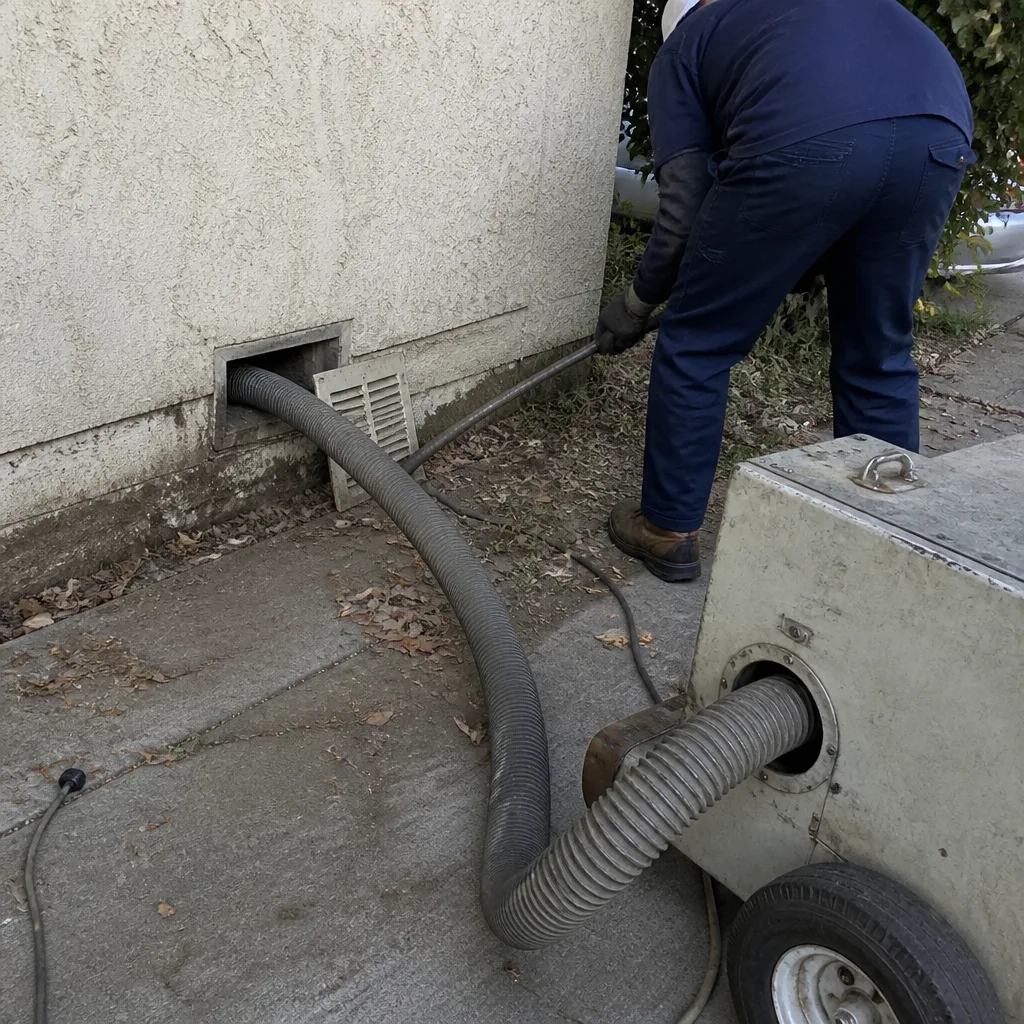 Before
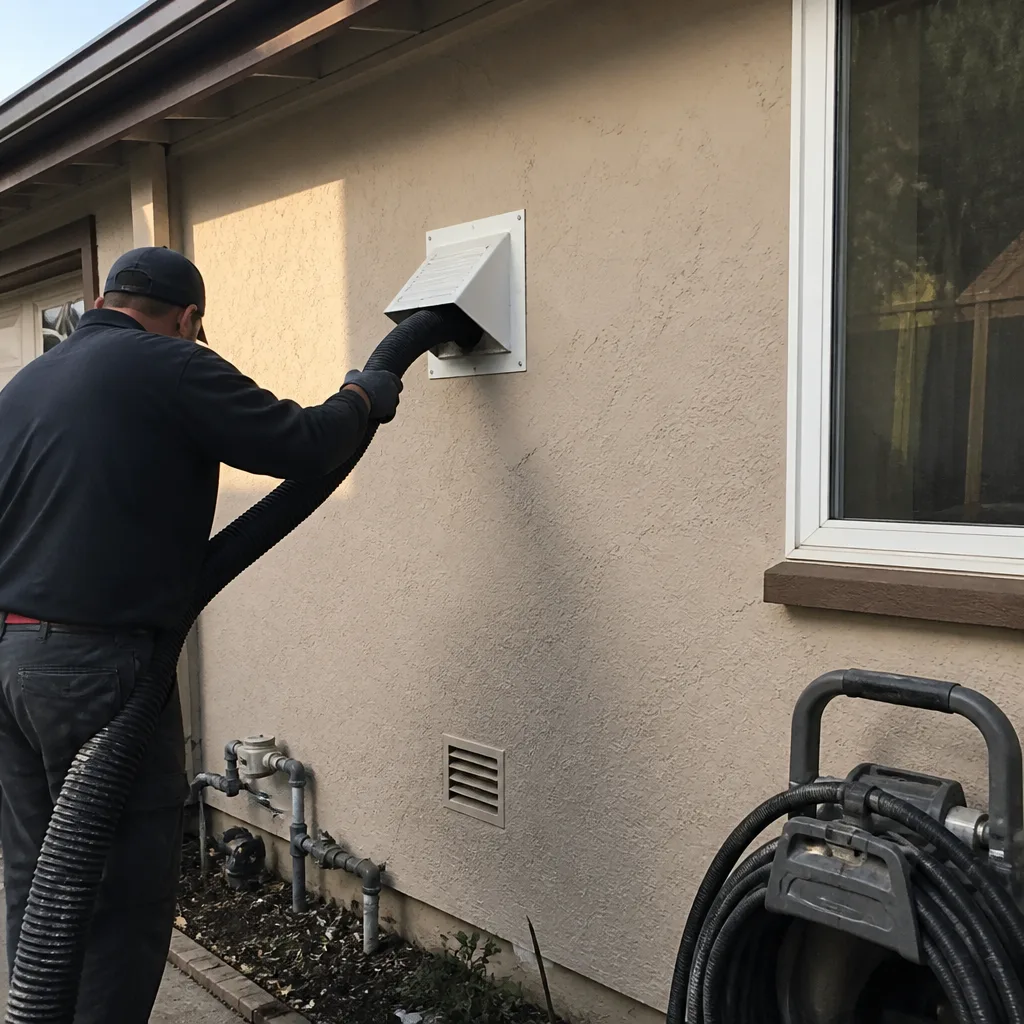 After
When to Call a Professional
Call a professional after any water event that reached the crawlspace, any flood that left standing water in or near ductwork, any smoke event that lasted more than a few days, or any time you notice a musty smell, visible dust discharge from registers, or unexplained allergy symptoms among household members. Duct systems are not designed for homeowner access, and the materials involved, especially wet insulation, require professional removal and replacement. Air Duct Cleaning in Pocket begins with a camera inspection, which means the first visit provides information even if no cleaning is immediately needed. Purevent Air Duct Cleaning offers free estimates in Pocket, call (877) 752-5088.
Frequently Asked Questions
Emergency duct cleaning in Pocket typically runs $500 to $1,200 for a single-family home depending on the number of vents, the extent of contamination, and whether repairs are needed. For additional guidance, explore more guides & resources. Smoke-affected systems on the lower end of that range require cleaning only. Flood-affected systems with saturated insulation run higher because sections must be replaced rather than cleaned. Call (877) 752-5088 for an exact quote based on your system. Estimates are free.
Within 72 hours of water intrusion. The first three days are the window in which cleaning and drying are still viable. After that, mold colonization begins on the dust inside the ducts, and the remediation scope shifts from cleaning to replacement. If water reached your crawlspace or the area around your duct runs, treat the inspection as urgent, even if the system seems to be running normally.
It depends on the duration and severity of the smoke exposure and what your duct interiors look like. A few days of moderate smoke may leave no significant residue. Weeks of heavy smoke, especially if windows were open or the system ran frequently, can deposit a fine particulate layer on duct interior surfaces. Remove a return register and inspect with a flashlight or white cloth. If you see soot-colored residue, a professional assessment is warranted.
No. Fiberglass duct insulation that has wicked water cannot be effectively dried. The inner liner traps moisture against the insulation layer, and the material compresses, losing its insulating value. The only correct remediation for saturated duct insulation is removal and replacement of the affected sections. Attempting to dry it in place leaves moisture in the system and creates conditions for mold growth.
Require before-and-after camera documentation. A professional contractor scopes the duct interiors before cleaning, records the condition, and scopes again after. The after footage should show clean, dry duct surfaces. Any contractor who cannot or will not provide visual verification is not a contractor you should pay. This documentation also serves as evidence for insurance claims and future resale disclosure.
Many homeowner’s policies cover duct cleaning and repair when the damage is caused by a covered peril, such as a broken supply line or a wind-driven storm event. Flood insurance through the NFIP covers damage from rising water, but coverage for duct systems varies by policy. Documentation is the key factor in any claim: photograph damage before cleanup, itemize the duct system separately from other restoration work, and retain before-and-after footage from the contractor. For details on regulatory requirements, see Air Duct Cleaning Permits, Codes & Inspections in CA: What You Need to Know. Call your agent to confirm your specific policy language.
Three things: replace your filter with the highest MERV rating your system can handle, photograph the duct interiors at each register for your documentation baseline, and have the system inspected if it has not been cleaned in the past five years. A clean duct system accumulates smoke particulate less readily than a dust-laden one, and the documentation establishes your pre-event condition for any future claim.
The Bottom Line
Pocket’s position in the Sacramento River floodplain and its annual exposure to wildfire smoke make the duct system a specific vulnerability that most emergency preparedness checklists ignore. The discipline is simple: document your ducts before anything happens, assess them within 72 hours after a water event, understand that smoke exposure is a question of what settled inside the ducts and not just what the filter caught, and hold every contractor to a standard of camera-verified before-and-after documentation. The homeowners who handle ductwork as part of emergency response, not as an afterthought, recover faster, spend less on remediation, and avoid the weeks of invisible contamination that follow most Sacramento disaster events. Purevent Air Duct Cleaning home serves Pocket with rotary-brush contact cleaning, negative-air extraction, and full duct repair capability. For Dryer Vent Cleaning in Pocket after a smoke or flood event, dryer vents warrant attention too: smoke particulate and flood humidity affect the entire exhaust system, and a clogged dryer vent compounds indoor air problems you are already fighting.
Written by the team at Purevent Air Duct Cleaning, serving Pocket since 2017.